
 Search Articles


(CN) — Three amateur equestrians argued Wednesday in the Fourth Circuit that a nonprofit responsible for investigating abuse claims within the Olympic movement infringed on their due process rights.
The athletes — Thomas Navarro, James Giorgio and Nina Shaffer — say the U.S. Center for SafeSport suspended or banned them from participating in amateur horse riding events based on abuse accusations they could not first refute at a hearing.
SafeSport, a nonprofit partner of the U.S. Olympic & Paralympic Committee, is a creation of Congress, the athletes argue, and must provide a fair hearing before issuing suspensions and publishing their names online.
Joe Zonies, a Denver-based attorney for SafeSport, argued the government plays no role in its decisionmaking. Ultimately, only members of amateur athletic organizations are subject to SafeSport’s decisions. An athlete can quit the organization and still participate in the sport if they are unhappy with a decision.
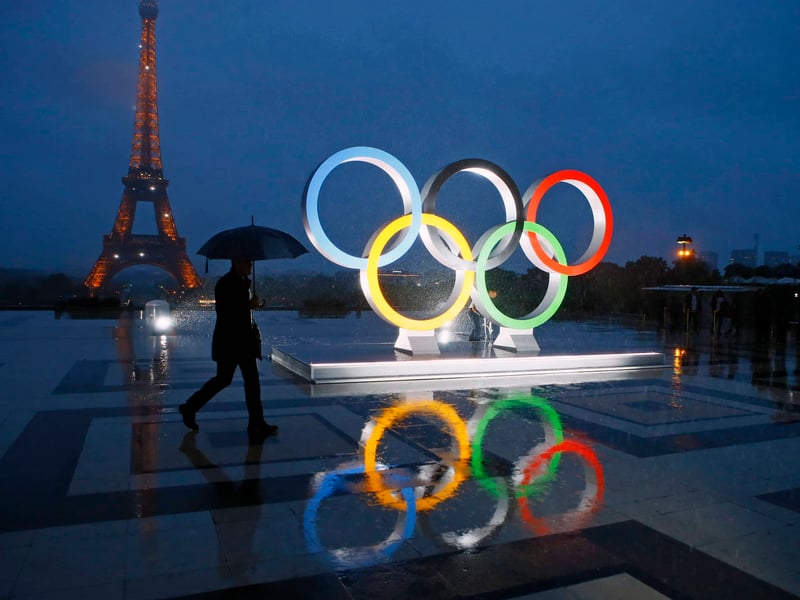
“You just can’t do it with the five rings above your head anymore,” he said.
The athletes challenge aspects of the Amateur Sports Act of 1978, also known as the Ted Stevens Act, which delegates authority to the USOPC to determine eligible participants in amateur sporting events. The USOPC in turn charters a national governing body to regulate each sport, including the U.S Equestrian Federation, which regulates most horseback-riding sports.
Congress amended the the Ted Stevens Act to bolster protections for young athletes after the #MeToo movement shined a light on the pervasive nature of sexual abuse in the sports world, most notably exposing the Larry Nassar scandal within USA Gymnastics. SafeSport was created to investigate reports of abuse and impose public sanctions against members of amateur athletic organizations who are found to have committed wrongdoing.
Navarro, who teaches horseback riding in Virginia, was convicted in 2000 of sodomy and sexual abuse involving a minor. In 2018, SafeSport ruled that Navarro’s conviction made him permanently ineligible to participate in USEF events. Giorgio, a horse breeder in Connecticut, was permanently banned from USEF events that same year because of a prior criminal conviction involving a minor.
In 2024, SafeSport suspended Shaffer, a horse breeder and trainer in Pennsylvania, from participating in USEF events for three months after finding she committed “emotional abuse.”
The equestrians say SafeSport failed to provide a hearing so they could rebut the accusations. After issuing their decision, the athletes were told they could pay thousands of dollars for post-arbitration hearings.
The athletes sued SafeSport, USEF and the USOPC last year, arguing the organizations violated their due process rights. Separately, they claim Congress wrongfully delegated its regulatory authority to a private entity.
U.S. District Judge Jasmine H. Yoon, a Joe Biden appointee, granted a motion to dismiss the case in January. The athletic organizations are not government entities, Yoon ruled, and therefore not subject to due process rules.
Attorney Tamara Tucker of Charlottesville, Virginia, represented the athletes at Wednesday’s hearing. She argued that Congress had wrongfully delegated its authority to SafeSport to investigate and adjudicate issues with no connection to sports.
She cited the U.S. Supreme Court’s opinion in U.S. Department of Transportation v. Association of American Railroads, where the court ruled Congress could not delegate its authority to regulate train schedules to Amtrak, a private corporation.
Similarly, Congress delegated to SafeSport the exclusive jurisdiction to investigate and adjudicate the conduct of amateur athletes with no oversight or accountability, Tucker argued.
“We’re not here because somebody is unhappy with a referee’s call,” Tucker said. “We’re here because Congress has delegated to a private entity exclusive authority over millions of Americans, and the conduct it regulates does not have to have a nexus to sports.”
U.S. Circuit Judge Paul V. Niemeyer, a George H.W. Bush appointee, appeared skeptical of the argument. He pointed out SafeSport and the governing bodies only have authority over participating athletes. SafeSport cannot imprison or seize the property of an athlete — it can only ban them from competition.
“They don’t have subpoena power,” the judge said. “They don’t have enforcement power in a court, except as private individuals. It seems to me they have the power to enforce their own membership, their own events and enforce the rules of the game.”
If a private poker club kicked out one of its members because he was accused of embezzlement 10 years ago, Niemeyer asked, would the courts have any role in deciding whether it was lawful?
Tucker said the analogy was inapt. Instead, imagine that Congress wrote a statute that created a Poker Embezzlement Center and put it in charge of the country’s poker clubs, she offered.
“Congress waded into this area of regulation well beyond what it had ever done before,” Tucker said.
Zonies rebutted that the Supreme Court decided in San Francisco Arts & Athletics, Inc. v. United States Olympic Committee that the regulation of amateur athletics was not a traditional nor exclusive government role. The high court wrote in the 1987 opinion that the Ted Stevens Act merely authorized the USOPC to coordinate activities that had always been performed by private entities.
SafeSport is exercising that same authority — drafting policies and procedures to determine who is eligible to participate in amateur sports organizations, Zonies said.
U.S. Circuit Judge Nicole G. Berner, a Joe Biden appointee, asked how Zonies would respond to arguments that SafeSport’s authority extends beyond the regulation of sports and infringes on private activities, such as offering horseback riding lessons on their property.
“The most the center can do is say: You can’t be a member,” Zonies said. “You can no longer participate in our private organization. Her clients can, and I believe still do, train individuals in equestrian sports.”
U.S. Circuit Judge Stephanie D. Thacker, a Barack Obama appointee, also served on the panel.
 Follow @SteveGarrisonPC
Subscribe to our free newsletters
Our weekly newsletter Closing Arguments offers the latest about ongoing trials, major litigation and rulings in courthouses around the U.S. and the world, while the monthly Under the Lights dishes the legal dirt from Hollywood, sports, Big Tech and the arts.