
 Search Articles


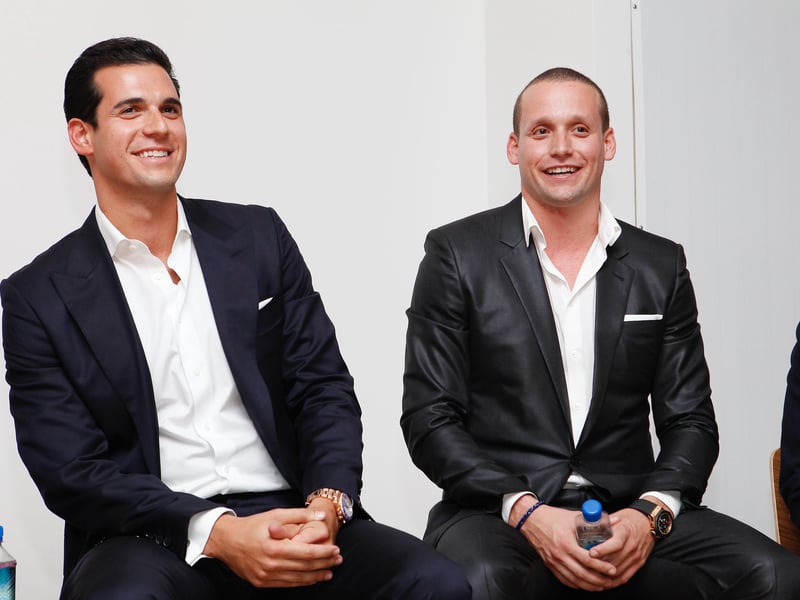
MANHATTAN (CN) — A woman’s effort to revive her sexual assault lawsuit against luxury real estate brokers and socialite brothers Tal, Oren and Alon Alexander has sparked bigger questions about New York enforcement in civil rape cases, a Second Circuit judge acknowledged Wednesday.
A panel of judges on the federal appeals court was mulling whether to reverse the dismissal of the lawsuit brought last year by Angelica Parker, who claims that both Tal and Alon Alexander sexually assaulted her in a Manhattan apartment in 2012 while Oren Alexander watched. The complaint was tossed earlier this year by U.S. District Judge Lewis Kaplan, a Bill Clinton appointee who found that Parker’s lawsuit was untimely.
Kaplan found that a pair of state-level New York laws, which created a revival window for sexual assault claims that would otherwise be time-barred, preempt a similar revival window created by a New York City law.
This was the issue on appeal for the Second Circuit on Wednesday, and one that could be massively impactful for the future of civil sex assault claims in New York.
“I believe these are issues of significant importance to the state of New York, to the city and so on, to state actors,” U.S. Circuit Judge Raymond Lohier, a Barack Obama appointee, said in court.
Lohier and his fellow judicial panelists didn’t immediately answer those questions — they have yet to issue a ruling. But they did seem inclined to seek certification from the New York Court of Appeals to determine how the conflicting lookback windows should be handled.
“Certification is meant to embody those federalism interests and make sure that a federal court doesn’t interfere or get it wrong with respect to those important legal and policy-related issues,” Lohier said.
That solution could answer many of the questions posed by the circuit judges on Wednesday, like one from U.S. Circuit Judge Dennis Jacobs, who asked the Alexanders’ attorney why the state would bother putting a hard cap on when these claims could be brought.
“Allowing somebody to bring a claim that would otherwise be time-barred would be the evident purpose of the opening of the window. What’s the purpose of closing the window?” the George H. W. Bush appointee asked.
Milton Williams, representing the Alexanders, replied that it would be “the same purpose as any statute of limitations.” His clients are also facing a sprawling federal indictment that charges them with sex trafficking — the trio has been locked up in Brooklyn’s Metropolitan Detention Center since their arrest last December.
Their case wasn’t the only one on Wednesday to press the Second Circuit on the revival window question, one that has divided the U.S. District Court for the Southern District of New York.
A Jane Doe plaintiff, accusing billionaire private equity investor Leon Black of raping her in Jeffrey Epstein’s Manhattan townhouse when she was 16, was also heard by the court on the issue. In her case, however, a federal judge ruled that the state laws do not preempt the city’s lookback window, deeming her suit timely.
Black’s lawyers are trying to push the court in the other direction.
“Plaintiff’s allegations in this case are false,” Black’s attorney Christopher Michel said Wednesday. “But what matters today is that they are also untimely.”
In both cases, New York City weighed in as an amicus curiae, arguing that the circuit should certify the question to the New York Court of Appeals, the state’s top court.
The issue stems from a 2022 amendment from the New York City Council, which added a lookback window from March 2023 to March 2025 that allowed survivors to bring otherwise time-barred sexual assault claims from 2000 and 2015. Two state laws — the Child Victims Act and the Adult Survivors Act — feature their own, earlier lookback windows, which Black and the Alexanders say conflict with the city’s.
Lohier and Jacobs oversaw Wednesday’s arguments alongside U.S. Circuit Judge Jose Cabranes, a Bill Clinton appointee, who joined the panel remotely.
 Follow @Uebey
 Follow @uebey.bsky.social
Subscribe to our free newsletters
Our weekly newsletter Closing Arguments offers the latest about ongoing trials, major litigation and rulings in courthouses around the U.S. and the world, while the monthly Under the Lights dishes the legal dirt from Hollywood, sports, Big Tech and the arts.