
 Search Articles


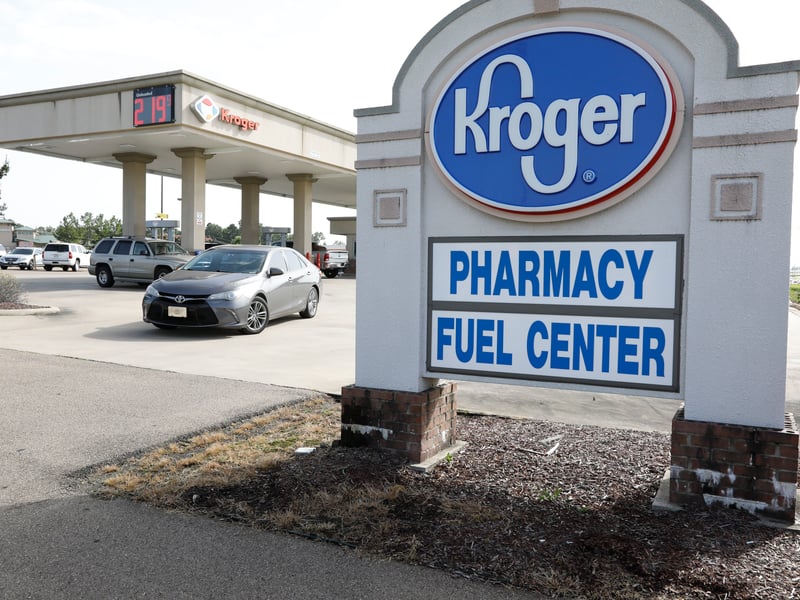
(CN) — Supermarket chain Albertsons sued rival company Kroger Wednesday morning, arguing that Kroger failed to exercise “best efforts” to secure regulatory approval for what would have been the nation’s largest grocery store merger, ultimately causing the deal’s downfall.
Filing suit in the Delaware Court of Chancery, Albertsons raised claims against Kroger for willful breach of contract and breach of the covenant of good faith and fair dealing, Albertsons said in a news release. Per court rules, the complaint remained temporarily under seal Wednesday afternoon.
Albertsons claimed in a news release that Kroger deliberately breached the companies’ $24.6 billion merger agreement by failing to sufficiently divest in the antitrust approval process, ignoring regulators’ feedback, rejecting stronger divestiture buyers and neglecting to cooperate with Albertsons during the merger process.
These acts, Albertsons said, caused multiple courts to order the merger’s halt, resulting in Albertsons’ termination of the merger altogether. On Tuesday, an Oregon federal judge and a Washington state judge each issued orders blocking the deal from proceeding until antitrust regulators complete an internal probe.
Tom Moriarty, Albertsons’ general counsel and chief policy officer who wrote the press release, chastised what he described as Kroger’s “willfully deficient approach to security regulatory clearance.”
“Rather than fulfill its contractual obligations to ensure that the merger succeeded, Kroger acted in its own financial self-interest, repeatedly providing insufficient divestiture proposals that ignored regulators’ concerns,” Moriarty said.
Had the merger been completed, Kroger would have subsumed Albertsons to form one of the largest grocery chains in the United States, operating over 4,400 stores.
In a statement to Courthouse News, Kroger called Albertsons’ claims “baseless and without merit,” refuted the allegations “in the strongest possible terms” and announced it will defend against Albertsons in court.
“We went to extraordinary lengths to uphold the merger agreement throughout the entirety of the regulatory process and the facts will make that abundantly clear,” a Kroger spokesperson said.
Additionally, the spokesperson accused Albertsons, not Kroger, of repeatedly and intentionally interfering throughout the merger process.
“This is clearly an attempt to deflect responsibility following Kroger’s written notification to Albertsons’ multiple breaches of the agreement, and to seek payment of the merger’s break fee, to which they are not entitled,” the Kroger representative said.
Ruling double-whammy stalls merger
Albertsons announced its lawsuit and merger termination less than a day after the pair of rulings put the brakes on the deal on consumer protection grounds.
In Portland, Oregon, U.S. District Judge Adrienne Nelson wrote in a 71-page order that a preliminary injunction on the merger would be necessary while the Federal Trade Commission carried out its administrative proceeding.
Failure to do so would allow the companies to proceed with the merger while the commission conducted its probe, Nelson said.
And if the investigation found that the merger violated antitrust laws, she added, it would be difficult to “unscramble the egg” and preserve competition after exchanging sensitive business information.
“Any harms defendants experience as a result of the injunction do not overcome the strong public interest in the enforcement of antitrust law, especially given the difficulty in disentangling a premature merger,” Nelson wrote.
While both Albertsons and Kroger argued in a Sept. 4 hearing that the merger would be necessary to compete with non-traditional grocers like Walmart, Amazon and Costco, Nelson was ultimately unpersuaded.
“The overarching goals of antitrust law are not met … by permitting an otherwise unlawful merger in order to permit firms to compete with an industry giant,” she wrote in her opinion.
About an hour after Nelson published the order, King County Superior Court Judge Marshall Ferguson followed suit in the neighboring state of Washington, ordering a permanent injunction against the merger due to violations of state consumer protection law.
“In my view, the evidence convincingly shows that the current competition between Kroger and Albertsons stores is fierce in the state of Washington,” Ferguson said in the Seattle courtroom. He added in his opinion that a merger would “substantially lessen” competition.
 Follow @JacksonHeals
Subscribe to our free newsletters
Our weekly newsletter Closing Arguments offers the latest about ongoing trials, major litigation and rulings in courthouses around the U.S. and the world, while the monthly Under the Lights dishes the legal dirt from Hollywood, sports, Big Tech and the arts.