
 Search Articles


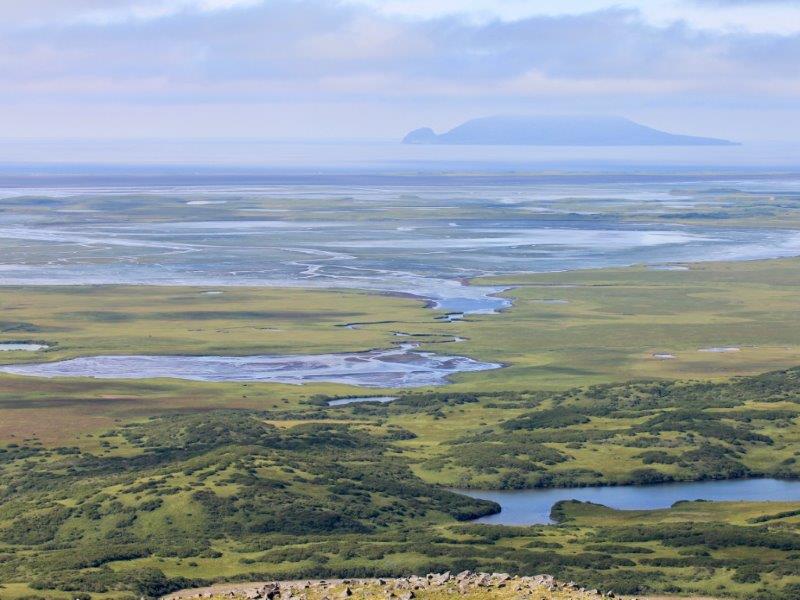
(CN) — Three Alaska Native villages and a national conservation organization filed a lawsuit Tuesday against the Trump administration, challenging its decision to exchange federally protected wilderness land to enable construction of a road through Izembek National Wildlife Refuge, one of the world’s most critical stopover points for migratory birds.
The Native Village of Hooper Bay, the Native Village of Paimiut, Chevak Native Village and the Center for Biological Diversity argue that the land swap violates federal law by undermining the conservation and subsistence purposes that govern protected lands in Alaska. The deal would trade approximately 500 acres of irreplaceable wilderness at the heart of the refuge for 1,739 acres owned by the King Cove Corporation.
The case is the latest chapter in a decades-long dispute over whether to build a road through Izembek, Alaska’s smallest national wildlife refuge but one of its most ecologically significant. Despite its modest size, the refuge provides essential habitat for millions of migratory birds, including Pacific black brant, emperor geese and endangered Steller’s eiders, which depend on the area’s vast eelgrass wetlands during their migrations.
For the Alaska Native communities joining the lawsuit, the proposed road threatens not only wildlife but their subsistence way of life. Many of the birds that stage at Izembek migrate to the Yukon-Kuskokwim Delta, where they have been harvested by Native communities for generations.
“If the Izembek road happens, it will cause a lot of chaos for Alaska Native people in my region who still live off the land and sea. The birds we hunt may not be able to survive,” Chief Edgar Tall Sr. of the Native Village of Hooper Bay, said in a written statement.
“I started at a very young age learning the knowledge of subsistence, where people harvest and how to save food. But everything is changing in our state, like how we survive, how we do our daily living. I want the government to listen to us and stop destroying things before everything around us just disappears,” he continued.
The timing of the lawsuit is significant for the communities, which already face the effects of climate change. Recent typhoons have devastated villages across the region, highlighting the vulnerability of communities that rely on healthy, intact ecosystems, according to Angutekaraq Estelle Thomson, Traditional Council President of the Native Village of Paimiut.
“As Yup’ik people from the Yukon-Kuskokwim Delta, we are already living with the front-line impacts of climate catastrophe,” Thompson said in a statement. “Typhoon Merbok and now Typhoon Halong have torn through our homelands, forcing thousands of our relatives to evacuate and threatening the villages, food systems and sacred places that have sustained us since time immemorial.”
Thomson emphasized the connection between protecting Izembek and preserving Indigenous ways of life.
“Izembek’s eelgrass wetlands are a lifeline for emperor geese, black brant and other birds that feed our families and connect us to Indigenous relatives across the Pacific,” she said. “Trading away this globally important refuge for a commercial corridor devalues our lives and our children’s future.”
The planned road would cut through a narrow isthmus at the center of the refuge’s eelgrass wetlands, which scientists say would disrupt and degrade habitat that cannot be replicated elsewhere. The refuge also supports populations of grizzly bears, caribou, salmon, sea otters and sea lions.
Previous administrations from both parties repeatedly rejected similar proposals, concluding that a road through Izembek would cause permanent environmental damage and fail to serve the national public interest. The Trump administration, however, authorized the exchange under a provision of the Alaska National Interest Lands Conservation Act, which permits land swaps only when they further the law’s conservation and subsistence objectives.
The plaintiffs argue that the administration’s use of this provision actually undermines both conservation and subsistence — the very purposes the law was designed to protect. They warn that approving the Izembek exchange sets a troubling precedent for Alaska’s 104 million acres of protected federal lands.
“Trump just gave away the heart of Izembek without following the law,” Marlee Goska, Alaska staff attorney at the Center for Biological Diversity, said in a statement. “This deal sets a dangerous precedent for all federally protected lands in Alaska and paves the way for the destruction of Izembek’s climate change-fighting eelgrass.”
The plaintiffs also describe a failure to meaningfully consult with affected Native communities. The Native Village of Hooper Bay and other Tribes in the Yukon-Kuskokwim Delta repeatedly requested meetings with federal decision-makers and sought to have their perspectives included in the process, but those requests were reportedly denied or ignored.
Representatives for the Trump administration and King Cove Corporation did not immediately respond to requests for comment.
 Follow @JeremyYurow
Subscribe to our free newsletters
Our weekly newsletter Closing Arguments offers the latest about ongoing trials, major litigation and rulings in courthouses around the U.S. and the world, while the monthly Under the Lights dishes the legal dirt from Hollywood, sports, Big Tech and the arts.