
 Search Articles


PORTLAND, Ore. (CN) — Nearly five years after a federal board granted a subsistence hunt to a Native American tribe experiencing food insecurity during the throes of the pandemic, the state of Alaska continues to challenge the board’s authority to have done so. Before the Ninth Circuit on Friday, Alaska asked the appeals court to overturn an order upholding that authority.
The state sued the Federal Subsistence Board, a division of the Department of the Interior, in 2020, arguing it exceeded its statutory authority when it opened a 60-day hunting season for the Organized Village of Kake — a federally recognized tribe living in the small town of Kake — in the spring of 2020. The board allowed an emergency hunt of two bull moose and five male deer for the village’s tribal citizens.
The state said it further exceeded its authority by allowing the village to determine who gets to hunt and who gets the haul from the hunt.
Under the Alaska National Interest Lands Conservation Act, the board has regulatory authority to enact special actions to open and close hunting on federal public lands as part of its management of subsistent uses of fish and wildlife as long as it gives adequate notice and public hearing.
The lower court determined that the state’s challenge to the Kake hunt didn’t fit within the exception to mootness, as the Kake hunt ended before the court issued its decision. The state appealed, and in 2023, the Ninth Circuit reversed that determination and sent the case back to the lower court. The district court again ruled in favor of the board, finding it was reasonable for it to interpret the Alaska National Interest Lands Conservation Act as granting authority to open emergency subsistence hunts.
Thus, the state appealed to the Ninth Circuit once more and quickly stood up to probing from the three-member panel.
“ You’re saying the fact that two bull moose and five buck deer were harvested during the pandemic for food shortage reasons that that is going to require Alaska to go down to zero?” U.S. Circuit Judge Lucy Koh asked.
Laura Wolff, Alaska assistant attorney general representing the state Department of Fish and Game, countered that the concern is rooted in the harvest debt the unapproved hunt creates.
“ If there isn’t a harvestable surplus, that means you can’t open a season because the population will start dwindling and dwindling and dwindling to zero,” Wolff said. Alaskan law requires the state to open hunting season whenever it is possible.
The Joe Biden appointee pointed to other hunts that the state hadn’t objected to, and Wolff said the state responds in many ways, with one being opening a hunt as well.
“If it reacts by opening, that sort of counters your more practical argument that somehow this is going to decimate the population,” U.S. Circuit Judge Jennifer Sung, a fellow Biden appointee, said.
Wolff clarified that the more appropriate phrasing would be “take the entire harvestable surplus” rather than “decimate the population.”
For instance, if the board opens the season 10 days early and federally qualified subsistence hunters take the entire harvestable surplus, the state must close hunting throughout the state.
The judges remained skeptical of the state’s numbers, noting that commercial and recreational hunting limits are in the tens of thousands for deer and bull moose.
“ I feel like your ‘The sky is falling’ is a bit of a challenge for me to see, to be honest,” Koh said. “The state allowed 45,736 deer to be commercially and recreationally harvested, and you’re saying five during a pandemic when people were hungry and didn’t have enough food because of supply chain shortages is going to somehow break the system.”
Wolff said the state’s concern is about having to react to emergency hunts to manage hunting across the state holistically.
The Federal Subsistence Board, represented by Justice Department attorney Kevin McArdle, argued that it followed proper procedure and didn’t find any conservation concerns. Further, it argued that it is necessarily granted the authority to make emergency hunt decisions.
“ We are the manager now of public lands for subsistence uses,” McArdle said. “And perhaps the most basic component of the act of managing the public lands for subsistence uses is this deciding when they’re going to be open for subsistence hunting.”
The Organized Village of Kake intervened in the lawsuit before the Ninth Circuit to implore the panel to uphold the lower court’s reading of Title VIII of the Alaska National Interest Lands Conservation Act, which allows preference to rural subsistence users.
“ From the beginning, the universal understanding was that in the absence of state compliance, Title VIII allowed for federal management of hunting and fishing on federal lands,” said Nathaniel Amdur-Clark, attorney with the Anchorage-based Sonosky Chambers Sachse Miller Monkman firm representing the Organized Village of Kake. “And that was a fundamental shift from state management to federal management.”
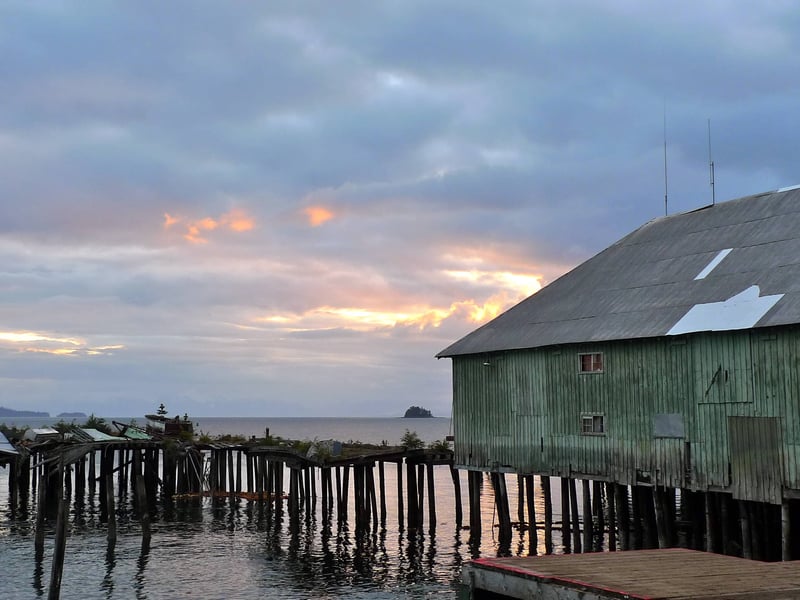
Plus, as a village of just around 500 people on one of roughly 1,100 islands in the Alexander Archipelago on the southeast arm of the state, Kake didn’t have many options when the global supply chain suddenly became severely disrupted.
“ There’s only two sources of food, right? Subsistence harvests and food that’s brought in from outside,” Amdur-Clark said. “And the people of Kake were understandably worried about their ability to provide healthy food to protect its people and especially elders.”
The Ninth Circuit panel, which also included George W. Bush appointee U.S. Circuit Judge Carlos Bea, did not indicate when it would rule.
Subscribe to our free newsletters
Our weekly newsletter Closing Arguments offers the latest about ongoing trials, major litigation and rulings in courthouses around the U.S. and the world, while the monthly Under the Lights dishes the legal dirt from Hollywood, sports, Big Tech and the arts.