Search Articles


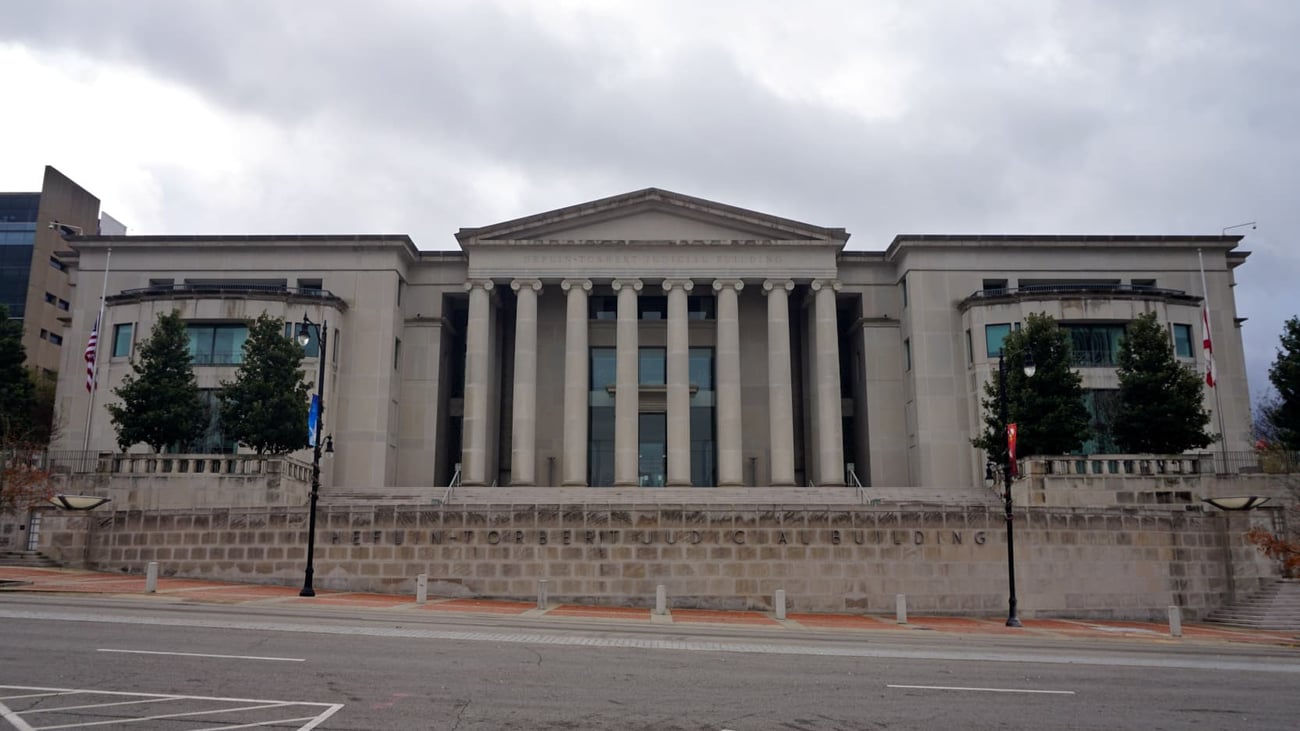
(CN) — The Alabama Supreme Court on Friday limited the scope of the state’s reporter shield law, handing a partial victory to former University of Alabama basketball player Kai Spears in his ongoing defamation lawsuit against The New York Times.
The decision clarifies what journalists in the state can withhold during discovery when confidential sources are at issue.
The case stems from a 2023 article that identified Spears as a passenger in a car linked to a fatal shooting in Tuscaloosa. Spears, who was not involved, sued the newspaper, claiming the story was repeatedly stated as fact even though it was primarily based on one anonymous source and despite contrary information from another.
In a federal lawsuit, Spears sought discovery to learn more about the newspaper’s sources and verification process to prove negligence or actual malice for potential punitive damages. The Times invoked Alabama’s 1936 reporter shield statute, which protects “the sources of any information … published in the newspaper.” U.S. District Judge Annemarie Carney Axon stayed the case, sending the two certified questions to the state Supreme Court for resolution.
After oral arguments in February, Justice Chris McCool wrote the majority decision for the all-Republican court, finding on Friday the shield protects only a source’s identity and any information that would “inevitably” reveal that identity. Such information may include a residential address, telephone number, email or social media account.
But more crucially, the court found the shield does not extend to broader material that might only “reasonably lead” to identifying the source.
“By its plain language, [the statute] protects only ‘sources of … information,’ which, in its strictest and narrowest sense, does not protect ‘any and all information’ that, in the hands of a resourceful recipient, ‘could reasonably lead’ to the discovery of the identity of a confidential source,” McCool wrote for the court.
The Supreme Court did advise strict construction of the statute, noting that privileges limiting discovery are construed narrowly because they modify common law.
“We hold that this language also necessarily protects any information that would inevitably reveal the identity of a confidential source because the disclosure of such information would, for all intents and purposes, be equivalent to disclosing the source’s name,” McCool wrote, adding “‘[i]nevitable’ is not the same as ‘obvious,’” and trial courts will resolve disputes over what qualifies on a case-by-case basis.
Justices Greg Shaw and William B. Sellers concurred in part, stressing plain-language analysis. Justice Brady E. Mendheim dissented, arguing the court should have declined both questions because the first was moot and the second was conditional on the first.
The case now goes back to Axon, a Donald Trump appointee, where discovery can proceed with clearer boundaries.
Media advocates filed a friend-of-the-court brief in the case, warning a narrow reading could chill journalism.
In a statement, a spokesperson for the New York Times said, “we appreciate that the court recognized Alabama’s reporter shield law applies to The New York Times in this case, and the law protects from disclosure information that would identify our sources.” Other parties could not be reached for comment by press time.
 Follow @gabetynes
Subscribe to our free newsletters
Our weekly newsletter Closing Arguments offers the latest about ongoing trials, major litigation and rulings in courthouses around the U.S. and the world, while the monthly Under the Lights dishes the legal dirt from Hollywood, sports, Big Tech and the arts.
Additional Reads

 Roblox looks to dodge Iowa suit over danger to children April 10, 2026
 Nebraska man sentenced to death in 2022 quadruple murder April 10, 2026