
 Search Articles


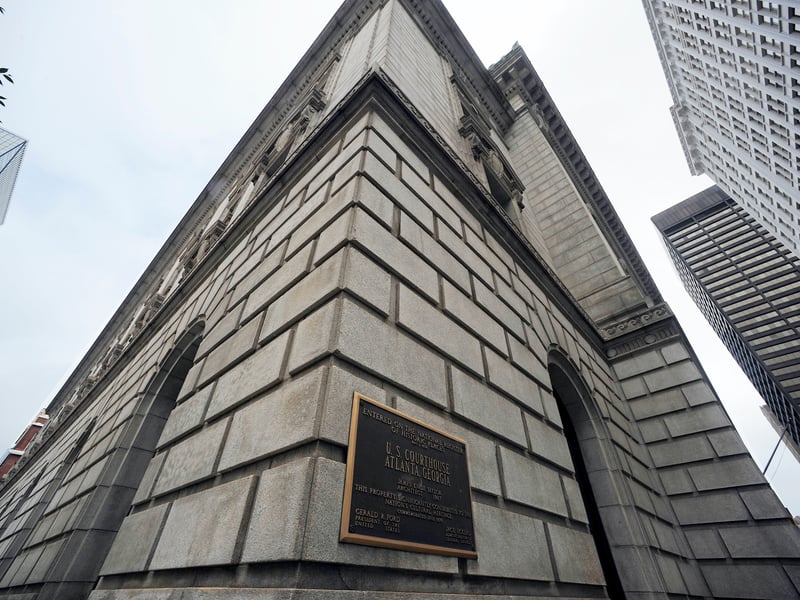
ATLANTA (CN) — Four former high school football players who were allegedly subjected to violent “ritualized” hazing by their teammates asked a panel of the 11th Circuit Court of Appeals on Friday to overturn a lower court’s dismissal of their civil rights lawsuit.
An Alabama federal judge ruledin favor of Davidson High School football coaches and other Mobile, Alabama school officials last year, tossing out the 2018 lawsuit filed by the players and their parents seeking $12 million in damages for violations of their Fourth and Fourteenth Amendment rights.
The students claimed former Davidson High School head football coach Fred Riley, three assistant coaches and school system officials, including former Davidson principal Lewis Copeland and former Mobile County school superintendent Martha Peek, allowed a “custom of hazing” that amounted to excessive corporal punishment.
Arguing on behalf of the students on Friday, attorney Charles Bonner of the Law Offices of Bonner and Bonner asked the three-judge panel of the Atlanta-based appeals court to let a jury hear the case.
Meanwhile an attorney representing the officials urged the panel to uphold the lower court’s decision, arguing that they were unaware of the alleged violent incidents giving rise to the lawsuit until a video of one beating attracted national media attention.
A cell phone video showing an attack on then-14-year-old quarterback Rodney Kim Jr. went viral on social media in 2018. Kim has alleged that he suffered a broken arm after other football players beat him in a locker room.
Several of the players involved in the incident were arrested, charged with assault and suspended from school.
Other players also claimed to have suffered acts of violence by fellow students while coaches failed to intervene.
In one instance, Coach Riley allegedly ate a “nutty buddy” ice cream cone and watched as a group of four players beat then-17-year-old Jeremiah Chatman with belts and fists.
Riley retired as a football coach and teacher in 2018.
U.S. District Judge Terry Moorer ruled that the coaches and school officials were entitled to qualified immunity.
Moorer found there was no evidence that the coaches directed any of the alleged assaults. In the single instance where Riley allegedly used force — an altercation when the coach bumped a student with his stomach — the action did not constitute ’excessive corporal punishment’ rising to the level of ‘conscience-shocking behavior,’" Moorer ruled.
On Friday, Bonner told the panel that the students’ constitutional rights were violated, namely his clients’ “bodily integrity” and right to be free from seizure.
“This is not the same as harassing a bully or having kids taunt each other. This is a ritualized beating," Bonner said, “to be initiated into a football team.”
Bonner argued that teachers who observed the hazing could be held culpable for encouraging the violence. The attorney pointed to an instance when Riley allegedly saw a beating happening and told the students to “knock it off” but then went back into his office while the attack continued.
“The state actors are engaging in omissions,” Bonner said. “The coaches are standing by and watching this conduct.”
But attorney William Montgomery Jr. of Ball Ball Matthews & Novak, who represents the coaches, told the panel that his clients had stepped in and stopped inappropriate behavior in almost every circumstance.
“Where they saw it or knew of it, they stopped it,” Montgomery said.
The panel members, who are all Trump appointees, appeared unconvinced that coaches and teachers encouraged or coerced the violence.
U.S. Circuit Judge Elizabeth Branch questioned how teachers could be held liable for violating students’ right to be free from excessive corporal punishment when fellow students were the ones allegedly inflicting harm.
The panel members also indicated that the hazing, while violent, may not rise to the legal standard of excessive corporal punishment. U.S. Circuit Judge Robert Luck pointed out that even “pretty extreme stuff” like slamming someone to the ground multiple times was not sufficient to meet the “shock the conscience” benchmark.
Bonner told the panel that even though the hazing occurred every year, the school had no anti-hazing policy. He argued that the absence of a policy seemed to show tolerance for the practice.
U.S. District Judge Wendy Berger, who was sitting by designation from the Middle District of Florida, pointed out that policymakers and school officials may not have even been aware that the hazing was happening.
“It’s my understanding that most of this went unreported,” Berger said.
Bonner pushed back, saying it was enough that Riley, who also served as director of the school’s athletic department, allegedly observed the beatings.
Arguing on behalf of the school officials, attorney Kenneth Carbo Jr. of the Atchison Firm said his clients could not fix what they did not know was happening.
But Judge Luck questioned whether, if hazing was allowed to go on for years, it was a “custom or practice” that takes on the force of the law.
“There’s evidence going back to 2005 that this was a regular occurrence. At some point does that not ripen into a custom or practice of the [Mobile County Board of Education]?” Luck asked.
“It can happen 100 times but if the board doesn’t know it’s happening, I don’t think it triggers [liability],” Carbo said.
Bonner told the panel that violence of the kind his clients allegedly experienced will certainly be repeated.
“It’s going to happen again, again and again to our children, to your children unless this court makes it a law that it’s clearly established this conduct violates the Fourth and the Fourteenth Amendments of the Constitution,” Bonner said.
The panel did not indicate when it will make a decision in the case.
 Follow @KaylaGoggin_CNS
Subscribe to our free newsletters
Our weekly newsletter Closing Arguments offers the latest about ongoing trials, major litigation and rulings in courthouses around the U.S. and the world, while the monthly Under the Lights dishes the legal dirt from Hollywood, sports, Big Tech and the arts.