
 Search Articles


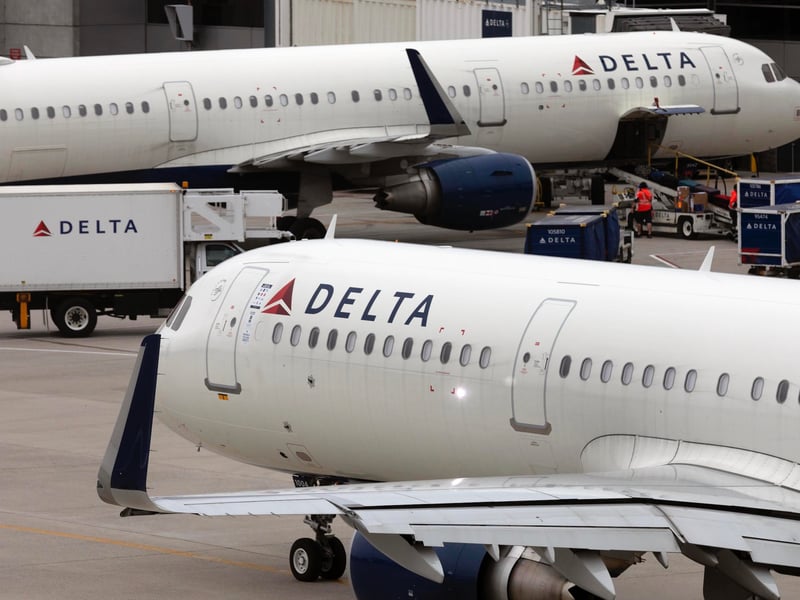
BROOKLYN (CN) — It took jurors less than an hour on Thursday to convict Svetlana Dali, a 57-year-old woman who snuck onto a full Delta Air Lines flight from New York to Paris last year without a boarding pass or passport.
Dali, a permanent U.S. resident from Russia, hid in the lavatory for almost the entire redeye journey from John F. Kennedy International Airport to Charles de Gaulle Airport. Flight attendants checked on her, and after she motioned to express that she was vomiting, offered her water and ginger ale, according to court testimony.
But when the captain announced a turbulent landing, flight attendant Cleomie Meme insisted Dali take a seat. That’s when staff realized she didn’t have one.
“This case is simple: The defendant snuck onto flight 264 so she could fly where she wanted to go. That is a direct quote from her testimony,” Assistant U.S. Attorney Brooke Theodora said during closing arguments Thursday morning.
Indeed, Dali said as much when she took the stand Wednesday in her own defense. “I just walked onto the airplane,” she said through a Russian translator.
Security footage played at the three-day trial shows Dali slip between two groups of passengers, bypassing face scanners on either side of the jetway entrance, to board the plane. That was after she walked straight past a busy staff member to get into a boarding line and went around the TSA passport check podium, according to video evidence and trial testimony.
French law enforcement arrested Dali when the plane landed in Paris. She was returned to the U.S. a week later, and during a two-hour interview with the FBI, clips of which were played in court, admitted she took the flight without a ticket and knew that doing so was against “an administrative law.”
At the gate, she said, “I just took advantage of the moment … I slipped through.”
An FBI witness testified that before the interview, law enforcement read Dali her Miranda rights in English and provided her a written copy in Russian.
Though her statements weren’t allowed into evidence, Dali also told FBI agents that even though France is the “worst country,” she had to leave the U.S. because she believed she was being poisoned and American police refused to protect her.
At trial, defense attorney Michael Schneider focused on Dali’s mindset and JFK airport staff’s failure to detect Dali as she walked through multiple security checkpoints on Nov. 26, 2024 — two days before Thanksgiving.
“I don’t think anybody can say that anybody stopped her,” Schneider said. “This never should have worked.”
Dali evaded airport security twice before the November incident, according to trial testimony. Two days earlier, she entered a secure departures area at Bradley International Airport in Hartford, Connecticut, and in February 2024, she was discovered hiding in a bathroom in a secure zone for international travelers at Miami International Airport, after which she was detained, fingerprinted and released.
Theodora called those “calculated trial runs” in a plan to snag a free flight to Europe. Schneider had another take: “She wasn’t sneaky, she was desperate.”
The Brooklyn Federal Defenders attorney highlighted Dali’s statements to the FBI that were admitted into evidence — reminding jurors that his client sat for the interview after a week in a French jail followed by an eight-hour international flight.
“When you knock, a door will open,” Dali told the agents. “It’s a line from the Bible.”
Schneider told the jury, “She kept knocking; Delta opened the door.”
Dali has been held without bail since Dec. 16, when authorities arrested her in Buffalo after she cut off a GPS ankle monitor and attempted to flee into Canada.
Schneider, who declined to comment on the verdict, asked U.S. District Judge Ann Donnelly, a Barack Obama appointee, to expedite Dali’s sentencing.
The guidelines for a charge of knowingly and intentionally stowing away on an airplane, he noted, will be for zero to six months in prison — the upper end being about as long as the time she’s already served.
 Follow @NinaPullano
Subscribe to our free newsletters
Our weekly newsletter Closing Arguments offers the latest about ongoing trials, major litigation and rulings in courthouses around the U.S. and the world, while the monthly Under the Lights dishes the legal dirt from Hollywood, sports, Big Tech and the arts.