
 Search Articles


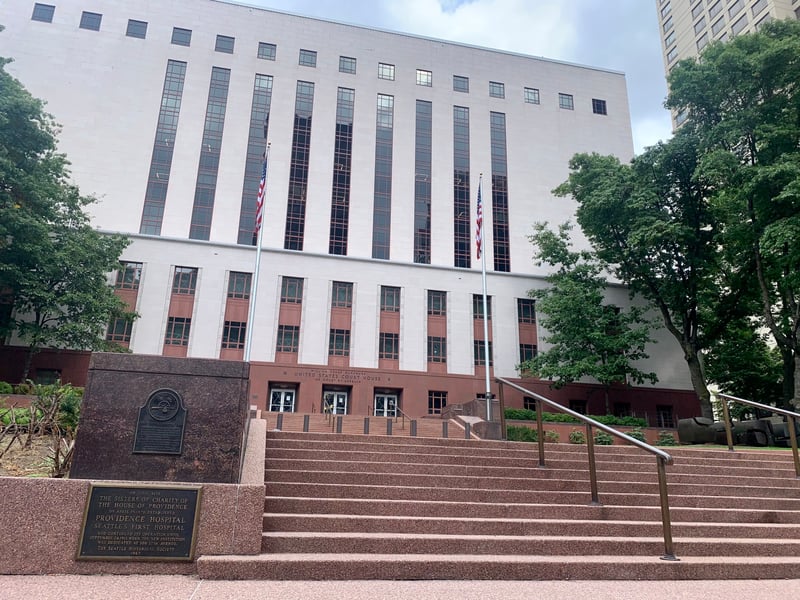
SEATTLE (CN) — A traditional Korean spa that requires nudity and caters only to “biological women” appeared before a three-member panel of the Ninth Circuit on Monday to argue that the state’s antidiscrimination laws shouldn’t prevent it from refusing service to transgender women.
“It is the spa’s position that the women sharing in this cultural and spiritual experience have associational and free exercise rights,” the spa’s counsel, Kevin Snider of the conservative Pacific Justice Institute, said during arguments Monday.
Washington State-based Olympus Spa provides Korean body scrub services, called seshin, which require nudity.
The Christian owners of the traditional Korean spa hold religious convictions that only married men and women should be around each other while unclothed. The spa’s admission policy restricts people with male genitalia from entering the facility.
Under the Washington Law Against Discrimination, places of public accommodation are barred from restricting customers based on their gender identity. But those rules were unfair to the spa and its customers, Snider argued.
Customers of the spa — that is, nude women aged 13 or older — are not “publicly available goods or services that males are entitled to view when females do not consent,” he told the justices. Therefore, he argued, the state’s public accommodation rules shouldn’t apply.
In late 2020, the state’s Human Rights Commission issued a complaint of discrimination after a transgender woman who had not undergone sex-reassignment surgery was denied service at the spa. The spa argued that its nudity requirement was consistent with state laws and codes.
The spa also added new language to its entrance policy, stating on its website that “biological women are welcome.”
Unpersuaded by the spa’s response, the commission determined the spa violated state discrimination laws with its policy and website language. A federal judge dismissed the spa’s ensuing lawsuit in 2023, which accused the commission of violating its religious, associational and free speech rights.
On appeal, the spa argued that the state’s antidiscrimination laws on public accommodations inhibit its constitutional rights.
U.S. Circuit Judge Mary Margaret McKeown, a Bill Clinton appointee, questioned Snider on Monday about the spa’s admittance policy.
“It’s not really ‘biological women are welcome,’” McKeown said. “It means nonbiological women are not welcome. I mean, that’s the reality.”
Snider confirmed that only biological women are allowed in the spa, as are transgender women who have undergone bottom surgery and do not have male genitalia.
“The reason is very practical: There is nudity in the spa. It is required,” Snider said. He also argued that the spa has a right to freedom of association without government interference by maintaining intimate or private relationships.
McKeown questioned Snider about the right to association. She noted that the spa’s policy appears to parallel those that have attempted to restrict customers based on race — policies that have been overturned by courts.
“So, if you have a public accommodation, can you say, ‘No blacks?’" McKeown said. “That’s associational.”
“There is a distinction we believe should be drawn between race and protected classes,” Snider said.
Neal Luna, assistant attorney general, argued that the spa’s services aren’t inherently expressive conduct protected by free speech. By following the spa’s trail of logic, he argued, any business open to the public would be allowed to discriminate against customers.
“Public businesses cannot pick and choose their customers based on a protected class,” Luna said.
Even still, the spa argued that it should receive the same statutory exceptions enjoyed by private clubs, which can be more restrictive with their membership requirements. To this, Luna argued that even if the spa charged for membership, it wouldn’t enjoy the rights afforded to private clubs, which have exclusive membership bases.
“For places of public accommodation, the state’s interest is ensuring everyone has equal and non-discriminatory access to publicly available goods and services,” Luna said.
Luna argued that the relationships between and among the spa, its employees and its customers are not associations protected by the First Amendment.
“The spa is not an intimate association just because some customers are receiving services while unclothed,” Luna said. “Colloquial intimacy is not First Amendment intimacy.”
U.S. Circuit Judge Kenneth Lee, a Donald Trump appointee, brought up his own experience as a child in Korea at a men’s-only spa. He said the Olympus Spa appeared to be in a “gray area in the associational realm.”
“Maybe it’s not like a private club, but on the other hand it’s not a commercial transaction,” Lee said. “There’s something very intimate about the experience.”
Luna argued that the spa’s services fell short of the legal definition of intimate in this context.
“There is a humiliation harm [and] there is a loss of dignity harm that the state has an interest in protecting,” Luna said.
The panel did not indicate when it would rule.
Subscribe to our free newsletters
Our weekly newsletter Closing Arguments offers the latest about ongoing trials, major litigation and rulings in courthouses around the U.S. and the world, while the monthly Under the Lights dishes the legal dirt from Hollywood, sports, Big Tech and the arts.