
 Search Articles


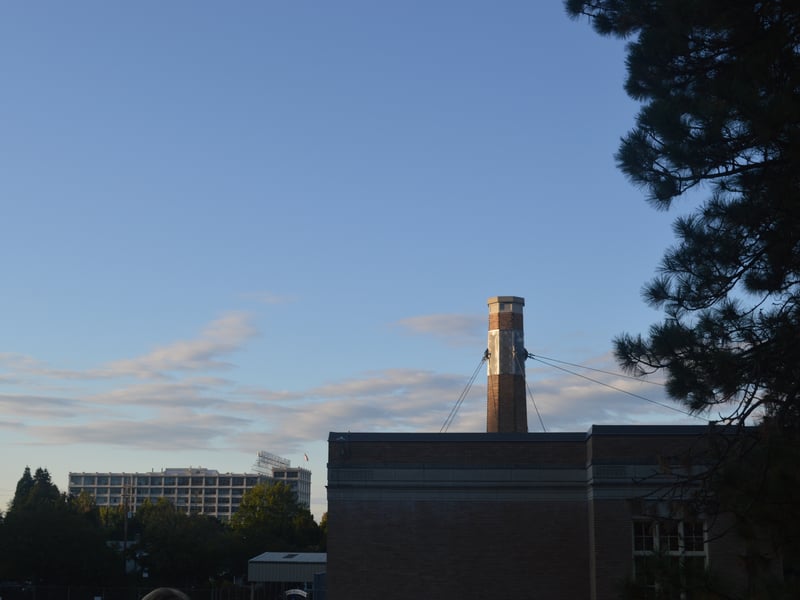
PORTLAND, Ore. (CN) — The tiny birds gather above the chimney as dusk approaches, flying in erratic, twisting swoops.
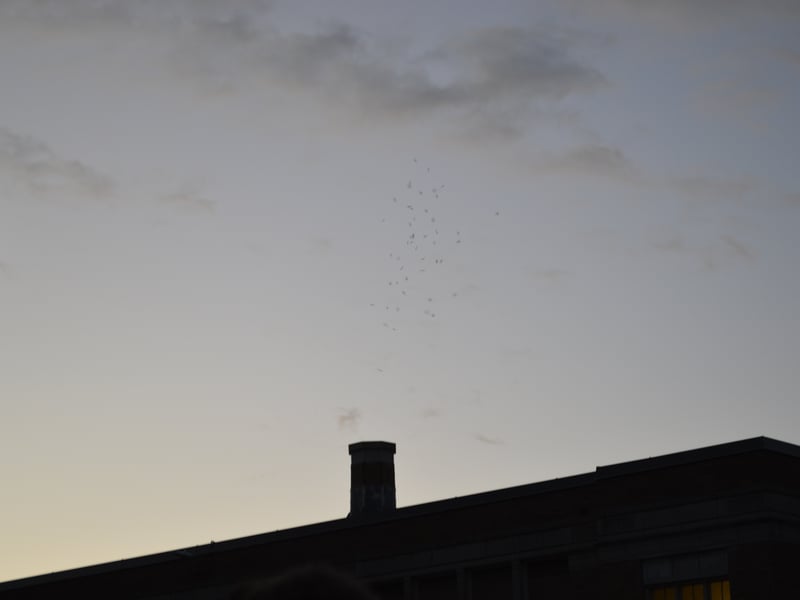
More birds join, growing the group to thousands. They circle the chimney, finding rhythm together, taking unpredictable dives before soaring back into the air.
Then, suddenly as it began, the show seems to be over — but that’s not quite the end of their performance. The Vaux’s swifts take their final plunge, plummeting into the chimney for the night. Curtain call, roll credits, end scene.
Such is the hive-like dance of the Vaux’s Swift. The miniature birds breed in the Pacific Northwest in the summertime, raising their fledglings for a cross-continental journey that they complete each year. When fall comes, adult and newborn fledglings head south for Central and South America, spending winter near the warm equator before preparing to begin the journey north again in the spring.
As humans have colonized these swifts’ migratory paths, removing a substantial amount of the Pacific Northwest’s ancient forests, these birds have been forced to change with the times. Now, instead of making homes in dead, hollowed-out trees in Oregon and Washington, they typically sleep in chimneys, from large smokestacks to smaller home ones.
One of their favorite stops has been the chimney at Chapman Elementary in Portland, Oregon, where for decades, thousands of these birds have roosted each September.
Such was the case, at least, until this year — when the number of these special birds at Chapman Elementary seemed to dwindle, then just disappear. “To have them not use that chimney and switch to using other chimneys more locally is just kind of baffling for us,” said Joe Liebezeit, assistant director of statewide conservation at the Bird Alliance of Oregon.
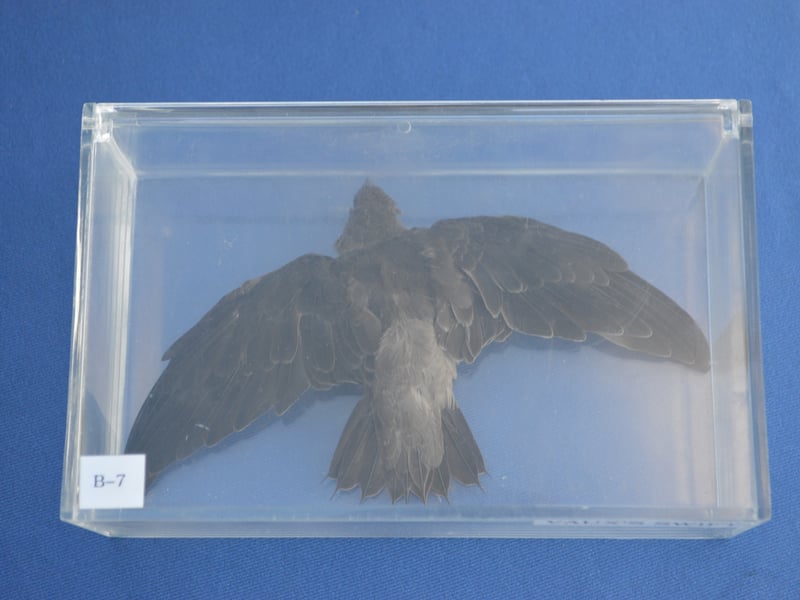
But more about the swift. Even though they spend most of their lives flying, these little birds, just four to five inches in length, can’t make the trip in one go.
Instead, they eat in flight, mate in flight, do pretty much everything while in flight. Technically, they can even sleep in flight — but only for three or four seconds at a time. Of course, a bit more rest than that is needed to recharge for a grueling journey across the Americas.
And so the Vaux’s Swifts find places along the way. “When they’re migrating, which is what these swifts are doing, they nest in huge groups,” said Emily Pinkowitz, the Bird Alliance of Oregon’s Director of Education at the Bird Alliance of Oregon.
“When they sleep, they need the hollow of an old-growth tree,” she added. “That’s their natural habitat.” But they can adapt to other habitats: for example, when the forests and valleys of Oregon’s Willamette River Valley are replaced with the neighborhoods and industrial districts of modern day Portland.
Roosting by Vaux’s swifts has been documented at Chapman Elementary since the 1980s. The chimney was the world’s largest known roost for them, according to the Bird Alliance of Oregon.
In previous years, in a single night, as many as 30,000 Vaux’s swifts have been documented using the chimney. Around dusk, thousands of people gathered in the schoolyard to observe the show.
“You’ll see them flying around, catching insects,” Liebezeit said. “Then, there’s this moment when it snaps into place and they all dive into the chimney.”
“We often see them do some tentative swoops, where they go down and come back up again,” he said. “At a certain point, something just clicks into place. They decide it’s time, and they all dive in together.”
Scientists have no idea who the so-called “head” swift is, which one leads their gorgeous evening dance or decides when it ends. The birds constantly switch who is leading the flock, seeming to have one collective consciousness as they dive and pirouette in the skies.
The performance is occasionally disrupted by a hawk waiting nearby, scoping out dinner. Unsurprisingly, though, Vaux’s swifts are expert aerialists and aren’t so easy to catch.
To track the numbers of these incredible birds, the Bird Alliance of Oregon has been running theSwift Count Community Science Project since 2009. The nonprofit positions volunteers at Chapman Elementary and near other popular Portland chimneys, training them to count the swifts as they dive in for the night.
Some volunteers are incredibly skilled, with the ability to count thousands of swifts at a time. This work helps researchers keep tabs on population levels and monitor their migration patterns.
From 2009 to 2023, the average peak number of Vaux’s swifts at Chapman was around 7,000, according to data released by the Bird Alliance of Oregon. And yet this year’s number hit a heartbreaking minimum: a peak of 5,430 on Sept. 4.
More troublingly still, that’s incredibly early in the Vaux’s Swift season, which typically runs until October. This year, the swift count was at zero on Sept. 18. Volunteers stuck around at Chapman Elementary for a few days after, but they never saw any more.
All of that, researchers say, tells a sad story about habitat loss. “There isn’t this size chimney everywhere along the way, all the way to Central America,”Pinkowitz said in an interview outside Chapman, gesturing to the chimney behind her. These birds “need old-growth trees and they need old-growth forests — and yet over time, habitat like that “is lost more and more and more.”
But that doesn’t mean hope is lost altogether. Vaux’s swifts can still be found roosting in big groups at a wide variety of locations across the Portland region, including at an old high school in Oregon City and an auto body shop in northeast Portland.
Sometimes, Pinkowitz explained, groups of swifts will move from Chapman to a new location because they find the chimney too crowded. Early in the 2024 season, around 400 swifts abandoned the chimney because of an overbearing hawk. Rain can also disrupt roosting patterns, even keeping the birds from performing their regular evening flights.
Even still, the sudden, complete disappearance of the Vaux’s swifts from Chapman so early in the season does concern avian experts like Liebezeit.
“There have been more regionwide surveys of them, and over the years, the numbers have declined. It’s not enough to warrant listing them under the Endangered Species Act, but they’re certainly a bird of concern,” Liebezeit said. “Any time you see something change, like what’s happened at Chapman, it definitely makes us concerned. That’s why we want to look and investigate more on what might be happening.”
So, what might be happening? The Bird Alliance of Oregon still isn’t sure. It’s not the people who come to observe the evening dance that scared the birds away. After all, thousands of people have been gathering in steady numbers here for decades.
It’s not the weather: Portland didn’t see an overly rainy September. It could be the predators, as higher levels of Cooper’s hawks, peregrine falcons and American crows were counted around the chimney this year, but those predators are typically there every year.
Maybe the swifts just moved on. As Liebezeit explained, it’s not unheard of for swifts to use certain chimneys for a few years and then pick a new chimney to roost in. He noted that there definitely is higher swift activity in new areas this year. Nonetheless, in the 40 years swifts have been known to roost at Chapman, Portland has never seen an event like this. Perhaps more clues will come in September in 2025, when the Bird Alliance of Oregon will be back investigating — and hopefully, counting more flocks of these elegant birds as they perform their evening flights.
Subscribe to our free newsletters
Our weekly newsletter Closing Arguments offers the latest about ongoing trials, major litigation and rulings in courthouses around the U.S. and the world, while the monthly Under the Lights dishes the legal dirt from Hollywood, sports, Big Tech and the arts.