
 Search Articles


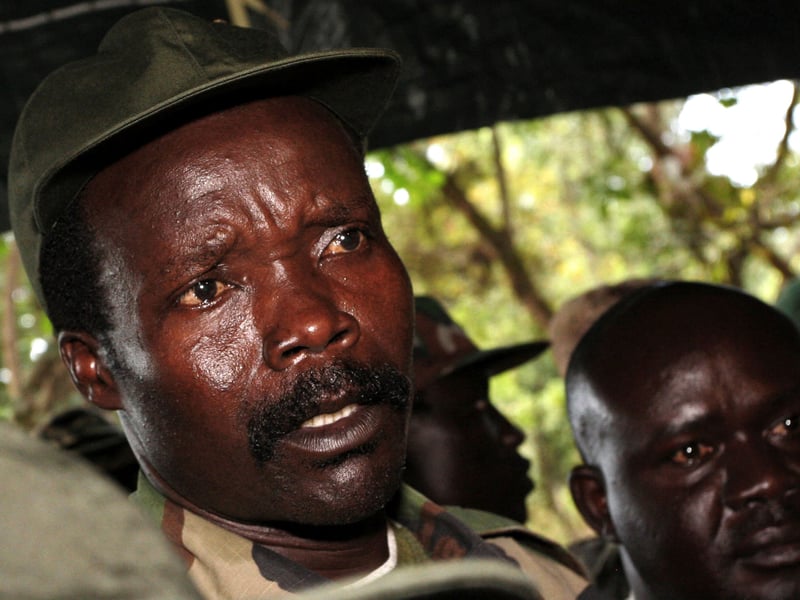
THE HAGUE, Netherlands (CN) — Nearly two decades after the International Criminal Court first issued an arrest warrant for Joseph Kony, judges in The Hague on Thursday confirmed all 39 charges of war crimes and crimes against humanity against the warlord, marking a historic step even as he remains at large.
Judges with the ICC’s Pre-Trial Chamber III said there are “substantial grounds to believe that Mr. Kony is criminally responsible for the crimes charged” in northern Uganda between 2002 and 2005, namely war crimes and crimes against humanity.
They also turned down a defense request to pause the case, finding no reason to delay. It’s the first time the court has confirmed charges in a suspect’s absence, formally sending the case toward trial — if Kony is ever caught.
The confirmation follows a three-day hearing in September, where prosecutors and victims’ lawyers presented their evidence and witness stories without Kony in the room — an unusual step that set the stage for Thursday’s decision.
Kony, a self-proclaimed prophet and founder of the Lord’s Resistance Army, led one of Africa’s most brutal insurgencies. Emerging from northern Uganda’s Acholi region in the late 1980s, his movement mixed Christian mysticism with political rebellion against President Yoweri Museveni’s government.
When Museveni took power in 1986, his southern-based army ousted the northern officers who had long held sway in Uganda’s military and politics. In the years that followed, many in the Acholi region felt pushed aside and punished, as government crackdowns and neglect deepened resentment in the north. Kony tapped into that frustration, framing his rebellion as both a spiritual mission and a fight to defend a community that felt forgotten.
Over the next 20 years, his fighters swept through Uganda, South Sudan, Congo and the Central African Republic, burning villages, killing civilians and looting communities while abducting tens of thousands of children — boys forced to fight and girls forced to become “wives.”
ICC’s decision now confirms the full scope of that violence, finding reasonable ground for Kony to stand trial over a campaign of murder, torture, rape and enslavement carried out under his command. Judges said he orchestrated attacks on schools and camps for displaced families and used abductions as a deliberate tool of war. They said he also oversaw the systematic use of child soldiers and the abuse of women and girls forced into marriage or pregnancy.
Years of investigations and witness testimony underpinned the decision, detailing how they said Kony’s forces systematically targeted civilians they viewed as government supporters. As one protected witness recalled, “I saw children younger than me being trained to shoot with weapons. I knew they were so young because the muzzles of their AK-47 rifles dragged on the ground when they carried them on their shoulders.”
The campaign of abductions and terror forced more than a million people into displacement camps at the height of the conflict. Survivors have long waited for justice since the first ICC warrants in 2005, which also named four of his top commanders — all now dead except for Dominic Ongwen, who was convicted in 2021.
Because Kony is still on the lam, the case can’t move to a full trial. ICC rules require defendants appear in person, so for now, the process is on hold. The court said this stage is about keeping the case alive, preserving evidence and making sure everything is ready to go the moment Kony is finally brought in.
Though largely symbolic for now, the decision marks an important moment in Uganda’s long fight for justice. Nearly 20 years after the war’s height, northern communities still live with the aftermath of violence, from shattered towns and lost livelihoods to deep psychological scars left by years of fear and displacement.
If Kony is ever captured, he’ll face one of the ICC’s most sweeping indictments yet, covering crimes against humanity like murder, enslavement, rape, forced marriage and persecution, as well as war crimes including torture, sexual slavery, pillaging and the use of child soldiers. The case, however, will remain on hold until he is apprehended, at which point judges will assign it to a trial chamber for full proceedings.
Courthouse News reporter Eunseo Hong is based in the Netherlands.
Subscribe to our free newsletters
Our weekly newsletter Closing Arguments offers the latest about ongoing trials, major litigation and rulings in courthouses around the U.S. and the world, while the monthly Under the Lights dishes the legal dirt from Hollywood, sports, Big Tech and the arts.