
 Search Articles


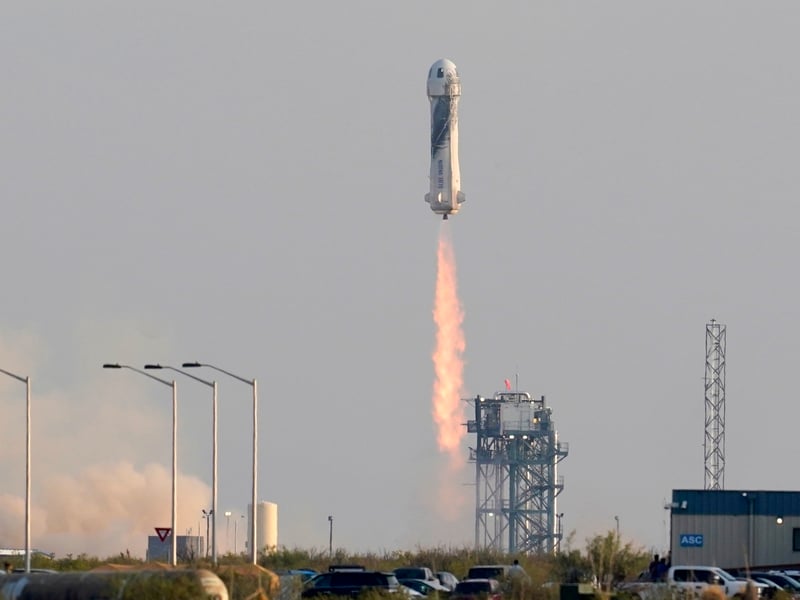
WASHINGTON (CN) — With the federal government potentially just months away from issuing its first-ever regulations for commercial spaceflight, executives from some of the country’s largest space travel companies told lawmakers Wednesday that Washington should take its time developing standards for the still-growing industry.
As it stands, privately owned space vehicles, such as those operated by companies, aren’t subject to federal safety regulations. This was a deliberate act from the government, which in 2004 instituted a moratorium on new regulations for commercial space travel, known in the industry as a learning period. Under that pause the Federal Aviation Administration, the government’s aerospace authority, could issue regulations only to protect public safety or respond to an incident.
Once the moratorium elapses, however, the FAA will be responsible for determining how the government should regulate the country’s fast-growing private space sector, which has ferried dozens of people beyond Earth’s atmosphere in recent years.
The temporary halt on private spaceflight regulations was extended in 2015 and was set to expire Oct. 1, but a stopgap budget bill negotiated by Congress late last month extended the moratorium through the beginning of 2024.
Despite that extra time, officials from major commercial spaceflight firms told the Senate Commerce, Science and Transportation Committee during a hearing Wednesday that the moratorium should be extended even further.
Sirisha Bandla, vice president of government affairs and research at Virgin Galactic, recalled that the delay was initiated because “it is impossible for regulators to create effective regulations for diverse, innovative vehicles without sufficient data.”
“The rationale was that FAA regulatory burdens on a relatively new and rapidly evolving industry could slow innovation,” Bandla said, “and that’s still true today.”
Since the government’s moratorium went into effect, the commercial space industry has developed slower than expected, she explained, thanks in part to technical and economic hurdles and also “the industry’s emphasis on safety above all.”
Bandla proposed an extension to the moratorium that would serve as more of a transition period, allowing the government and the private sector to fully flesh out what the new regulatory environment could look like.
“We take this time to get industry and government stakeholders together to look at what that blueprint is,” she told Arizona Senator Kyrsten Sinema. “That could include milestones, such as looking at safety standards, how safety standards are working and what standards are being developed in the industry.”
Bandla added that she believed such an extension should be to the tune of around eight years.
Phil Joyce, senior vice president of spaceflight company Blue Origin’s New Shepard reusable launch vehicle program, concurred, saying the FAA “should be encouraged to talk to industry, build consensus and scale up its licensing capabilities.”
Continued launches from New Shepard and other private spaceflight endeavors will provide the agency with data it needs to draw up new regulations, Joyce said.
Missouri Republican Eric Schmitt observed that the FAA’s learning period “has afforded us the robust commercial spaceflight industry we have here today.”
“It’s important that the learning period be extended to provide both industry and the FAA enough time and data to establish an appropriate off ramp to a more permanent framework for the commercial space industry,” he said.
Sinema, who chairs the transportation committee’s space and science subpanel, expressed concern about extending the regulatory moratorium given the slow pace of development in the private sector. She pointed out that the first commercial spaceflight carrying human passengers took place more than a decade after the moratorium went into effect.
“Lack of flight data and widely diverse operations have made it difficult to find consensus on workable, industry-wide passenger safety standards during the learning period,” Sinema said. “I’m not sure that the industry can reach this kind of scalability fast enough if we just extend the learning period without thinking through changes.”
When it comes time for the government to begin regulating commercial spaceflight, witnesses at Wednesday’s hearing said such standards should be streamlined, and should ensure safety without stifling innovation.
Wayne Monteith, president of aerospace contractor National Aerospace Solutions, pointed to FAA regulations published in 2020 governing spacecraft launch and reentry, which he said were “envisioned to enhance safety and have a lighter regulatory touch,” but that some in the industry still felt the guidelines were too restrictive.
“I remain concerned this continued growth will be negatively impacted by an overly burdensome or inefficient regulatory construct,” Monteith said, “or a very public catastrophic event involving humans.”
Developing commercial spaceflight regulations with a risk-averse mindset could hamper innovation and threaten U.S. leadership in the industry, he opined. Any changes should be considered with input from a breadth of federal agencies and industry stakeholders, Monteith added.
Joyce said Congress should lend its full support to the FAA, which he worried is struggling to keep pace with development in the industry. “Streamlined processes will help, but the FAA needs more funding to deal with the increase in launches.”
Texas Senator Ted Cruz said that the government should stake out a clear position on what aspects of commercial space travel it wants to regulate.
“On most policy issues, my philosophy is quite clear: get government out of the way to the greatest extent possible and let the private sector roar,” Cruz said. “But, to accommodate this growth and to enable future potential, the regulatory framework must be clearly defined, allow for innovation and be accountable for the actions it does or does not take.”
Blue Origin, Virgin Galactic and Elon Musk’s SpaceX form the three largest spaceflight companies operating in the U.S. The firms have, combined, sent roughly 64 people into space — largely wealthy space tourists and celebrities.
 Follow @BenjaminSWeiss
Subscribe to our free newsletters
Our weekly newsletter Closing Arguments offers the latest about ongoing trials, major litigation and rulings in courthouses around the U.S. and the world, while the monthly Under the Lights dishes the legal dirt from Hollywood, sports, Big Tech and the arts.