
 Search Articles


MANHATTAN (CN) — By this time last year, more than 20 million plane and cruise ship passengers had submitted to the U.S. government’s facial-recognition software. As to how that information is processed or retained, however, the records are not public.
Asking a federal judge to change that, the ACLU filed suit Thursday to compel action on a Freedom of Information Act request it filed two months earlier.
Represented by ACLU attorney Ashley Gorski, the group contends that the public lacks “essential information” about what kind of policymaking decisions Customs and Border Protection has made concerning facial surveillance.
“It also lacks essential information about CBP’s and TSA’s plans to expand facial recognition technology at airports and the border; how photographs or ‘face prints’ obtained by CBP or TSA will be accessed by airports, airlines, and commercial vendors, as well as federal, state, and local authorities; and how ineffective, discriminatory, and costly this facial recognition technology may be,” the complaint continues.
In addition to the facial-recognition work that CBP and the Transportation Security Administration have been carrying out for years, the ACLU notes that it is also concerned about the Department of Homeland Security’s collection of biometric data from noncitizens entering or exiting the U.S.
U.S. citizens are supposed to be able to opt out, but Homeland Security nevertheless revealed late last year that it was working on a rule to mandate facial surveillance at entry points for everyone, citizen or not.
Public backlash to the news was instantaneous. Though Homeland Security quickly shelved the plan, the ACLU says the lack of any explanation for the reversal means that the government could always revisit mandatory facial surveillance in the future.
Meanwhile, for those who cannot opt out, the ACLU says face surveillance gives “the Trump administration yet another tool for targeting, harassing, and violating the rights of noncitizens.”
“We should also be concerned about mission creep,” the group said in a statement Thursday. “If this technology is normalized at the airport, it’s only a matter of time before the government cites its use at airports as a basis for deploying it elsewhere.”
A spokesman for Immigration and Customs Enforcement declined to comment on the suit but did note that facial-recognition technology is not routine at civil immigration enforcement. ICE’s primary use of the technology is done by its special agents at Homeland Security Investigations for cases involving child exploitation and human trafficking, he said.
“HSI’s work to combat online child sexual exploitation and human trafficking has been widely recognized by law enforcement agencies around the world, and facial recognition technology is critical to identifying the perpetrators of these crimes,” the spokesman said Thursday.
The ACLU says transparency is key.
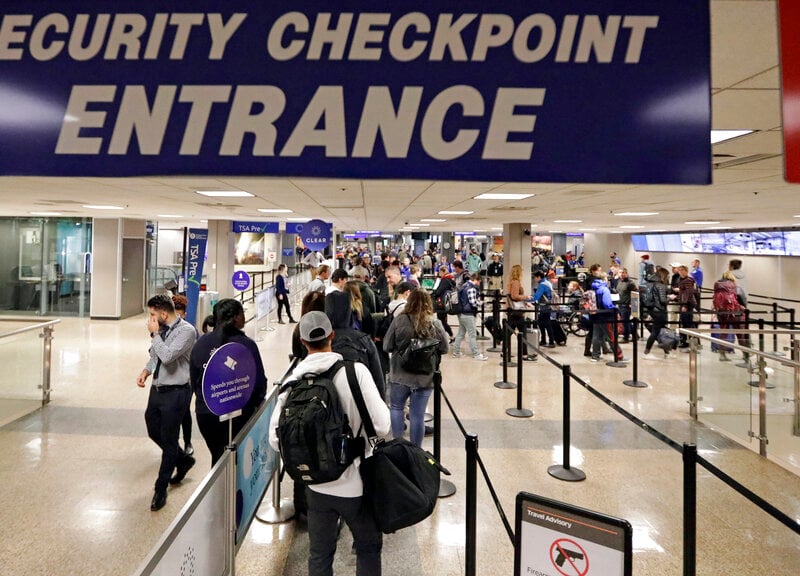
Biometric facial recognition technology is already implemented at more than two dozen U.S. airports to screen passengers through CBP’s Traveler Verification Service. Some airlines, including Delta and JetBlue, even promote the technology as a convenience for passengers who no longer need to show boarding passes and identification.
The ACLU seeks several categories of documents pertaining to the use of facial recognition at airports and the border, including government contracts with airlines, airports, and other entities concerning Traveler Verification Service; policies and procedures concerning the acquisition, processing, retention, and dissemination of data acquired through Traveler Verification Service analyses of the effectiveness of facial recognition technology; records concerning TSA’s plans to apply facial recognition technology to domestic travelers; and final reports concerning the cost of implementation of Traveler Verification Service for individuals entering and exiting the U. S.
Though Homeland Security, TSA, ICE, and Customs and Border Protection have acknowledged receipt of the ACLU’s Jan. 9 request, none have produced any responsive records.
 Follow @jruss_jruss
Subscribe to our free newsletters
Our weekly newsletter Closing Arguments offers the latest about ongoing trials, major litigation and rulings in courthouses around the U.S. and the world, while the monthly Under the Lights dishes the legal dirt from Hollywood, sports, Big Tech and the arts.