
 Search Articles


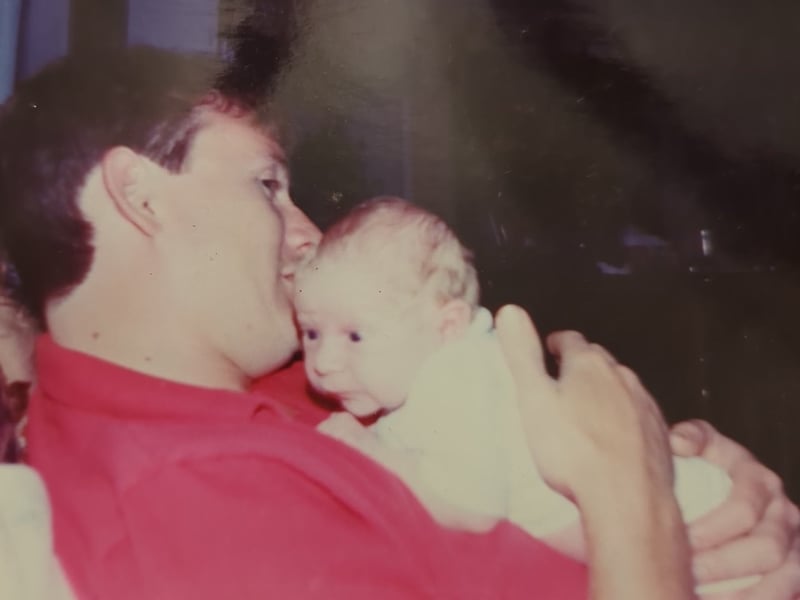
(CN) — In 1999, 12-year-old Alyssa Medlin told a Louisiana jury a horrific story. For three years, she said, her mother’s boyfriend John Kinsel had sexually abused her.
Her own mother thought she was lying. She, Medlin’s aunt and Medlin’s grandfather all testified they’d never seen Kinsel behave inappropriately toward her. There was no clear physical evidence, and according to the testimony of one of Medlin’s friends, Medlin said she accused Kinsel because she didn’t like him and didn’t think her mother was happy.
But 10 out of 12 jurors believed the young girl — and in Louisiana in the 1990s, that was good enough. The court found Kinsel guilty of aggravated rape and sentenced him to life without parole.
Seven years later, at a 2006 post-conviction hearing for Kinsel, a then 19-year-old Medlin told a very different story.
Kinsel had never raped her, she said. Medlin said that at 12 years old, she hadn’t fully understood the seriousness of her allegations. Now an adult, she said she was coming forward to get an innocent man out of prison.
Nearly 20 years after Medlin’s recantation, Kinsel remains behind bars, trapped in the Byzantine maze of Louisiana’s post-conviction system.
In the process, he’s become yet another example of the way the U.S. justice system can keep prisoners locked up even as the original cases against them draw scrutiny.
Now, Kinsel may finally be getting a chance at freedom. In 2022, he filed his fifth petition for post-conviction relief.
Last year, Jefferson Parish Judge Donald Foret ruled Kinsel had presented new evidence to support his claims of innocence. He ordered an evidentiary hearing. After multiple appeals by the state, the Louisiana Supreme Court in February declined to overturn Foret’s decision. A hearing in the case is set for Monday, Sept. 8.
Kinsel is currently represented by Justin Bonus. A New York attorney, Bonus made headlines for helping to free Vincent Simmons, a Black man who spent more than 40 years in a Louisiana prison before a judge determined he hadn’t received a fair trial.
“It was a big win,” Bonus said of the state Supreme Court decision in Kinsel’s case. “A lot of people, I think, thought that this wasn’t going to go that way.”
Prosecutors have consistently fought against Kinsel’s release.
After Medlin recanted in 2006, Jefferson Parish Judge Charles Cusimano ordered a new trial for Kinsel, finding he couldn’t have been convicted without her testimony. The state appealed the decision to the Louisiana Fifth Circuit Court of Appeal, where a panel of judges reversed 2-1.
Under state law at the time, Kinsel needed to prove his constitutional rights had been violated in order to get a new trial. Kinsel argued Medlin’s false testimony violated his right to due process — but because he couldn’t prove prosecutors knowingly used false testimony, the panel said his conviction wasn’t unconstitutional.
Kinsel filed for habeas relief in federal court.
He found none there, either. Because his petition was filed after 1996, the case was governed by the Anti-Terrorism and Effective Death Penalty Act, a federal law passed in the wake of the Oklahoma City bombing that restricts prisoner habeas petitions.
“It is beyond regrettable that a possibly innocent man will not receive a new trial in the face of the preposterously unreliable testimony,” Senior U.S. Circuit Judge Jacques Wiener wrote for a Fifth Circuit panel. “But, our hands are tied by the AEDPA.”
Kinsel got another chance to fight his incarceration after Louisiana passed a factual innocence law in 2021. Such laws allow prisoners to challenge their convictions based on evidence that wasn’t available at the time of trial.
Medlin’s recantation still isn’t enough: Under the law, prisoners must present new nontestimonial evidence, such as scientific or forensic findings.
Even so, Bonus thinks he can meet the evidentiary bar. He cites expert reports stating that Medlin was asked leading questions during a forensic interview and that a sexual assault exam didn’t find evidence of the physical trauma expected for the type of abuse she alleged. Medlin had claimed that Kinsel repeatedly raped and sodomized her.
A defense expert planned to raise the latter point at Kinsel’s original trial. After the state requested a continuance, Kinsel’s family couldn’t afford to pay the expert to come back another day, Bonus said.
“So, John isn’t able to call his own doctor,” Bonus said. “It doesn’t make any sense.”
Perhaps worst of all, Bonus argues Medlin tried to recant before Kinsel’s conviction but that the prosecution forced her to testify even after she tried to back out. If true — and if Bonus can prove it — it would be a clear violation of Kinsel’s constitutional rights.
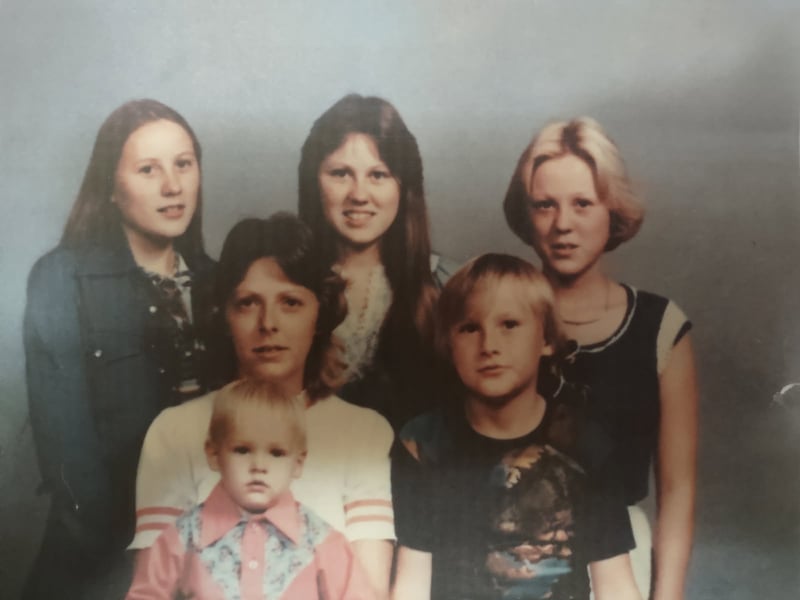
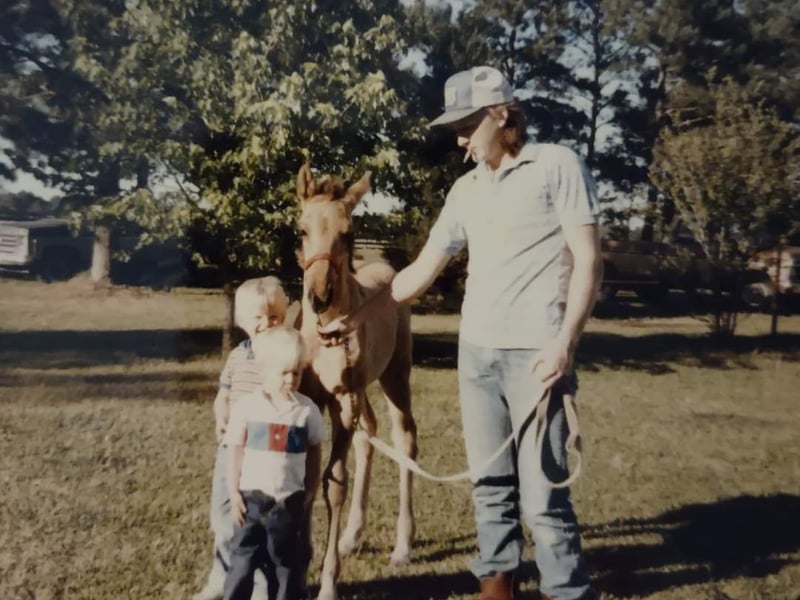
Kinsel grew up in the tiny town of Trinity, Texas, 90 miles north of Houston.
The youngest of seven siblings, he had a rough childhood. His father took his own life when Kinsel was eight. A year later, his mother died from breast cancer. He bounced between various relatives, including his then 18-year-old sister Mary, who said she became “his mother as well as his sister.”
As a young adult, John Kinsel moved to Louisiana.
He met Adrienne Alberts, who worked at a bar where he was a regular. She was raising three kids, including Alyssa Medlin.
“I was 28, and he was only 23,” Alberts recalled. “I didn’t know it until months and months later.”
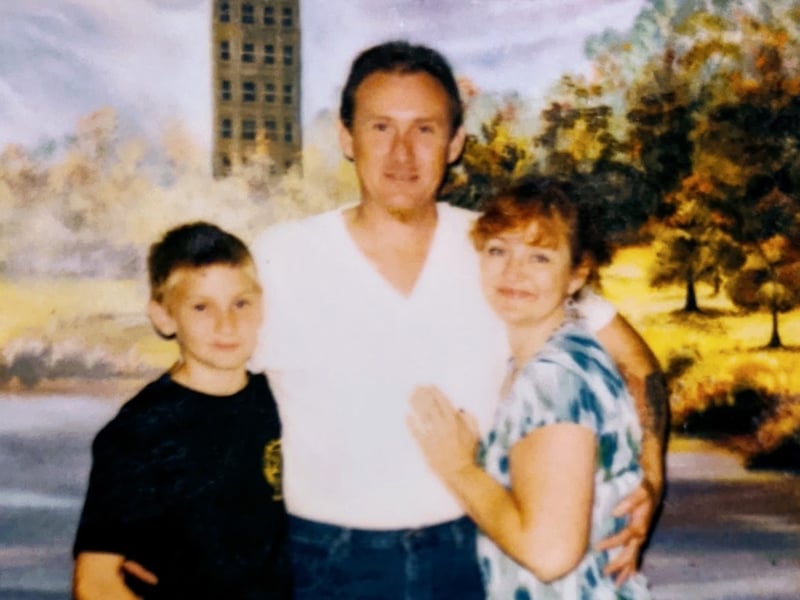
Alberts and Kinsel started dating. They moved to Gretna, a suburb of New Orleans, and had a son together.
The relationship was volatile: Kinsel did drugs, and the couple frequently fought. Kinsel went to rehab but ended up relapsing.
Looking back, Alberts said she now sees Kinsel’s drug abuse through the lens of childhood trauma.
“There were things that John never talked about,” she said. “He would say something sometimes and then cut it off.”
The Louisiana Department of Corrections denied a request by Courthouse News to interview Kinsel. Through Alberts, he declined to answer questions in writing, citing fears of retaliation by prison officials.
When their son was 15 months old, Alberts broke up with Kinsel. He went back to Texas to stay with his sister Janet, who was dying of cancer.
Over the next several months, Alberts says Kinsel repeatedly tried to get back together.
“One minute, he would call and say he’d go to rehab,” she said. “The next minute he would call and tell me, you know, ‘I don’t have a problem, you do.’” Alberts had no interest in reviving the relationship. “It was just crazy,” she said. “I was not going back to that life.”

Around the summer of 1996, Alberts said she applied for a restraining order after Kinsel threatened her while high.
It was during this time that 9-year-old Alyssa Medlin alleged to her mother that Kinsel had sexually abused her. Alberts was skeptical. In an interview, she said Medlin’s behavior didn’t line up with other people she knew who were molested. One of Medlin’s friends had a sister who’d also made similar allegations of abuse against her own stepfather. Alberts decided to wait and see if her daughter said anything else about it.
Soon, though, the issue was taken out of her hands.
When Medlin went back to school in the fall, she told a counselor Kinsel had abused her. The school called law enforcement, and Kinsel was charged with aggravated rape.
Although Alberts had serious doubts about her daughter’s story, she claims authorities threatened to take her children away if she talked with Medlin about her accusation.
“We didn’t talk about it at home,” she told Courthouse News. “Anything that was said was construed as we were trying to flip her story [or] were trying to coerce her. So, everybody just stopped.”
It’s not unheard of for prosecutors to limit communications with child witnesses. Still, to Kinsel’s defenders, it’s one of a multitude of factors that led to an innocent man being locked up for life.
Likewise, it’s not unheard of for child sex abuse victims to recant even when the abuse really did occur. Prosecutors have argued in court that Medlin only recanted to get back in her family’s good graces. A spokesperson for the Jefferson Parish District Attorney’s office declined to comment specifically on Kinsel’s case, saying they don’t comment on open cases.
And yet since at least 2005, Medlin has repeatedly insisted Kinsel never abused her.
In an interview with Courthouse News, she vigorously denied prosecutors’ arguments for why she recanted.
“I could give two fucks less if my family likes me or not,” she said. Besides, “our relationships have never been estranged because of what happened with John.”
Kinsel has always maintained he didn’t abuse Alyssa Medlin. On house arrest before his trial, he felt sure his innocence would be vindicated in court, his sister Mary told Courthouse News.
“I believe in the judicial system,” she recalled him saying. “They can’t sentence an innocent man.”
John Kinsel’s first trial ended in a mistrial. The second almost resulted in a hung jury. Jurors initially split 9-3, one vote short of what was needed for a conviction.
Judge Kernan Hand polled jurors a second time. One juror flipped to guilty. “I cried like a baby,” Alberts said. Kinsel was just 30 years old.
At the time, Louisiana was one of only two states where defendants could be convicted by nonunanimous juries.
The state began requiring unanimous verdicts in 2018. The U.S. Supreme Court ruled in Ramos v. Louisiana in 2020 that nonunanimous verdicts were unconstitutional, but Louisiana’s high court decided the decision didn’t apply retroactively. A proposed bill, which would have allowed prisoners convicted by nonunanimous juries to challenge their convictions, died in the state Senate 9-26 earlier this year.
Although Kinsel is white, experts say Louisiana’s allowance of nonunanimous convictions comes from Jim Crow-era efforts to deny Black people equal citizenship.
“The presumption was a Black person is not going to convict another Black person,” explained Angela Allen-Bell, a law professor at Southern University Law Center in Baton Rouge, Louisiana, who has extensively researched nonunanimous juries.
Using voter registration records, Louisiana officials were able to estimate what proportion of a typical jury might be Black — and therefore, what rules would be needed to dilute their vote. They decided on a ratio of 9-out-of-12, which became 10-out-of-12 in 1974.
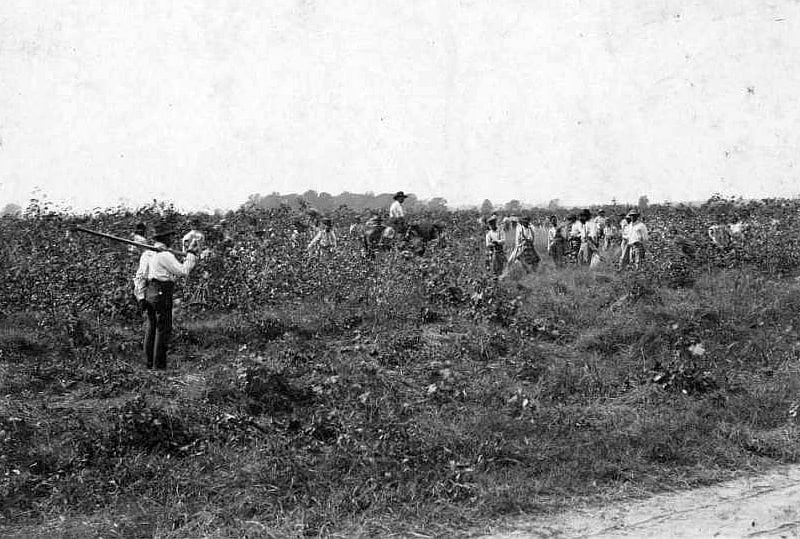
In that way, Louisiana was able to maintain a steady supply of mostly Black convicts.
Although slavery had been abolished, they could still provide labor for the state. The state’s largest prison — the Louisiana State Penitentiary, better known as Angola — was built on the grounds of a former slave plantation. To this day, it still operates as a working farm, where prisoners harvest cotton and other crops.
After Kinsel’s conviction, Alberts moved her family to a small town in Colorado “where no one knew my business.”
She told their son Kinsel died in an accident. He was 12 or 13 when he learned the truth.
“He’s had a lot of anger at me because I lied,” Alberts said, but “he understands why I told a lie. I wanted him to have a childhood. I felt like after everything, he deserved a childhood free of the finger-pointing.”
For years, Alberts says she and Medlin didn’t talk about the accusation.
One day, when Medlin was 18, they got into an argument. The conversation turned to Kinsel. “My thing was,” Alberts recalled, “you’re just going about your merry little way like there’s nothing wrong, and this man is in prison.”
Medlin called Kinsel’s attorney and said she wanted to recant her testimony.
Mary Kinsel remembers her brother’s reaction when Medlin recanted in court.
“He looked at me and said, ‘See Mary, I told you I didn’t do this,’” she said. “I just started crying.”
Even as Medlin went under oath again to say Kinsel was innocent, her shifting story proved a problem for the defense.
“Recantation evidence is always viewed with a healthy dose of skepticism,” explained Daniel Medwed, a law professor at Northeastern University who isn’t connected to the case. “A lot of courts are saying, ‘If someone is swearing under oath and then later saying they lied under oath, how do we know that they’re telling the truth now?’”
At the 2006 hearing where she recanted, Medlin claimed she hadn’t intentionally lied about Kinsel abusing her.

Instead, she said she’d confused Kinsel with another man. The Louisiana Fifth Circuit Court of Appeal was skeptical, calling her post-conviction testimony “unreliable and inconsistent.”
Even as he granted Kinsel a new trial, Judge Cusimano said much the same.
“I’m not sure I believe [Medlin] about whether it happened or not,” he said in court. “I don’t know at which time I’m supposed to believe her.”
Regardless, for almost two decades now, Medlin has consistently maintained Kinsel never raped her.
In an interview with Courthouse News, Medlin said she got the idea to make the allegations after a law-enforcement presentation on “stranger danger” at her school. She said she felt she needed to lie to protect her mother and younger brother from Kinsel.
“My stepdad was not an angel,” Medlin said. “He was drinking. He had been smoking crack. He threatened to kill my mother and kidnap my baby brother.”
Medlin said she’d never been molested by anyone. She said she couldn’t recall what she had said in her 2006 testimony. She attributes any inconsistencies to the fact that when she went to the district attorney’s office in 2006 to try to recant, she was told she could be charged with perjury — a detail confirmed by the office’s chief of investigations at the 2006 hearing.
“I was shaking like a leaf in that freaking witness box,” Medlin said.
Bonus, Kinsel’s current attorney, highlighted this as one of many problems with the case.
“You’re going to charge an 18-year-old with perjury based upon what the 18-year-old said when they were 12?” he said. Although he doubts prosecutors would have actually charged her, he says they “shook her up” and left her hedging her recantation testimony.
As Kinsel continues to fight his imprisonment, the question of when Medlin changed her story will be key to his defense.
Medlin told Courthouse News she tried to withdraw her accusations during Kinsel’s original trial. On the day she was scheduled to testify, she says she called her aunt Stacy Plaisance on a pay phone during lunch and said she didn’t want to testify because her accusation wasn’t true.
When she returned to the courthouse, Medlin says there was “a tug-of-war over me and my body” as she was dragged away from her family and taken to an empty grand jury room. She says she ultimately testified for the prosecution because she was scared of what would happen if she didn’t.
In text messages with Courthouse News, Plaisance backed up Medlin’s claim that she had tried to back out of testifying.
Plaisance says she and Medlin found Donald Rowan, an assistant district attorney who was prosecuting Kinsel’s case, and told him the accusation wasn’t true. She says Rowan became angry and had his assistant take Medlin away.
The district attorney’s office disputes these claims. Officials argue in court filings that although Medlin and Plaisance have testified in prior proceedings about Medlin’s call and the conversation with Rowan, they previously only said that Medlin had said she didn’t want to testify — not that her accusations weren’t true.
At Kinsel’s 2006 hearing, Rowan was adamant Medlin didn’t withdraw her allegation. There was “some confusion during the trial,” he said, but “no one ever came to me and said, ‘This didn’t happen, I don’t want to go forward because I’m going to lie,’ or anything like that.”
Rowan currently serves as a judge in Jefferson Parish after being elected to Cusimano’s old seat in 2007. Through an administrative assistant, he declined to comment on Kinsel’s case.
Kernan Hand, the judge who oversaw Kinsel’s original trial, has also claimed Medlin tried to recant her testimony. In an interview with a Georgetown University student in 2023, he said Medlin had recanted while the case was still “in screening with the DA’s office.”
A recording of the call was submitted to the court as evidence, but prosecutors dismissed it. They say Hand was confused or misremembering and that his statement came as part of a “rambling, informal telephone conversation.”
Hand now works with the Jefferson Parole Project, a nonprofit that helps inmates reenter society. Courthouse News was unable to reach him for comment by press time.
Nonetheless, in the eyes of many, the trial he oversaw in 1999 has become a symbol of justice denied. Even Phillip “Dr. Phil” McGraw has discussed the case on his podcast, urging listeners to donate to Kinsel’s defense.
For Kinsel’s family, the stakes are more personal. His continued incarceration has remained a painful open wound.
Even after all these years, Mary Kinsel told Courthouse News she still prays her brother will get released.
“I really just want him home,” she said. “It’s so hard, because we love him today as much as we loved him when he was a little boy.”
Subscribe to our free newsletters
Our weekly newsletter Closing Arguments offers the latest about ongoing trials, major litigation and rulings in courthouses around the U.S. and the world, while the monthly Under the Lights dishes the legal dirt from Hollywood, sports, Big Tech and the arts.