
 Search Articles


(CN) — A white Republican candidate is mounting a formidable challenge in a contested Alabama congressional district that courts created just last year to increase Black voters’ representation.
The makeup of Alabama’s District 2, with a Black voting-age population of 48.7%, resulted from the recommendations of a special master in a 2023 case decided by the Supreme Court, which agreed with a lower court’s finding that state maps likely violated the Voting Rights Act. Only one of Alabama’s seven House districts was then predominantly Black.
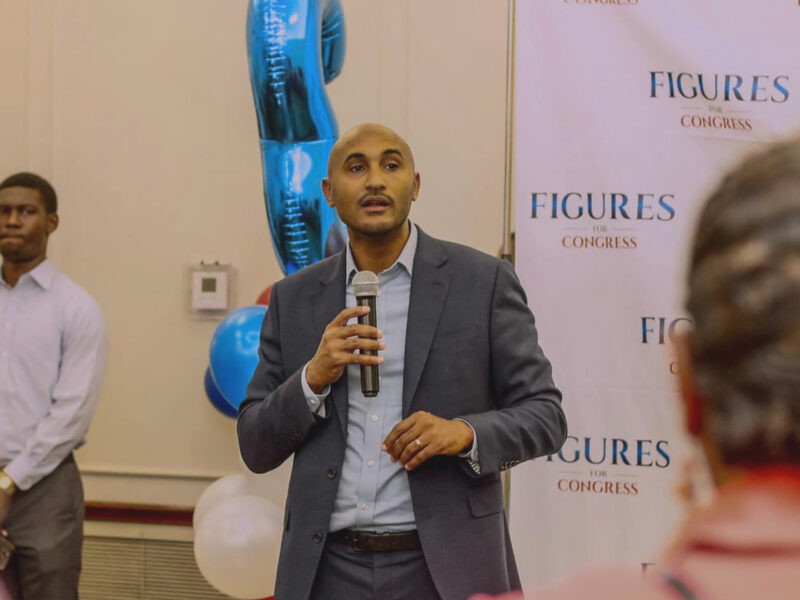
In a phone interview Wednesday, Democratic candidate Shomari Figures expressed concern that regardless of the district’s design, Republican Caroleene Dobson has a feasible path to victory.
‘It’s not a matter of if they can win it, they can certainly win it,” Figures said. “They’ve invested millions of dollars, they’ve picked out a young candidate to drive home the message of the Republican Party and we’ve seen a national buy-in from the Republican Party. Speaker Johnson hosted a fundraiser for my opponent. These are not the actions of people who don’t think they have a shot at the seat.”
Just ahead of the general election, one recent poll indicated the race was tightening, with Dobson within 5 percentage points of Figures.
According to the Federal Election Commission’s most recent campaign finance reports, Dobson had contributions of just over $3 million, while Figures gathered just under $2 million. Dobson’s total includes $1.6 million of personal loans. As of August, she had spent about $1.3 million more on the race than Figures.
In March’s primary election, 57,091 people cast ballots for Republican candidates, while 57,520 — just 429 more — cast ballots for Democratic candidates. The large field of contenders was eventually whittled to Figures, who is Black, and Dobson, who is white. Both are attorneys.
Civil rights lineage vs. fifth-generation farmer
Figures is the son of civil rights attorney Michael Figures, an Alabama state senator for 18 years before he died from an aneurysm in 1996, at age 46. The elder Figures is known for his lawsuit against the Ku Klux Klan after several of its members lynched a Black teenager in 1981, resulting in a settlement that bankrupted the organization.
Shomari Figures’ mother, Vivian Figures, assumed her husband’s seat in the state Legislature and has held it for the past 28 years.
A graduate of the University of Alabama School of Law, Figures has been a clerk in federal courts, a personnel manager in the Obama White House, and a staff attorney in Congress and the U.S. Department of Justice.
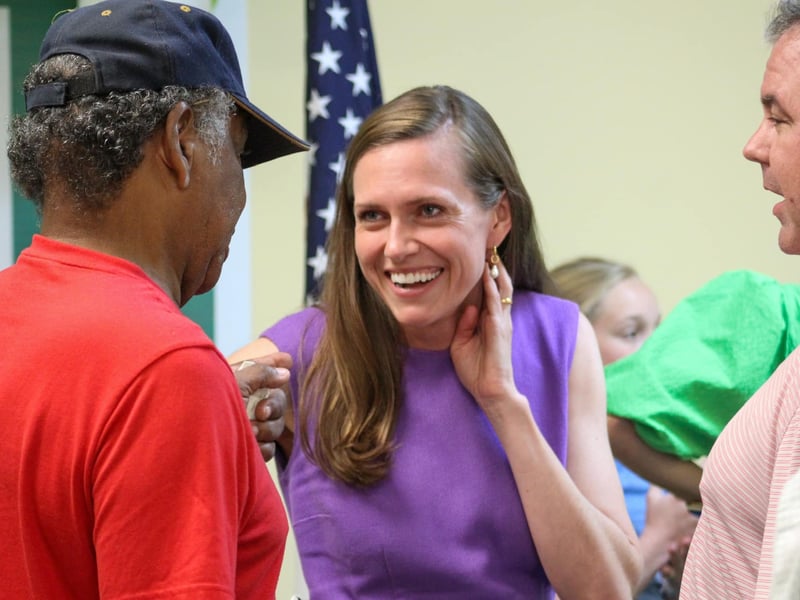
Dobson is a fifth-generation cattle farmer who earned a law degree from Baylor and focuses her practice on real estate. She is a shareholder at the MaynardNexsen firm in Birmingham.
The Dobson campaign did not respond to several requests for an interview.
Both candidates have been the target of personal attacks, with Figures described as a liberal Washington insider who has little substantive connection to the district he wants to represent. Meanwhile, Dobson has been forced to defend herself against charges of elitism, including that her family built its wealth off slave ownership and on the backs of sharecroppers.
Presidential race could prove key
Legal challenges arose to Alabama’s districting after the 2020 Census indicated nearly 27% of the state’s population was Black, but the Republican supermajority in the Legislature refused to create a second Black-majority district.
After the Supreme Court mandated a redraw, state lawmakers held a special session but repeatedly refused to voluntarily comply with court orders.
The courts then took control, eventually adopting a map where the Black-preferred candidate was forecast to win 16 of 17 elections.
Shawn J. Donahue, an elections and redistricting expert and assistant professor of political science at the University at Buffalo, said Alabama’s 2nd District should be safe for Figures, at least in this election.
“The thing that I would look at is African American turnout,” Donahue said. “If African Americans turn out, Figures should win, probably by a decent margin. But if there’s some weakening of support among African Americans for Democrats, that could potentially give Republicans an opening.”
Donahue said he expects the cities of Mobile and Montgomery to provide the bulk of Figures’ support, while rural counties will be more racially polarized.
“There will be a large percentage of white voters who will not vote for the Black candidate and vice versa,” he said, adding that having Kamala Harris at the top of the Democratic ticket would be “much more beneficial for African American Democratic turnout than probably it was with Biden.”
But Donahue also acknowledged some indicators suggested more Black voters were gravitating toward Republican candidates. While Figures may have an edge under existing circumstances, Donahue said midterm elections could be more challenging.
For a GOP win, he said, “You probably have less chance in a presidential election year, because even in states that aren’t really competitive, people are pretty enthused to get out and vote. But if this election would have happened in 2022, that would have potentially been more problematic for Democrats, based on the low turnout.”
District’s future hinges on 2025 trial
Figures said he wants to leverage his experience in Washington as well as his established relationships with state leaders to expand his district’s access to health care, create more job opportunities and bolster higher educational outcomes. He said state and national Democratic Party officials are helping get his campaign over the finish line.
“We are a unified front,” he said. “This is the first time at a congressional level that we’ve had this opportunity, and we’re not taking that for granted.”
Meanwhile, the court-ordered map is only temporary. It was the result of a preliminary injunction while the case was stayed until after the election. The trial is scheduled for February 2025.
Deuel Ross, an attorney with the NAACP’s Legal Defense Fund who argued for the plaintiffs at the Supreme Court, emphasized in a phone interview Thursday that the goal of the litigation was not to create a second Democratic district, but rather to create a second district where Black voters had an opportunity to elect a candidate of their choice.
“The issue for my clients and for our organization is about the fact that Alabama’s Black Belt has been divided for a very long time in the state, going back 100 years, and not having the representation that Black voters need and deserve,” he said. “So we’re hopeful that whatever the results of the election are, Black voters finally have the chance to elect someone who’s actually responsive to their concerns.”
Among the remaining claims in the case are that state lawmakers intentionally drew maps to deny Black voters the chance to elect their candidates of choice, Ross said. If the plaintiffs win next year, the court’s map will stay in place until after the 2030 Census. If the state prevails, it can enact a map of its choice.
 Follow @gabetynes
Subscribe to our free newsletters
Our weekly newsletter Closing Arguments offers the latest about ongoing trials, major litigation and rulings in courthouses around the U.S. and the world, while the monthly Under the Lights dishes the legal dirt from Hollywood, sports, Big Tech and the arts.