
 Search Articles


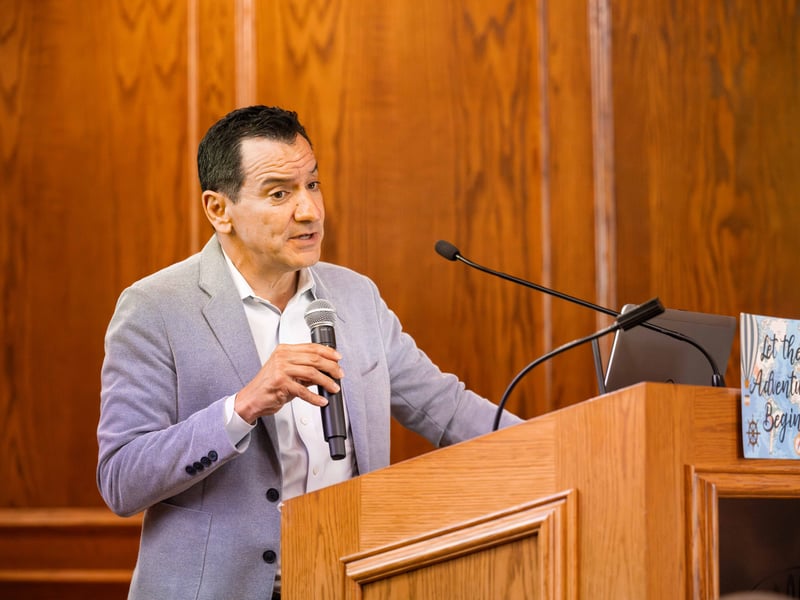
(CN) — For former California Assembly Speaker Anthony Rendon, the moment that encapsulated life as a politician came during a high-profile vote in September 2021.
State lawmakers that day were voting on a major police reform bill. It’d come about as George Floyd protests were happening across the country and had garnered significant attention. But Rendon’s mother had just died hours earlier, and as he flew to Sacramento to preside over the vote, he couldn’t help but think of the flight attendants. Surely, he figured, they were freaking out a bit at the sight of a grown man crying in his airplane seat.
That bill — the Kenneth Ross Jr. Police Decertification Act — created a new mechanism to revoke the certifications of police officers who violate people’s civil rights or otherwise commit serious misconduct. Named after a Black man wrongfully killed in Gardena, it passed the Assembly with Rendon’s support and is now California law.
After the vote, Rendon sat on what he called “a well-protected ledge” outside the speaker’s office. He smoked a cigarette and drank some scotch.
“I thought that moment kind of encapsulated everything about politics,” Rendon said with seeming nostalgia. Smoking and drinking scotch was like a throwback to his younger days — but some 20 years ago, he would have more likely been at a punk rock show than in the halls of California government. It was one of those rare moments that felt like a thread in his life story.
First elected to the Assembly in 2012, Rendon, a Democrat, became speaker in 2016. He served in that role until 2023, when he was ousted in an intraparty struggle.
Under California state law, politicians can serve a maximum of 12 years in the state legislature. Rendon is terming out this year, and he’s okay with that.
“It’s been a very strange journey,” he told Courthouse News — one that “never really seemed like it would happen.”
Rendon had what he called a weird climb into politics. Before winning election to the Legislature in 2012, he served as executive director for Plaza de la Raza Child Development Services, a California nonprofit focused on early education.
Working in the nonprofit world, he came to know his local council members and legislators through regularly working with them. Then he figured, why not create change as a lawmaker?
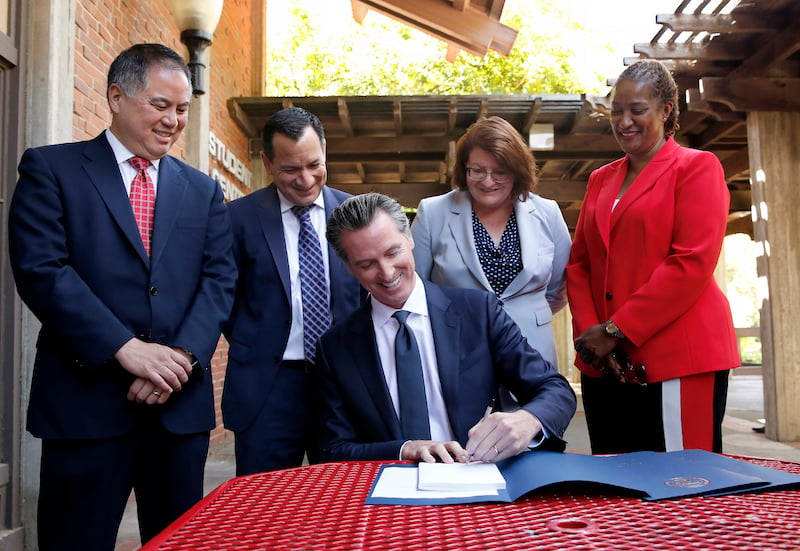
California has around 39 million residents spread across 80 Assembly seats. That’s roughly 500,000 people per district.
Rendon’s district, the 63rd, sits in southeast Los Angeles County but is firmly outside Los Angeles city boundaries. The Los Angeles Times has described the area as a “corridor of corruption,” he noted. A handful of city officials have been in prison or home confinement for that crime, and voter engagement is low.
Facing such cynicism, Rendon wanted to be able to point constituents to realized goals that wouldn’t have occurred without state money. “You can’t depend on cookie-cutter politics,” he said. “You make it as tangible as possible to them.”
Compare that to some other big California policy goals, including the $24 billion the state has put towards solving homelessness with little to show for it. Asked about this, Rendon said it was a fair comparison.
Rendon contrasted his time as a lawmaker with his experience working on the frontlines of social issues. As a nonprofit director, he knew the gang affiliations of the young people he was trying to help. He knew which drugs a particular boy was using.
Being in the Assembly, one can lose that level of familiarity. Everything — even big issues like homelessness — can become more abstract. That makes it more difficult to relate to it.
With some embarrassment, Rendon recalled a time years ago when his late mother asked him about such an issue. Rendon waved away the question. “We did that last year,” he told her.
“We check these boxes in an abstract sense,” he said.
Lawmakers can also suffer from the desire to stay in office, Rendon said. For example, they might vote a certain way with their reelection in mind. They tell themselves they need to stay in office to effect change and that they’ll do the right thing next time — but that time never comes.
“You just did that for five years,” Rendon said. “What’s the … point? I see that a lot.”
Now that he was leaving office, he was experiencing “the freedom of terming out,” he said later. “I can say whatever the fuck I want.”
The speakership
Republican state Senator Brian Dahle was elected to the Assembly at the same time as Rendon, in one of that body’s biggest freshman classes. Dahle quickly reached out to his new colleagues, asking them to come visit his district. He told them he’d reciprocate with a trip to theirs.
Rendon took him up on the offer. “Anthony was one of the first ones to say, ‘Hey, come down to my district,’” Dahle told Courthouse News. The two men developed a working relationship. Years later, when Rendon was speaker, Dahle served as the Republican minority leader. Dahle called Rendon fair, noting he’d let Dahle choose Republicans for certain committees.
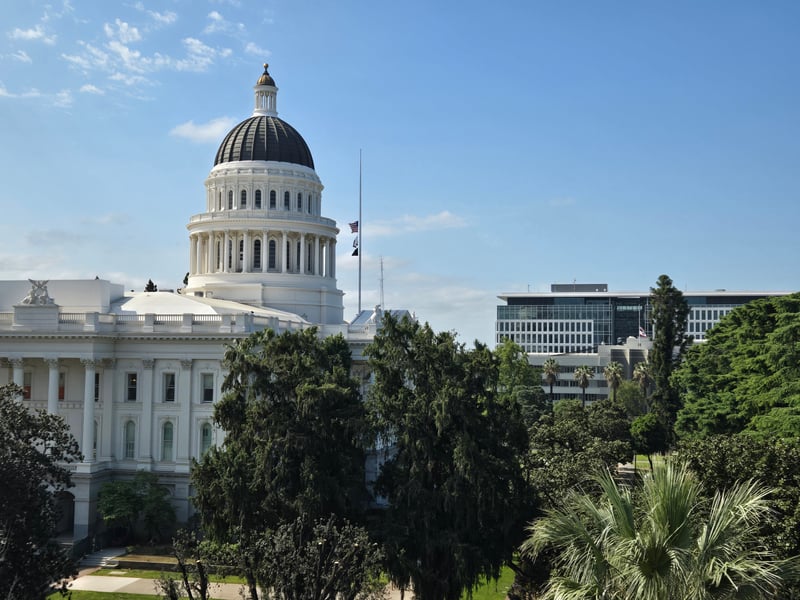
Rendon began his stint as speaker in March 2016. He took the gavel from now state Senator Toni G. Atkins, the former Senate president pro tempore who also terms out this year.
In an interview, Atkins said that while she and Rendon had some rough spots, they agreed more than they disagreed. Later, amidst Democratic infighting over the speakership, Atkins reached out to Rendon, saying she was there if he needed anything.
“It was a wonderful ride,” Atkins said of her time working with him. “I’m just grateful we could have the partnership.”
In seeking the speakership, Rendon figures he had many factors working in his favor. He was part of that large freshman class, a member of the Latino caucus and came from a large county like Los Angeles. If Las Vegas was placing odds on the race, he joked, bookies would have had a profile on him.
Once speaker, Rendon said he was particularly proud of creating the expectation that the Assembly would do something . As he sees it, government should take a proactive role in addressing issues. Republicans may oppose the mindset, but it’s part of Rendon’s legacy: California has an activist government that doesn’t sit idle.
The beginning of the end of Rendon’s speakership came around May 2022, when current Speaker Robert Rivas told him he had the votes to take over the job. The two ultimately landed on a compromise: Rendon would remain speaker until June 2023, with Rivas then taking the gavel. It was an agreement borne out of what Rendon described as a lot of yelling and fighting. “We’re Democrats,” he said. “We’re always split.”
Now, with some four months to go until his Assembly term ends, Rendon seems ready to move on. He said he was unsure if he’d take a final walk through the Capitol grounds to get a photo. Instead, he’s looking ahead to his daughter’s final year in preschool and the start of kindergarten in 2025. He’ll get to drop her off in the mornings and collect her in the afternoons.
“I missed out on a lot over the past four years,” he said.
Subscribe to our free newsletters
Our weekly newsletter Closing Arguments offers the latest about ongoing trials, major litigation and rulings in courthouses around the U.S. and the world, while the monthly Under the Lights dishes the legal dirt from Hollywood, sports, Big Tech and the arts.