
 Search Articles


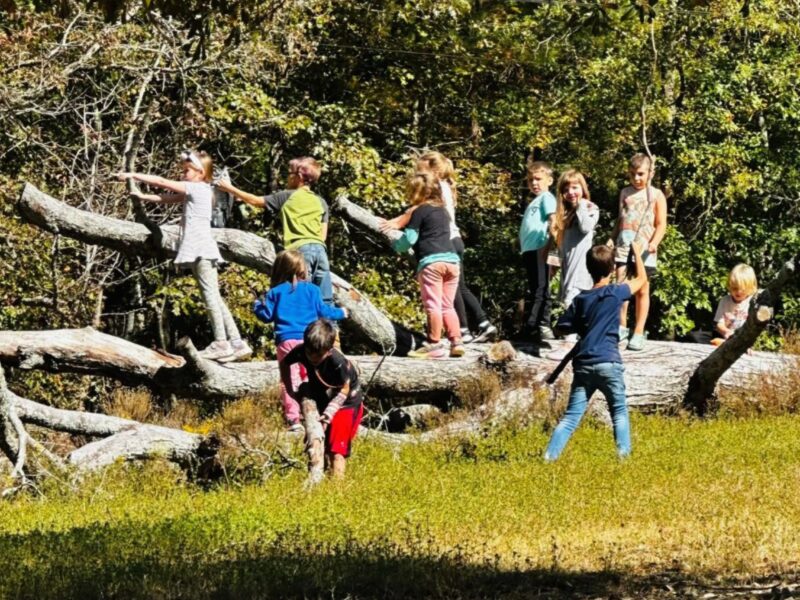
PAULDING COUNTY, Ga. (CN) — Rather than sitting at desks, the children at WildWood Nature Academy outside Atlanta are climbing trees and rubbing their toes in the grass as they ask and answer classroom questions.
Like any class, they’re learning the basics: history, math, language arts. The only difference here? They’re outside.
Being outside in nature can help kids stimulate their minds and regulate their emotions. And yet in spite of a growing body of research on these benefits, many students spend much of their days confined in institutional, fluorescent-lit schoolhouses.
Even when not in class, the advent of smartphones and social media has meant children are spending significantly less time outside during their free time, too.
“The kids aren’t alright,” social psychologist Jonathan Haidt said at a lecture last year.
A professor at New York University, Haidt has become one of the country’s most prominent critics of these childhood indoor-time trends.
His book “The Anxious Generation,” released in 2024, ties a rise in pediatric mental-health issues to less time in nature and more time in front of screens. This shift, he argues, is causing a “rewiring of childhood” and early development.
In his book, Haidt draws attention to data showing increased rates of depression, anxiety and even self-harm among adolescents, not just in the United States but globally.
He notes that academic performance — long on the rise as children lived more comfortable lives and got better educational opportunities — took a drastic downhill turn 14-years ago, right around a boom in smartphone and social-media use. And this drift has only accelerated with the rise of artificial-intelligence tools like ChatGPT, which children are increasingly relying on not just for academic help but even emotional support, sometimes with disastrous results.
Enter schools like the WildWood Nature Academy in Paulding County, Georgia, where screens are out of sight and children are immersed in the outdoors. Schools like this represent a growing pedagogical counterculture that’s often called the “forest school” movement.
Although the concept of forest schools has been around for decades, they’ve surged in popularity in recent years, especially for early learning. The North American Association of Environmental Education estimates that in 2020, there were roughly 25 times as many forest preschools in the United States as in 2010.
Advocates including WildWood founder Kerstin Davis argue schools like these are a necessary antidote to restore nature- and play-based childhood.
“If we continue on the path of screens and technology taking over our lives, we will lose the natural connection that we have with our own planet, and that is going to have negative effects on our health, our education, our relationships,” Davis said in a phone interview. “We have to reconnect with our beginnings, which were outdoors.”
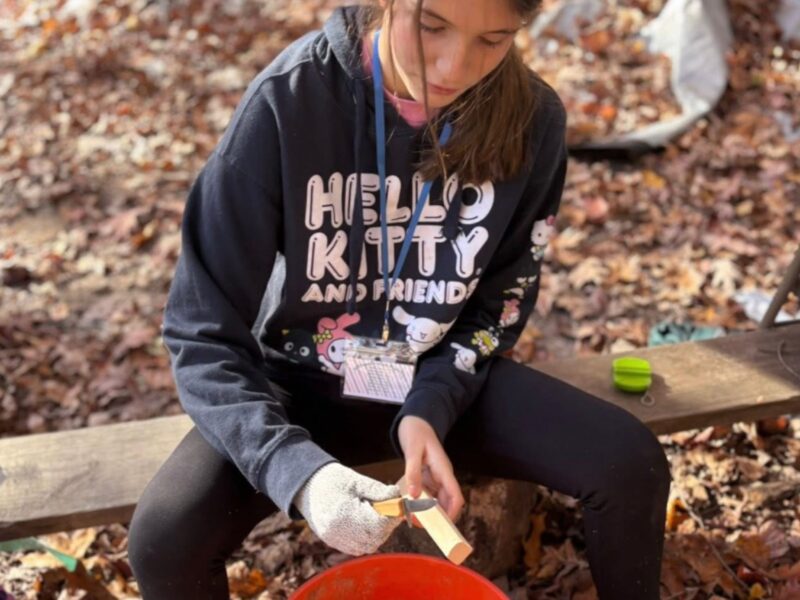
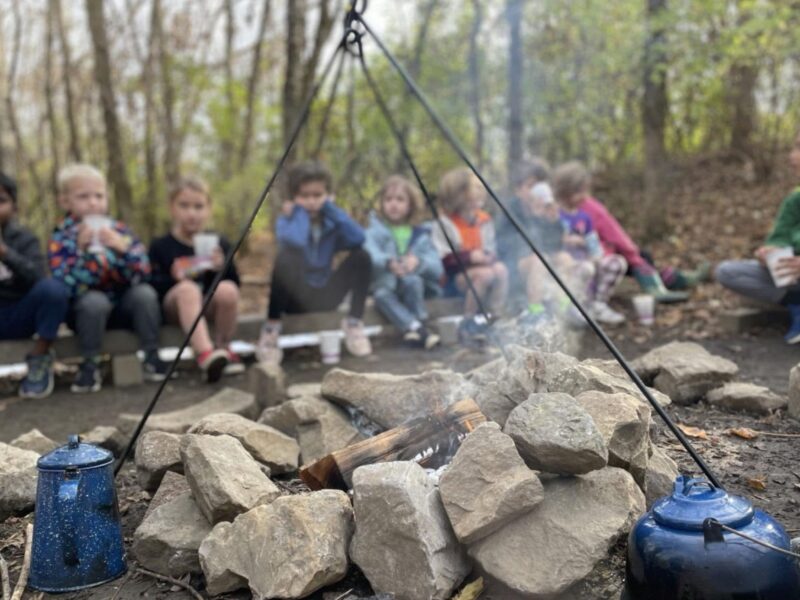
At schools like WildWood, students learn not just academics but a plethora of skills they wouldn’t normally learn in a typical public school setting, such as safely building a fire and using it to cook.
“We do real-life skills,” Davis said. “I would venture to say that our kids could stand against unusual situations better than most.”
One imagines Davis’ pupils might also be having more fun. Among the trades taught to these youngsters are woodworking, knitting and candle-making.
“Our kids are very well-rounded when they graduate,” Davis said. “They are good communicators — bright, healthy children.” For some parents and educators, the idea of getting children to pay attention and learn outside might sound far-fetched. But “if you can get past the stigma that school has to be in a building, you’ll be shocked at how well children flourish and how well they do.”
Davis has experienced the healing benefits of nature firsthand. She credits spending time outside with helping her overcome breast cancer. When she had children of her own, she wanted to make sure they also got to experience its benefits.
What started in 2004 with small home-school groups grew over the years, eventually becoming WildWood.
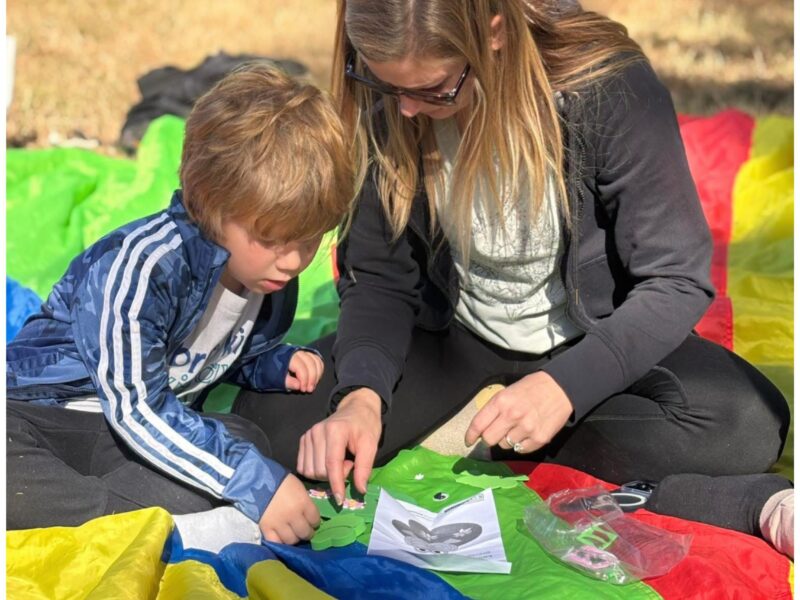
This is the third year that 31-year-old Grace Thompson has enrolled her 4-year-old son here. Already, she says she sees astounding differences between him and her two older stepchildren who grew up attending public school.
“He loves to be outside, look at flowers, go hiking and jump in creeks,” Thompson said. “He’s not afraid of bugs, or doing something challenging like climbing rocks or log piles, and he absolutely loves and respects animals.”
Thompson was raised on a farm, which she says allowed her to play freely outside and connect with the environment. By contrast, her children are growing up in the suburbs of a big city, where even available green space is not truly wild in the way the countryside might be.
Almost all the other children in Thompson’s neighborhood attend the same public school. For that reason, Thompson said she’s inclined to eventually enroll her son in the public school system. There are also no full-time higher grade-level nature school programs nearby. In neighboring Cobb County, the private Garden School of Marietta does offer full-time, in-nature learning, but only for kids up to eighth grade — and it costs more than $16,000 annually.
Davis’ academy saw its popularity boom during the Covid years, as many parents grew frustrated with closed schools and online learning.
Despite the growing success of these schools, the forest learning model still remains a relative rarity in the American education system.
Educator and nature enthusiast Jean Lomino is working to change that. In 2015, she co-founded Wauhatchie School, the first forest kindergarten in the state of Tennessee.
Over the last five years, the school expanded to four campuses in Chattanooga. It currently has a combined enrollment of more than 200 students, along with 30 staff.
As founder and director of the Forest School Teacher Institute, which she launched in 2018, Lomino now trains educators around the globe on how to teach outdoors and establish forest schools. She has a doctorate in educational leadership with a focus on environmental education from Andrews University in Michigan.
“I think everyone recognizes that especially in our culture today, screens are taking over so much of children’s time,” she said. She notes the problem is “not just in school” but also affects children’s free time, with negative impacts for physical, mental, social and emotional health.
“I think that we have to have opportunities for children to be outdoors in the fresh air and the sunshine, to be able to move [and] use their muscles. And of course, it provides all kinds of wonderful context for learning,” Lomino said. “I think there’s been a concern if children are outside so much that they aren’t going to learn — but it’s just the opposite.”
Lomino’s efforts have included on-site training at schools in Florida, Kentucky, Indiana, Ohio, Oklahoma, Tennessee, Texas, West Virginia and Wyoming. Abroad, her institute has also trained educators in Canada, China and South Korea.
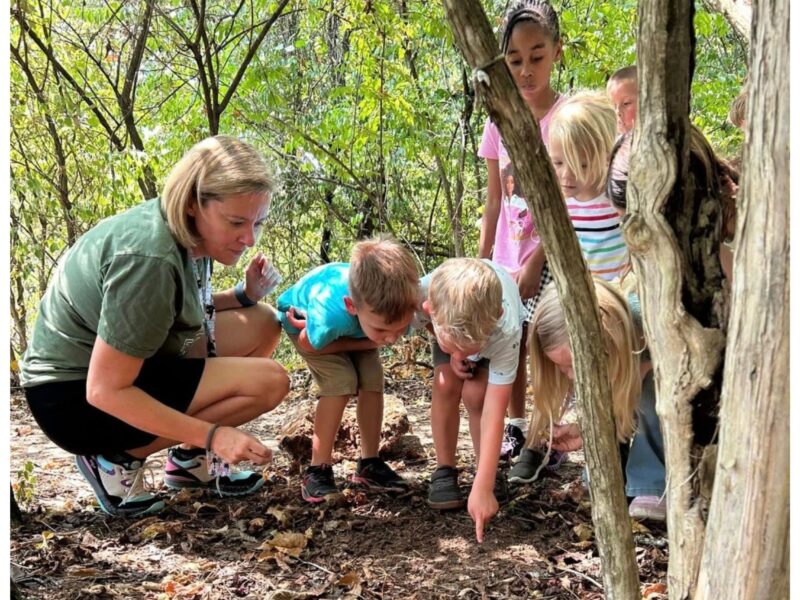
A big part of her training is encouraging educators to find a different perspective on their relationships with students. She emphasizes the concept of “emergent learning,” where students learn through exploration.
“The teacher’s role changes from being in front of the class and delivering information,” Lomino explained. “They become the facilitator of the learning and watch what the children are interested in and follow those interests.”
Research shows that outdoor time is positively associated with academic performance. It sparks creativity and helps recharge focus and attention, which is critical when developing new ideas, particularly for neurodivergent students.
“Anyone can pick up their phone and look up the answer to things,” Lomino said. “To be problem-solvers and critical thinkers is a natural benefit from being outside in nature.”
“You learn best by doing — not by sitting in front of a screen or looking at a textbook or filling out worksheets,” she added. “It’s experiential.”
Lomino wants to teach public schools how to incorporate forest schooling into their curricula, including by aligning learning material with the natural world just outside their buildings.
She’s worked closely with public schools in the Chattanooga region, helping them develop forest programs. Among them is Red Bank Elementary School, which began its first forest-school kindergarten class in 2016. It quickly drew praise from parents, leading school officials to create first- and second-grade forest-learning classes as well.
“I’m seeing more public schools now across the country that are really interested in providing these opportunities for children,” Lomino said. “That’s my goal right now. Because the private schools are wonderful, and we have many of those, but all children need to have this opportunity.”
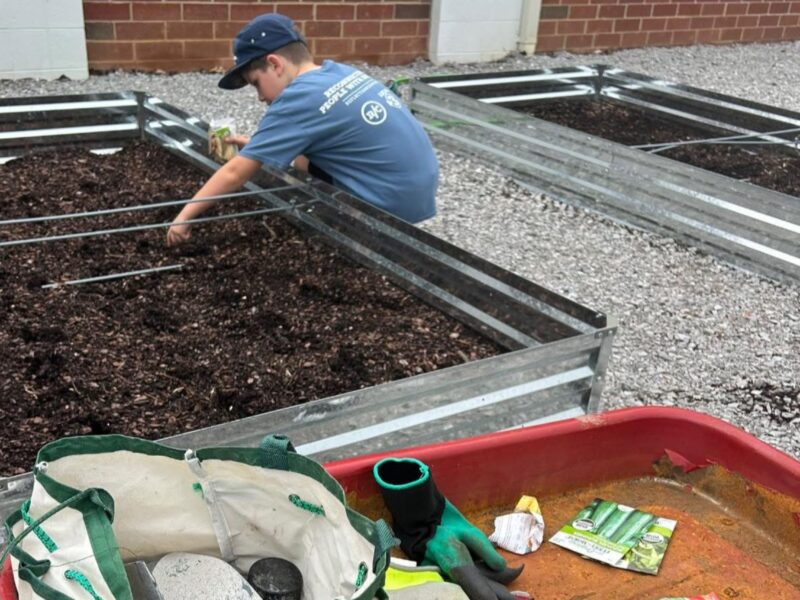
At Red Bank Elementary, students involved in the school’s forest program spend at least two hours each day learning outside.
Kim Hakimian, program coordinator and a kindergarten forest teacher, says she’s seen the positive impacts firsthand.
Kids were less sick and had fewer visits to the school nurse, supporting research showing that time outdoors can significantly boost the immune system. They performed at or above grade level on academic tests. They also had significantly fewer absences — a crucial detail considering that across the country, many schools have continued to grapple with chronic absenteeism following the Covid pandemic.
In every class and grade level at Red Bank, students are given a problem to solve each quarter. “For instance,” the school explains on its website, a student with an interest in skateboarding might be asked to “prototype modular components [for] a pop-up skate park.”
Hakimian says students in forest classes were better at solving these problems. They were also better at working in groups, collaborating with other students to find solutions.
One of the biggest impacts Hakimian has noticed is a rise in children’s self-confidence.
“There’s a lot of ‘I made it myself’ or ‘I took a risk but I’m still okay,’” she said. “‘I tried something and failed, but then I got back up and tried it again,’ or ‘I tripped on a root, but you know what, I’m just going to brush myself off.’”
Another big benefit — one that overlaps with confidence and self-esteem — is resilience.
As young kids spend more time in front of screens, teachers fret that they’re not building tools for emotional regulation, with more tantrums and outbursts, especially in preschool and kindergarten.
“We are seeing more and more kids coming into school, into kindergarten, anxious,” Hakimian. “When you take these kids outside, there’s a huge calming effect.”
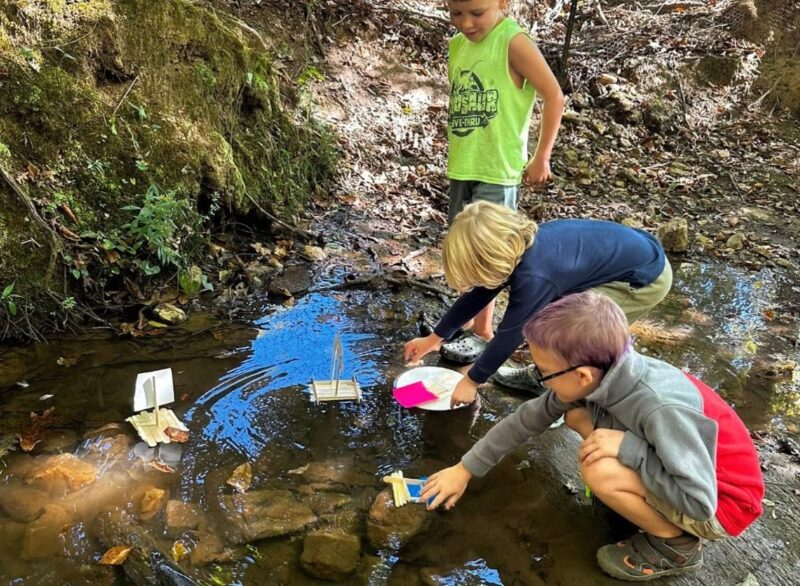
Brian Henley, a high-school social studies teacher in Georgia, echoed these concerns. “Deterioration of self-reliance in students is pushing a lot of educators to exhaustion,” he said.
So too did Melissa Antinof, a teacher with more than 25 years of experience and Burlington County, New Jersey’s 2019 teacher of the year.
“I’ve also noticed many students give up easily,” she said. They “don’t have the grit to keep trying when something is hard. They are used to information being handed to them from a device and are losing critical thinking skills, along with perseverance.”
Teachers also report that students can seem inattentive and disengaged. Henley said he’s had to find new ways to keep students’ attention, as they’re used to instant gratification from their phones and lose interest very quickly.
“Unfortunately,” Antinof concurred, “we are seeing more apathy each year.” That highlights yet another benefit of forest schools, where teachers can keep students interested and curious by keeping them engaged with the natural world.
As popular and as research-backed as it might be, bringing forest learning into public schools is a slow process.
One issue concerns factors like curriculum requirements and standardized testing, which don’t always align neatly with outdoor learning. Another is money.
“The reality check is the budget,” Hakimian said. “That is the reality check always with any public school system.”
At Red Bank, grant funding has helped bridge that gap, allowing the school to hire forest school co-teachers while also reducing student-to-teacher ratios.
The popularity of these programs, coupled with the strong scientific evidence for them, suggests forest learning programs will likely continue to grow.
Despite financial hurdles, both Hakimian and Lomino say that taking learning outdoors is possible in any school environment. “It’s [about] changing the mindset,” Hakimian said, by understanding the outdoors can be an educational resource. That can mean hanging bird-feeders, examining insects and flowers or even just taking a classroom outside to read. “There’s so much you can do by just stepping outside the building.”
 Follow @Megwiththenews
Subscribe to our free newsletters
Our weekly newsletter Closing Arguments offers the latest about ongoing trials, major litigation and rulings in courthouses around the U.S. and the world, while the monthly Under the Lights dishes the legal dirt from Hollywood, sports, Big Tech and the arts.