
 Search Articles


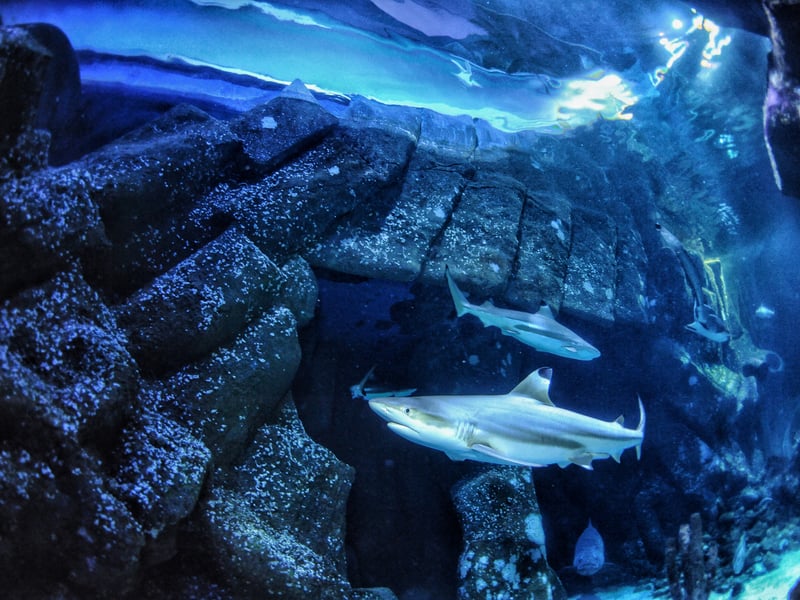
(CN) — An acidic ocean may seem like something out of a science fiction novel, but the reality is nearing. Scientists in Germany warn that marine life — particularly sharks — may already be experiencing some of the first tangible effects of the ocean’s decreasing pH levels.
Since global industrialization began in the 1800s, the ocean’s pH has fallen from 8.2 to 8.1, a small but globally significant shift. With rising carbon dioxide emissions, scientists warn ocean pH acidity could increase tenfold, reaching 7.3 by 2300.
While future conditions are uncertain, today’s changes are already visible: coral reefs are bleaching as waters warm and become more acidic, signaling the destabilization of marine ecosystems.
Researchers at Germany’s Heinrich Heine University Düsseldorf (HHU) suggest sharks may be hit hard. Just as soda erodes human teeth, an increasingly acidic ocean could damage their iconic, deadly grins.
Scientists tested the idea by collecting over 600 teeth from Blacktip reef sharks living in an aquarium, where shed teeth naturally accumulate on the floor. Because sharks continuously regrow teeth, researchers had ample samples to work with. They selected 16 undamaged teeth, splitting them into two groups: half incubated in current ocean water and half in the high-pH conditions projected for the next three centuries.
Professor Sebastian Fraune, the study’s senior author, said it was gratifying to see the project evolve from a small bachelor’s project into a large, peer-reviewed publication, published Thursday in Frontiers in Marine Science.
“We observed visible surface damage such as cracks and holes, increased root corrosion, and structural degradation,” said Fraune, also the head of the Zoology and Organismic Interactions Institute at HHU. “Curiosity and initiative can spark real scientific discovery.”
Teeth taken from the acidic water showed heavy damage and irregular surfaces, raising concerns about the future survival of sharks. While the jagged, sharp teeth might help slice prey, the teeth were far more brittle and prone to breaking.
Blacktip reef sharks are especially vulnerable because they swim with their jaws permanently open to breathe, keeping their teeth exposed to corrosive water. Even though shark teeth are made of tough mineralized phosphates, they are not built to withstand long-term acid erosion and are “weapons built for cutting flesh, not resisting ocean acid,” said first author Maximilian Baum.
“Maintaining ocean pH near the current average of 8.1 could be critical for the physical integrity of predators’ tools,” explained Baum, who is also a biologist at HHU. “(The study’s results are) a reminder that climate change impacts cascade through entire food webs and ecosystems.”
However, the researchers did only analyze discarded teeth composed of non-living mineralized tissue, so the situation is even more complex — as sharks actively attempt to remineralize or grow new teeth to replace damaged ones, they’d likely face increased energy costs. Future studies aim to investigate specific changes in teeth when exposed to acidic conditions, such as alterations in their chemical structure.
Subscribe to our free newsletters
Our weekly newsletter Closing Arguments offers the latest about ongoing trials, major litigation and rulings in courthouses around the U.S. and the world, while the monthly Under the Lights dishes the legal dirt from Hollywood, sports, Big Tech and the arts.