
 Search Articles


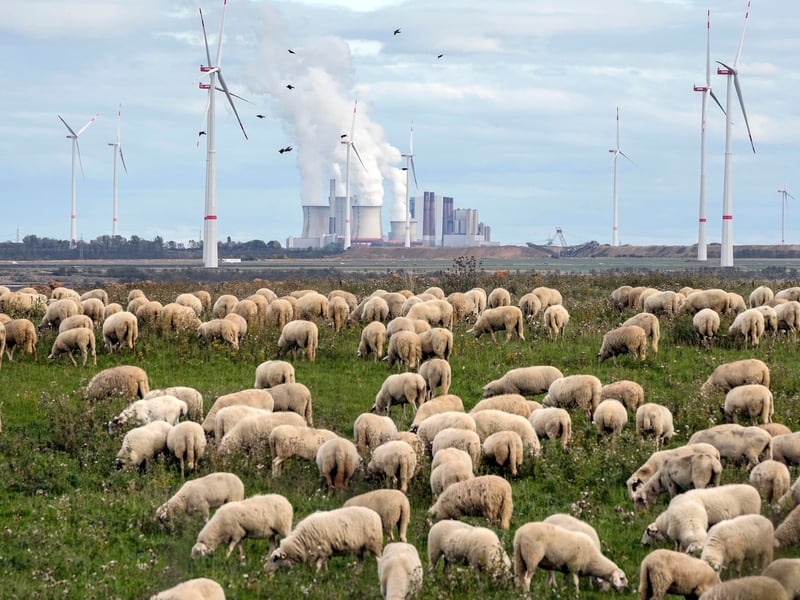
(CN) — In a sign Europe is scaling back its ambition to be the world’s champion in fighting climate change, the European Union was on course Thursday to flunk a deadline to submit new emission-cutting goals next week to the United Nations.
At a meeting in Brussels Thursday, climate ministers from the bloc’s 27 nations were unable to agree on meeting a global deadline to set new climate targets for a U.N. General Assembly in New York Instead, the ministers agreed to a “statement of intent” to adopt new goals by November when world leaders meet in Brazil for an annual U.N. climate conference, COP30.
Other major powers and countries, including China though not the United States, are expected to present new climate pledges. New targets are meant to uphold the 2015 Paris Agreement’s commitment to keep the planet’s temperature from becoming 1.5 degrees Celsius (2.7 degrees Fahrenheit) warmer than it was before industries began burning mass amounts of fossil fuels.
The EU’s failure to meet the deadline underscored growing unease in Europe over the bloc’s tough laws and bold plans to reduce greenhouse gas emissions.
“[The EU] cannot credibly arrive as a climate leader” in New York, said Steffen Menzel, a climate policy expert at E3G, a climate think tank, in an email. “That ship has sailed. But Europe can still try to keep face, and it must.”
The EU was hoping to adopt new climate targets for both 2040 and 2035 this month, but growing hesitation stalled those efforts.
France, Poland, Italy, Hungary, Slovakia, the Czech Republic, Croatia, Malta, Cyprus and Latvia are among the nations calling the new climate targets into question and seeking flexibility in reaching the goals. EU leaders are expected to discuss adopting new targets at a summit in late October.
The EU, long a champion of climate action, already made it mandatory to cut emissions by 55% compared to 1990 levels by 2030 and to reach “net-zero emissions” by 2050. The bloc reached a previous goal of reducing emissions by 20% by 2020.
In July, the European Commission, the EU’s executive body, proposed reducing emissions by 90% by 2040. Meanwhile, the bloc is looking at reducing emissions between 66.3% and 72.5% by 2035.
But geopolitical, domestic and economic turmoil in Europe has fueled growing resistance to Brussels’s green agenda.
“It would have been good if the proposal from the commission would have met no such opposition,” said Nils Meyer-Ohlendorf, a climate policy expert at the Berlin-based Ecologic Institute think tank. “But, as we all know, things in Europe have become a bit more complicated.”
The war in Ukraine, soaring inflation and economic weakness, the rise of far-right political parties and the return of U.S. President Donald Trump to the White House are among the reasons climate change is taking a back seat in European politics.
There is “a geopolitics that is getting more and more disruptive and difficult to navigate for the European Union and its member states,” said Elisa Giannelli, a climate policy expert at the E3G think tank, speaking by phone.
Amid the turmoil and backlash to green policies, it has become more difficult to push for new emissions reductions, she said.
But she characterized Thursday’s failure to adopt new goals as “probably more of a hiccup than complete disaster.”
Still, she expected the EU to agree on adopting new pledges for 2035 and 2040 before the U.N. climate summit in Brazil.
Courthouse News reporter Cain Burdeau is based in the European Union.
 Follow @cainburdeau
Subscribe to our free newsletters
Our weekly newsletter Closing Arguments offers the latest about ongoing trials, major litigation and rulings in courthouses around the U.S. and the world, while the monthly Under the Lights dishes the legal dirt from Hollywood, sports, Big Tech and the arts.