
 Search Articles


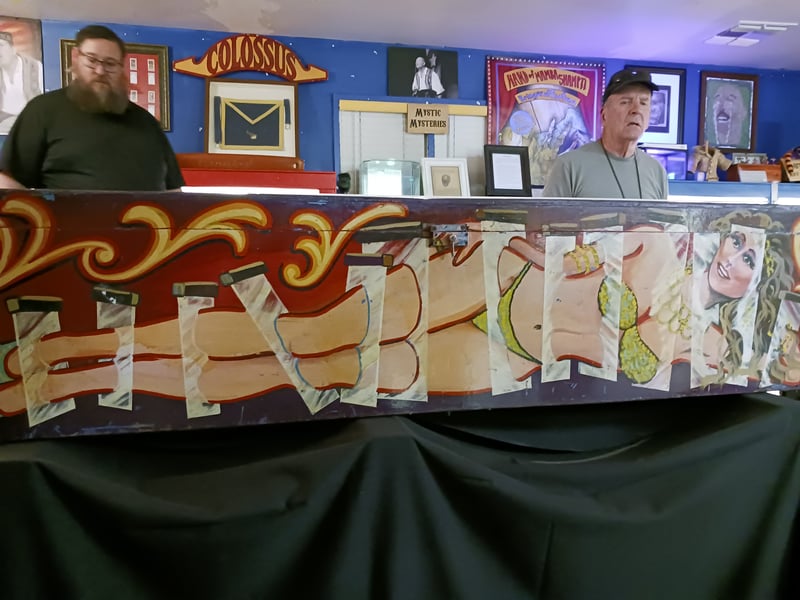
BAKERSFIELD, Calif. (CN) — What do haunted dolls, Satanic toasters and two-headed ducks have in common? All can be found at George the Giant’s Strange Museum of Oddities and Wonders, a pop-up museum that haunts Bakersfield during spooky season.
Inspired by the dime museums and sideshows of yesteryear, the museum boasts a variety of curiosities ranging from silly roadside attractions and whimsical cryptozoological specimens to spookier oddities like the purported mummified hand of a voodoo priestess. This year, the pop-up, located in a suburb of Bakersfield, is open on weekends through Oct. 27.
The project is the brainchild of Bakersfield native George “The Giant” McArthur. When deciding whether to include a new curio in the museum, McArthur says he follows a simple checklist.
“If I think it looks cool, if I like the story behind it, and [if I’d] pay a dollar to go see it, I’ll buy it,” McArthur told Courthouse News during a tour of the museum.
Some of the quirkier items in the museum, like a teddy bear made of belly button lint, are there just for laughs.
Others have more ghoulish provenance. Take Donny, a supposedly haunted doll. He’s the mascot and undisputed boss of the museum.
According to McArthur, a friend bought Donny at an estate sale, then donated him after he became jealous of the friend’s newborn child. He gets his exhibit set up first. “I’m not taking the chance of angering him,” McArthur explained.
In addition to these oddities, museum guests on a recent Saturday were treated to a rare demonstration of McArthur’s sword-swallowing skills. The ceiling in the borrowed building was too low for the 7-foot-3-inch McArthur to do the stunt standing up, so he had to sit on a chair — making an already difficult act twice as dangerous.
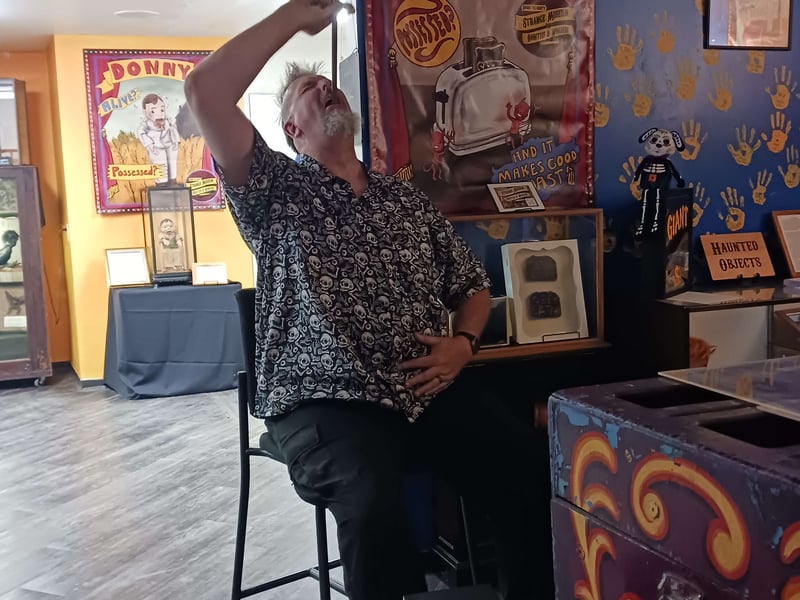
“When a sword-swallower does this, they take a chance of severing their larynx, puncturing their lung, and also ripping open the stomach," McArthur told the enraptured crowd. That “will cause the acids to be released, which can basically lead to death.”
The around 2-foot sword he was using was dulled and rounded, as is standard industry practice. Still, McArthur stressed the risk of injury and even death remains very real. One friend punctured his lung during a show, while another punctured his liver. Tragically, that latter friend ended up passing away.
McArthur himself tore open his esophagus at a show at Ripley’s in Hollywood in 2010 and had to be rushed to the hospital. As soon as he was released, he said he swallowed the sword again.
“I did this to prove just how stupid — I mean, how brave I am,” he said, garnering laughter from the crowd.
McArthur’s love of sideshows began at age 12, when he saw a sword-swallower and fire-eater perform. Fascinated by what the human body could do, he eagerly learned sword-swallowing, training first with a coat hanger before moving on to actual blades.
The next stunt he mastered was fire-eating. By then, he was hooked. He’s been performing professionally since 1991 and has appeared on TV shows and in Tim Burton’s movie “Big Fish,” in which he played the character Colossus.
Bullied as a child for his size and learning disabilities, McArthur found a family among sideshow folks.
He started collecting odd bits and pieces while on the road with his mentor Bobby Reynolds, a now-retired sideshow showman. After thirty years, he had enough oddities to open the museum.
“It’s my land, my happy place,” McArthur said with a smile as he watched guests explore the pop-up he started six years ago.
Except for the true-crime room, that is. That part of the museum makes him a little uneasy.
That true-crime room sits in the back of the museum, behind a curtain.
Everything inside belongs to McArthur’s friend and fellow Central Valley resident William Harder, founder of the website MurderAuction.com. Think: eBay for true crime enthusiasts.
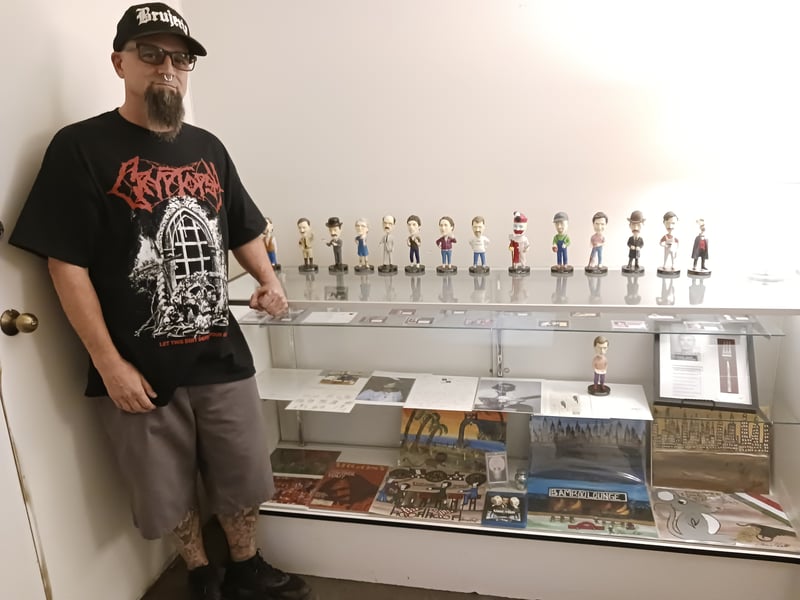
In an interview in the true-crime room, Harder said what started as a fascination with fictional characters like Freddy Krueger and Jason Voorhees evolved into a fascination with real-life killers like Charles Manson. He started visiting both high- and low-profile killers in prison, acquiring artwork and other collectibles.
Critics often accuse him of helping murderers profit from their crimes — but famous killers like Manson, Gacy, and Dahmer are all dead. Nor is there much money to be made on niche “murderabilia,” as Harder calls it. He stressed he doesn’t even take commissions from the sales on his website.
“Look, I get it: It’s a far cry from stamps,” Harder told Courthouse News with a laugh as he stroked his goatee. “People say this is inappropriate — but what’s appropriate? I’m vegan. I don’t wear fur or leather, and I think it’s inappropriate to do it. But other people wear it all the time.”
Far from an enabler, Harder stressed he’s simply a collector.
“I’m not encouraging anyone to hurt anybody,” he said. “I’m not paying anyone to hurt anybody. I just like to collect this silly stuff. And fortunately, other people do too.”
The crown jewel of Harder’s collection isn’t something money can buy. “There’s a picture of me with Charles Manson right there," he said, pointing to the display case full of handwritten letters and paintings. “No amount of money could replace that.” Also priceless were the memories, like the time he says Charles Manson told him: “You know, I wish I had a brother like you and a dad like you. I don’t know where I’d be in life, but it wouldn’t be here.”
What explains this unusual duo, a gentle, sword-swallowing giant and the self-styled Murder Guy?
In their particular case, McArthur said Harder was visiting the museum a couple years back when he overheard McArthur lamenting how he’d missed an opportunity to get a Gacy painting. Harder let him borrow one of his own, and the two became friends.
Regardless, this odd pairing exemplifies the spirit and the range of cabinets of curiosities — one inspiration for the museum. Once known as “wonder rooms,” places like this started popping up during the European Renaissance, showcasing natural specimens and strange artifacts that had no explanation at the time.
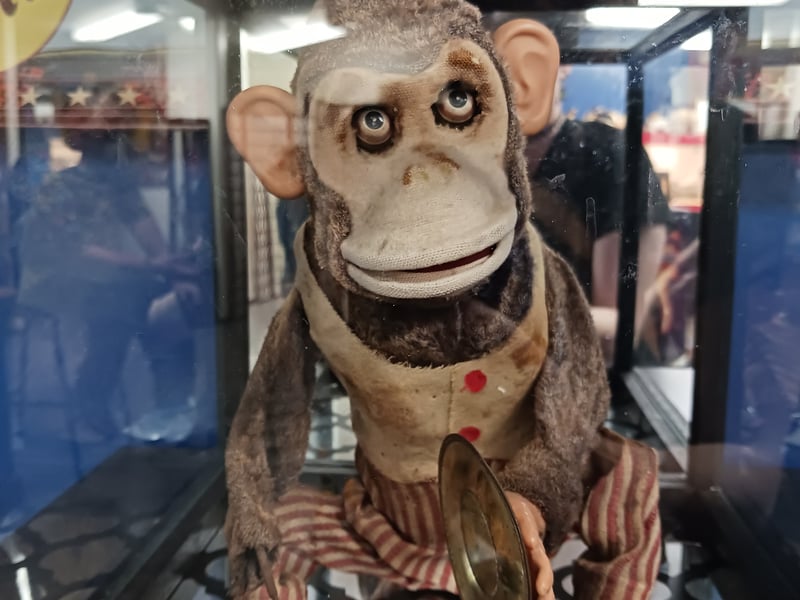
These eventually evolved into the dime museums of the 19th century. In addition to curios and even educational elements, such venues also featured performances like notorious “freak shows” that showcased conjoined twins and others with physical disfigurements. While the concept dates back to the Middle Ages, it was places like P.T. Barnum’s American Museum, opened in New York City in 1841, that turned such shows into entertainment for the lower classes. At its peak, the museum drew in 400,000 visitors a year.
Barnum and others are rightly criticized for exploiting vulnerable people — but the full accounting is a bit more complicated. Certain laws in the United States barred the severely deformed from holding normal jobs and appearing in public. That meant that despite the long hours and grueling schedules, these jobs could be viable alternatives to begging.
Besides, Barnum paid many of his so-called freaks quite well. Charles Sherwood Stratton, the dwarf billed as General Tom Thumb, lived in a fancy New York neighborhood after retirement, wearing expensive clothing. He even owned a yacht. George Costentenus, the Tattooed Man, often earned $1,000 a week and was known to wear expensive jewelry. Upon his death, he reportedly donated half of his lifetime earnings to a church and the other half to less fortunate freaks.
Unlike Stratton and Costentenus, McArthur acknowledges that his own dime museum is not making him fabulously wealthy.
“It’s just a vanity project,” he said. “We make enough money to pay the storage costs and maybe get something nice. One year, I got new teeth!”
Instead, McArthur says his Strange Museum of Oddities and Wonders is simply about sharing his love of the strange, freakish, mysterious and terrifying with the masses.
“I love this museum, and I love people seeing it and loving it too,” he said. “I lucked out that I get to do what I love."
Subscribe to our free newsletters
Our weekly newsletter Closing Arguments offers the latest about ongoing trials, major litigation and rulings in courthouses around the U.S. and the world, while the monthly Under the Lights dishes the legal dirt from Hollywood, sports, Big Tech and the arts.