
 Search Articles


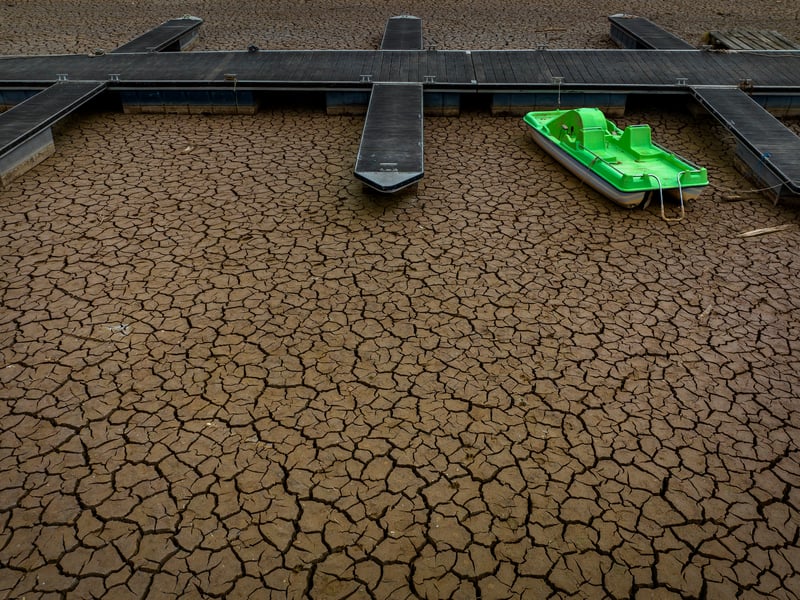
(CN) — More than three-quarters of the Earth’s land has become permanently drier, United Nations scientists warned Monday. Climate change caused by humans, such as greenhouse gas emissions from electricity generation and transportation, is blamed as the primary cause for this historic shift.
Researchers launched the landmark report, consisting of a detailed investigation into global aridity trends, at the 16th United Nations Convention to Combat Desertification, the largest U.N. land conference to date. The conference was also the first of U.N. land conferences to be held in the Middle East, an area which already feels the effects of international desertification.
Referring to the global aridity index, which tracks international aridity conditions, and using other advanced climate models, scientists compiled the report and uncovered a stark truth in the face of climate change naysayers: 77.6% of Earth’s land experienced dried conditions from 1990-2020, while just 22.4% experienced wetter conditions.
“This analysis finally dispels an uncertainty that has long surrounded global drying trends,” says Ibrahim Thiaw, executive secretary of the U.N. Convention to Combat Desertification, in a statement. “For the first time, the aridity crisis has been documented with scientific clarity, revealing an existential threat affecting billions around the globe.”
Over the course of the 30-year period, drylands expanded across the globe by about 4.3 million square kilometers — an area nearly as large as India. 40.6% of land, excluding Antarctica, is now considered dryland. In most circumstances, the land now considered dryland was originally a humid environment.
According to researchers, this drying will have devastating impacts on both the environment and humanity.
“Without concerted efforts, billions face a future marked by hunger, displacement, and economic decline. Yet, by embracing innovative solutions and fostering global solidarity, humanity can rise to meet this challenge. The question is not whether we have the tools to respond—it is whether we have the will to act," said Nichole Barger, chair of the convention’s Science-Policy Interface in a statement.
Some of the most highly affected areas include Europe — of which 95.9% is now considered dryland — the Mediterranean, central Africa and eastern Asia. The western United States and Brazil also suffered heavy drying trends, as can be seen in a drastic increase in wildfires and droughts in recent years.
This means that 2.3 billion people, over 30% of the world’s population, now live in areas that have become increasingly dry in the past three decades. That statistic is a substantial change from 22.5% in 1990 and is expected to double by 2100, the scientists claim.
In the foreseeable future, the U.N.’s report expects intensive dryland expansion to be seen across the midwestern United States, central Mexico, northern Venezuela and numerous other regions. Such a stark shift in climate will have irreversible consequences on ecosystems.
“The report’s clarity is a wake-up call for policymakers: tackling aridity demands more than just science—it requires a diversity of perspectives and knowledge systems,” said Sergio Vicente-Serrano, co-lead author of the report and an aridity expert with Spain’s Pyrenean Institute of Ecology. “By weaving Indigenous and local knowledge with cutting-edge data, we can craft stronger, smarter strategies to slow aridity’s advance, mitigate its impacts and thrive in a drying world.”
Scientists suggest that dramatic shifts caused by increased aridity, such as forests becoming grasslands, will lead to the extinction of thousands of plants and animals. Impacts on ecosystems can already be seen in 2024, as the Middle East experiences more frequent and larger sand storms and intense wildfires ravage forests in California, Oregon and Washington.
Aridity is also likely already degrading around 40% of Earth’s agricultural lands, the report authors add, which will lead to losses of 20 million tons of maize, 21 million tons of wheat and 19 million tons of rice by 2040.
Decreased agricultural opportunities, water scarcity and other side effects of aridity making land uninhabitable will increase forced migration worldwide. The Middle East, Africa and South Asia are cited as areas already seeing the forced migration of millions.
Other recommended initiatives include strengthening aridity monitoring, improving land use practices, investing in water efficiency and building resilience in vulnerable communities.
Although the report primarily uncovers devastating impacts of a changing climate, it also offers hope to members of the U.N. Convention to Combat Desertification. The organization hopes to inspire action with the catastrophic news in order to prevent its predictions becoming a reality.
“By uniting diverse expertise and leveraging breakthrough technologies, we are not just measuring change — we are crafting a roadmap for resilience. Tackling aridity demands a collaborative vision that integrates innovation, adaptive solutions, and a commitment to securing a sustainable future for all,” said study co-lead author Narcisa Pricope, a professor of geosciences and associate vice president for research at Mississippi State University.
Subscribe to our free newsletters
Our weekly newsletter Closing Arguments offers the latest about ongoing trials, major litigation and rulings in courthouses around the U.S. and the world, while the monthly Under the Lights dishes the legal dirt from Hollywood, sports, Big Tech and the arts.