
 Search Articles


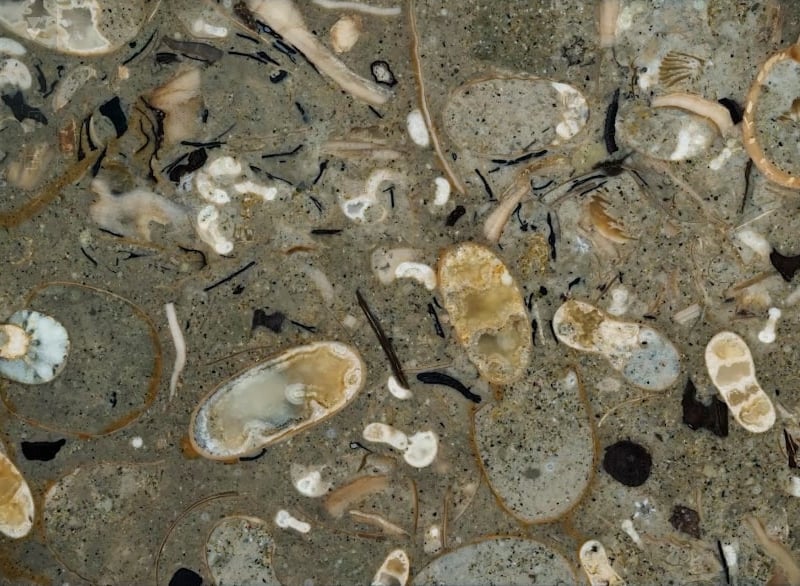
(CN) — Using 3D imaging of rocks, a research team from Hokkaido University in Japan found evidence that ancient squids once dominated the oceans.
Cephalopods are model animals for long-term evolution, but the origin and evolution of squids have been some of the biggest mysteries in the 500-million year history of such animals. Researchers in their study published on Thursday in the journal Science aimed to shed light on such questions.
“Cephalopods have thrived globally for the past 500 million years, surviving all major mass extinction events during that time interval,” said lead author Yasuhiro Iba, an associate professor of earth and planetary sciences at Hokkaido University. “Few other groups can claim such a record. And because they have the most extensive fossil record, they serve as model organisms for deep-time evolution.”
One reason the early years of squids has been such a mystery is because squids’ lack of hard shells made their fossils hard to come by. Undeterred, the team instead focused on finding ancient squid beaks — hard mouthparts with high fossilization potential that could help the team figure out how squids evolved.
With that in mind, the team developed an advanced fossil discovery technique that completely digitized rocks with all their embedded fossils in complete 3D form. Upon using that technique on Late Cretaceous rocks from Japan, the team identified 1,000 fossilized cephalopod beaks hidden inside the rocks, which included 263 squid specimens and 40 previously unknown squid species.
The team said the number of squid fossils they found vastly outnumbered the number of bony fishes and ammonites, which are extinct shelled relatives of squids that are considered among the most successful swimmers of the Mesozoic era.
Study author Shin Ikegami, also from the Department of Earth and Planetary Sciences at Hokkaido University, said that these findings support the theory that ancient squids not only did well, but outdid their relatives.
“In both number and size, these ancient squids clearly prevailed the seas,” Ikegami said. “Their body sizes were as large as fish and even bigger than the ammonites we found alongside them. This shows us that squids were thriving as the most abundant swimmers in the ancient ocean.”
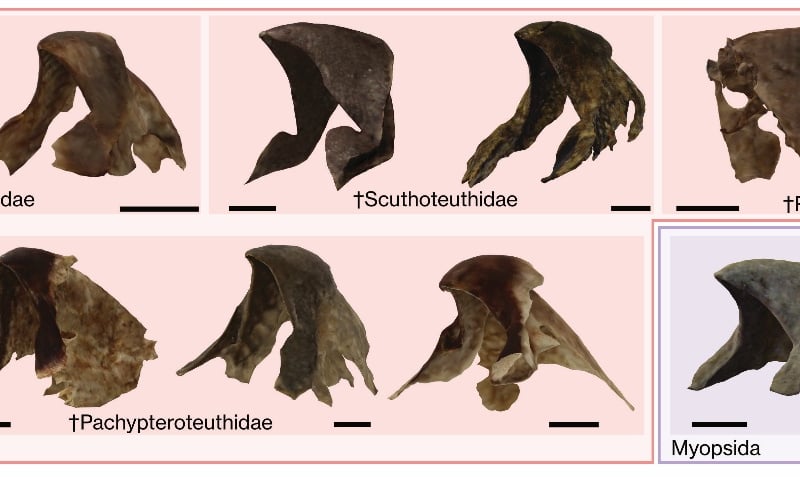
During their examination of the fossils, the team also discovered that modern squids existed longer than previously believed.
Iba said via email that nearly all previously known fossil records of squids came from the Cenozoic era, after the dinosaurs’ mass extinction event around 65 million years ago, leading scientists to believe this was the squids’ earliest appearance. During their research, the team realized that the fossils contained the ancestral remains of two main groups of modern squids — Myopsida, which live near the shore, and Oegopsida, which live in the open sea — dated to about 100 million years ago.
While the dinosaurs died out on land, Iba said that squids thrived in the sea.
“These findings change everything we thought we knew about marine ecosystems in the past,” said Iba. “Squids were probably the pioneers of fast and intelligent swimmers that dominate the modern ocean.”
Iba has hopes for using the technique on paleontological work going forward.
“This study demonstrates that it is possible to digitally excavate all fossils preserved in rock exactly as they are,” Iba said. “The technique can be broadly applied to paleontological research, and I hope it will lead to many new discoveries—not only of squids and other cephalopods, but across a wide range of groups— ultimately reshaping our understanding of the history of life.”
 Follow @kndrleon
Subscribe to our free newsletters
Our weekly newsletter Closing Arguments offers the latest about ongoing trials, major litigation and rulings in courthouses around the U.S. and the world, while the monthly Under the Lights dishes the legal dirt from Hollywood, sports, Big Tech and the arts.