
 Search Articles


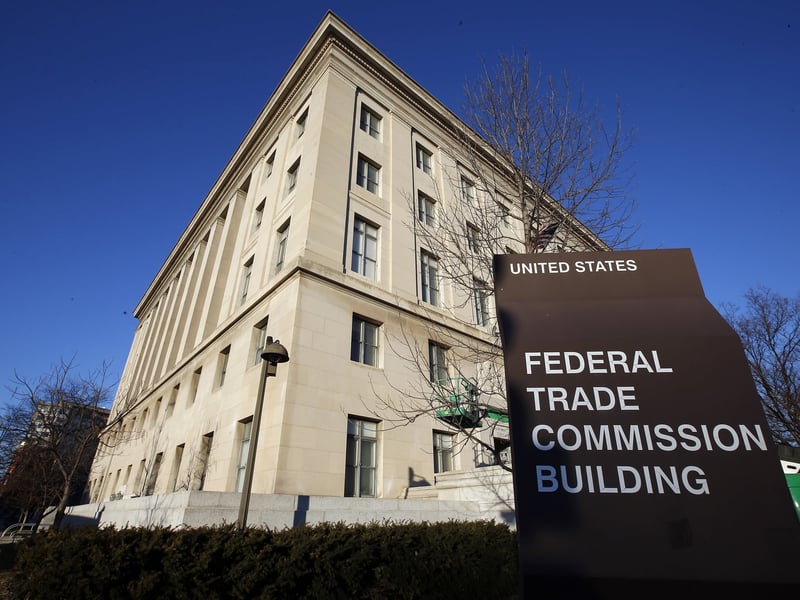
ATLANTA (CN) — An 11th Circuit panel on Tuesday unanimously upheld a Georgia federal judge’s order prohibiting global business payments company Corpay from making deceptive claims to customers about its fuel card products.
A 2023 permanent injunction stemming from a 2019 Federal Trade Commission lawsuit permanently bars Corpay — formerly known as FleetCor Technologies — from selling or charging for add-on services without first securing customers’ express informed consent, prohibits the company from making misrepresentations to customers related to fees and timing of payments and blocks the company from failing to credit timely customer payments.
The FTC estimated Corpay caused $213 million in damages to customers from unfair late fee billing and approximately $320 million in damages related to other unauthorized fees.
A three-judge panel of the Atlanta-based appeals court rejected Corpay’s challenge to the injunction, citing the company’s “rampant history of illegal acts” as reason enough for U.S. District Judge Amy Totenberg to have found that the company “needed constraints beyond the legal minimum to ensure future compliance.”
However, the panel also ruled Corpay CEO Ronald Clarke cannot be held liable for the company’s false claims that customers could limit purchases on some fuel cards to gas only.
While the panel found the evidence against Clarke was largely damning, it determined the FTC had not shown he had some knowledge of the company’s illegal conduct with respect to its “fuel only” ads.
“None of the evidence of Clarke’s communications that the FTC cites speak specifically to the ‘fuel only’ ads,” U.S. Circuit Judge Robin Rosenbaum wrote on behalf of the panel.
But other evidence did show that Clarke personally knew Corpay misrepresented the existence of fees and charged unauthorized or erroneous late fees, the panel ruled.
“[Clarke] dismissed concerns with Corpay’s practices as ‘fake news’ and asked his subordinates to find ways to extract more late fees,” Rosenbaum, a Barack Obama appointee, wrote.
Rosenbaum was joined in the decision by U.S. Circuit Judge Barbara Lagoa, an appointee of Donald Trump, and Senior U.S. Circuit Judge Charles Wilson, a Bill Clinton appointee.
Totenberg ruled in favor of the FTC in 2022 in its enforcement action claiming the company and Clarke violated Section 5 of the Federal Trade Commission Act by engaging in deceptive billing and advertising practices.
Corpay markets and sells fuel cards to mostly small- and medium-sized business operations that then distribute the cards to employees to use for fuel, vehicle maintenance and other goods and services.
The company’s advertisements falsely promised gas discounts, no transaction fees and the ability to limit employee spending. Corpay also charged late fees even when customers paid on time.
The appeals panel said that all Corpay’s fee-billing practices qualify as unfair under the FTC Act. Corpay’s case “lacks the gas to scale the FTC’s ‘mountain of evidence,’” Rosenbaum wrote.
According to the panel, the evidence showed that Corpay did not clearly inform customers of fees before and after the sales process and failed to clearly disclose that fees were optional.
“Internal documents revealed that for several of the fees, Corpay automatically enrolled customers without their knowledge. And internal emails and customer complaints reflected that Corpay didn’t tell customers of these fees during the sales process,” Rosenbaum wrote. “Plus, the terms and conditions were dense, vague, and largely inaccessible, available only by mail for at least three years. Corpay also hid the fees on invoices and failed to detail them on billing reports.”
The panel dismissed as “nonsensical” Corpay’s claim that various fees which were charged on a transactional basis — including a “convenience network surcharge” and a “minimum program administration fee” — were not actually transaction fees. Corpay internally referred to the fees as transaction fees, the panel noted.
“We can slice the baloney only so thin,” Rosenbaum wrote. “A fee called a ‘transaction fee’ that is charged per transaction is a transaction fee.”
Rosenbaum also flat-out rejected Corpay’s arguments that the lower court exceeded its authority in issuing the injunction and ruling in the FTC’s favor with respect to the unauthorized fees, writing: “Corpay misrepresented its product to customers, and under the law of this circuit, customers are not on the hook for these misrepresentations.”
A representative for the Federal Trade Commission’s Office of Public Affairs declined to comment on the decision Tuesday evening.
An attorney for Corpay and Clarke did not immediately respond to an e-mailed request for comment.
 Follow @KaylaGoggin_CNS
Subscribe to our free newsletters
Our weekly newsletter Closing Arguments offers the latest about ongoing trials, major litigation and rulings in courthouses around the U.S. and the world, while the monthly Under the Lights dishes the legal dirt from Hollywood, sports, Big Tech and the arts.