
 Search Articles


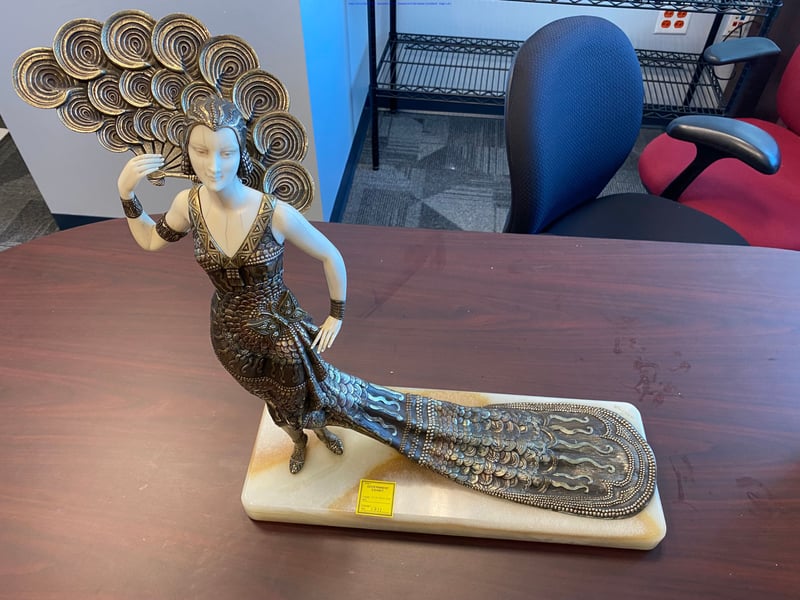
ATLANTA (CN) — A Miami art dealer must serve out his 51-month prison sentence for smuggling sculptures containing ivory into and out of the United States without declaring them to the feds, a panel of the 11th Circuit unanimously ruled on Friday.
The Atlanta-based appeals court upheld Eduardo Ulises Martinez’s convictions and sentence, rejecting his argument that a Florida federal judge barred him from presenting evidence about antique and de minimis exceptions to the Endangered Species Act. The exceptions allow for the importation of ivory that is at least 100 years old or items containing less than 200 grams of ivory.
After an eight-day trial in 2022, Martinez was convicted on nine counts of smuggling ivory sculptures into and out of the United States without declaring them or allowing inspection by the U.S. Fish and Wildlife Service.
He was stopped at Miami International Airport in 2021 with ivory statue heads in his luggage. Martinez admitted knowing the law but argued he didn’t need to declare the items because they were antiques.
A later search of Martinez’s home and business uncovered 227 sculptures containing ivory.
He was also convicted of obstruction of justice and ordered to pay a $20,000 fine and serve three years of supervised release after his prison term.
In its Friday ruling, the appeals court said Martinez’s failure to declare the ivory made any evidence about potential exceptions to the Endangered Species Act irrelevant.
“The ultimate importability or exportability of an item does not affect or eliminate the obligation to declare the item,” U.S. Circuit Judge Adalberto Jordan wrote on behalf of the panel.
The United States implemented a near-total ban on the commercial trade of African elephant ivory in 2016.
Although federal law allows for the importation of antiques and some items containing “de minimis,” or small, amounts of ivory from African elephants, the material must still be declared when it is imported or exported.
“Mr. Martinez was not relieved of his obligation to declare the statues containing ivory simply because they may have qualified for one of the two import/export exceptions,” Jordan, an appointee of Barack Obama, wrote. “The [U.S. Fish and Wildlife Service], after all, cannot determine whether either exception applies if it does not know that restricted items are being brought into or sent out of the United States, and Mr. Martinez could not decide for himself that his statues came within one or both of the exceptions.”
Jordan’s opinion was joined by U.S. Circuit Judge Andrew Brasher, a Donald Trump appointee, and Senior U.S. District Judge Virginia Covington, a George W. Bush appointee sitting by designation from the Middle District of Florida.
Martinez, representing himself after his appellate attorney withdrew, did not immediately respond to an emailed request for comment Friday morning.
The 11th Circuit also upheld his obstruction conviction, which stemmed from Martinez’s attempt to have art gallery owner Waltford Gonzalez misrepresent an invoice. Martinez asked Gonzalez to claim that an invoice for watercolor paintings actually covered a seized statue.
“A jury could view that act as an attempt to obstruct the administration of justice,” Jordan wrote.
The panel found that a statement by the prosecutor at trial, stating that Martinez was “no longer presumed innocent,” was a misstatement of law. However, the mistake does not warrant overturning his convictions in light of the strong evidence of his guilt.
“The smuggling scheme was extensive; Mr. Martinez admitted to knowing the declaration requirements for importing and exporting ivory, yet failed to declare the substantial number of statues with ivory that he imported and exported; and Mr. Martinez tried to get Mr. Gonzalez to help him deceive the government about the 2020 invoice,” Jordan wrote.
A representative for the Justice Department did not immediately respond to a request for comment on Friday.
 Follow @KaylaGoggin_CNS
Subscribe to our free newsletters
Our weekly newsletter Closing Arguments offers the latest about ongoing trials, major litigation and rulings in courthouses around the U.S. and the world, while the monthly Under the Lights dishes the legal dirt from Hollywood, sports, Big Tech and the arts.