
 Search Articles


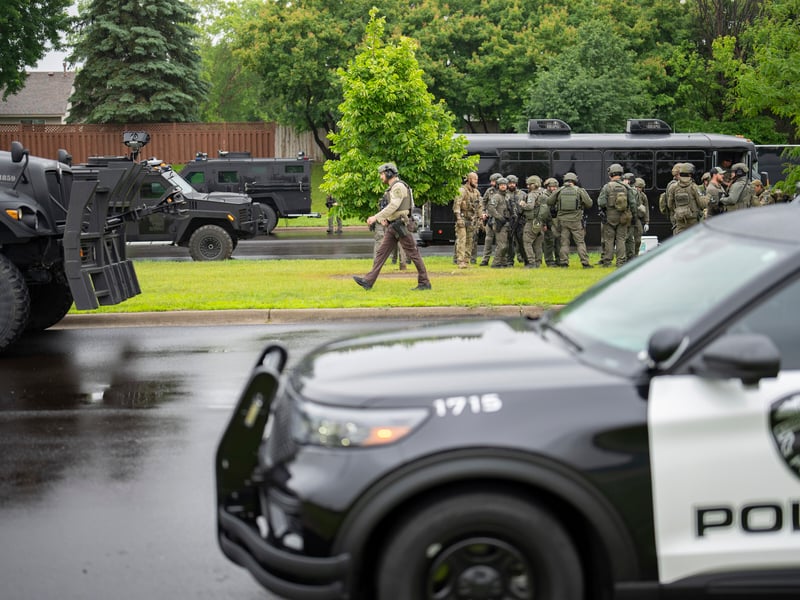
ATLANTA (CN) — The 11th Circuit was asked Wednesday to decide whether an FBI agent violated the Fourth Amendment when he led a raid into the wrong home, detonated a flash-bang grenade and held an innocent family at gunpoint at 5 a.m.
It marks the second time the botched raid case has come before the federal appeals court, after the Supreme Court last year asked it to reexamine whether the family’s negligence or intentional tort claims can proceed.
The justices specifically tasked the circuit judges with deciding whether those claims are barred by a “discretionary function exception,” which reinstates federal officers’ sovereign immunity when the claim is based on an officer’s discretion.
But as U.S. Circuit Judge Adalberto Jordan noted during Wednesday’s arguments, prior precedent on the discretionary function exception varies and does not provide a clear resolution for the court to follow.
“We have over 60 published cases since 1990 on the discretionary function exemption and they are all over the place,” the Barack Obama appointee said.
While the Supreme Court said in a 1991 opinion the exception forbids challenging decisions involving an “element of judgement or choice” based on policy considerations, several lower courts have held it does not shield “careless” or “unconstitutional” police conduct from judicial scrutiny.
When a SWAT team busted down the door to their suburban Atlanta home during the predawn hours of Oct. 18, 2017, Hilliard Toi Cliatt, his partner Curtrina Martin and her 7-year-old son hid in a bedroom closet, frightened and unaware of what was happening.
Cliatt was dragged from the closet, handcuffed and interrogated while another officer trained his weapon on Martin, who was lying on the floor half-naked, having fallen inside the closet. Only then did another officer stumble across some mail with the home’s address on it and realize the team had the wrong house.
The couple argued the officers took no reasonable efforts to ensure they identified the correct place and properly executed arrest warrants meant for a suspected gang hideout.
The special agent in charge, Lawrence Guerra, had previously driven by the target residence listed on the warrants and had a wealth of information clearly indicating he was at the wrong address that day.
Guerra’s attorney, Aaron Ross, argued his personal GPS unit led him to the wrong home, which he later destroyed.
But the circuit judges appeared unpersuaded that the agent’s actions were justified as they have a duty to undertake precautions to correctly execute a warrant.
“You can only execute a warrant, a search or arrest warrant, at the place described in the warrant,” Jordan said. “There’s no level of discretion involved there.”
In 1974, Congress amended the Federal Tort Claims Act with a law enforcement proviso — an exception to the exception. The addition came after national outrage over a pair of botched raids similar to Martin’s case. Under the proviso, sovereign immunity is waived on claims of assault, battery, false imprisonment, false arrest, abuse of process or malicious prosecution.
Under this exception, Jordan said it requires the panel to determine whether a private individual would be held liable under the same circumstances involving the federal officer.
“Actions are still legal or illegal regardless whether you’re an FBI agent or a private person,” Cliatt and Martin’s attorney, Patrick Jaicomo, said. “We should not ignore the elephant in the room here that Congress amended the FTCA to prevent wrong home raids.”
Jordan asked the attorneys if they would be open to relitigating all of the claims in the case as they did before the initial 11th Circuit panel, because the trial court relied on a doctrine that is now gone for some of the claims.
The trial court dismissed Martin’s intentional tort claims based on a supremacy clause defense by the government, which the Supreme Court said was not permitted under the Federal Tort Claims Act. The high court determined this act is the “supreme” law addressing civil liability for federal agents and supplies the “exclusive remedy” for damages claims arising out of their official conduct.
Jordan was joined on the panel by U.S. Circuit Judge Jill Pryor, a fellow Obama appointee, and U.S. Circuit Judge Embry Kidd, a Joe Biden appointee. They did not signal when they intend to release a ruling, as they may request supplemental briefing from the parties on the case.
 Follow @Megwiththenews
Subscribe to our free newsletters
Our weekly newsletter Closing Arguments offers the latest about ongoing trials, major litigation and rulings in courthouses around the U.S. and the world, while the monthly Under the Lights dishes the legal dirt from Hollywood, sports, Big Tech and the arts.