
 Search Articles


ATLANTA (CN) — An 11th Circuit panel on Friday affirmed the government’s dismissal of petitions from breeders seeking to import more exotic bird species into the U.S.
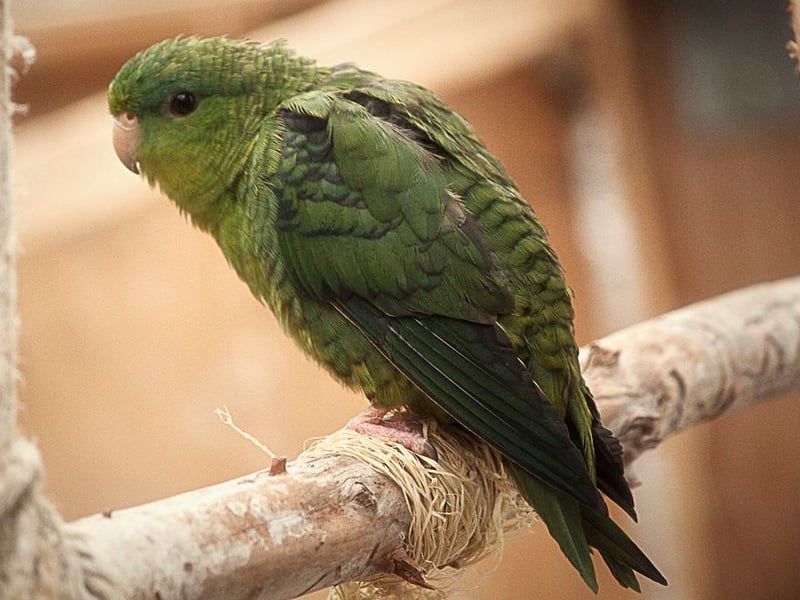
In 2021, a group of aviculturist organizations that care for and breed birds sought to import two captive-bred species of parrots, the cactus conure and the green form of the lineolated parakeet.
However, they petitioned to add only members of the species that have been captive-bred in certain European countries, instead of asking to add the two species as a whole to the approved import list.
The U.S. Fish and Wildlife Service denied the aviculturists’ petitions as invalid. It said that implementing regulations under the Wild Exotic Bird Conservation Act of 1992 didn’t allow the service to approve species in a country-by-country manner.
“We agree that the plain text and structure of the act instruct the service to consider adding ‘species’ of exotic birds, as a whole to the list of species approved for importation,” U.S. Circuit Judge Robin Rosenbaum wrote in Friday’s ruling.
In a unanimous opinion, the circuit judges concluded that only an entire species can be considered for importation, not just members of the species that hail from certain countries.
To promote exotic bird conservation, the Wild Exotic Bird Conservation Act prohibits the importation of certain species into the United States. But someone may petition to add a species to a list of those approved for import, so long as the species meets certain criteria.
“As it turns out, a bird in the hand is not worth as much as two in the bush,” Rosenbaum wrote.
“At least, that’s what Congress decided when it enacted the Wild Exotic Bird Conservation Act of 1992, and protected birds in the bush (the wild) by limiting when they can be in the hand (domestically imported),” the Barack Obama appointee added.
Under the act, a captive-bred species can be included on the approved import list only if the service determines the species is regularly bred in captivity and no wild-caught birds of the species are in trade, or the species is bred in a qualifying facility.
While both the cactus conure and the green form of the lineolated parakeet are native to parts of South America, they are captive-bred in certain European countries.
The unique and colorful cactus conure, also known as the Caatinga parakeet, is endemic to Brazil. In their petition, the aviculturists argued there are no wild-caught birds of the species in world trade, because the last trade in wild specimens occurred in 1997; they say the bird has been regularly bred in European aviculture since then.
The lineolated parakeet, also known as the barred parakeet, is native to South America but common in worldwide aviculture. Because the typical wild bird is the green form, the U.S. only allows other color mutations that don’t exist in the wild to be imported.
In their ruling, the circuit judges concluded that “species” is not defined by reference to particular countries of origin, nor is a “subspecies” confined to certain areas.
“Put simply, the ordinary meaning of ‘species’ does not support the aviculturists’ interpretation that the act requires the secretary to decide whether a species qualifies for exemption from the moratorium on a country-by-country basis,” Rosenbaum wrote.
“That’s so because a species may (and often does) exist over more than a single country, even if it may have some general geographic limitations,” she added.
U.S. Circuit Judge Nancy Abudu, a Joe Biden appointee, and Senior U.S. Circuit Judge Gerald Tjoflat, who was appointed by Gerald Ford, rounded out the panel.
 Follow @Megwiththenews
Subscribe to our free newsletters
Our weekly newsletter Closing Arguments offers the latest about ongoing trials, major litigation and rulings in courthouses around the U.S. and the world, while the monthly Under the Lights dishes the legal dirt from Hollywood, sports, Big Tech and the arts.