
 Search Articles


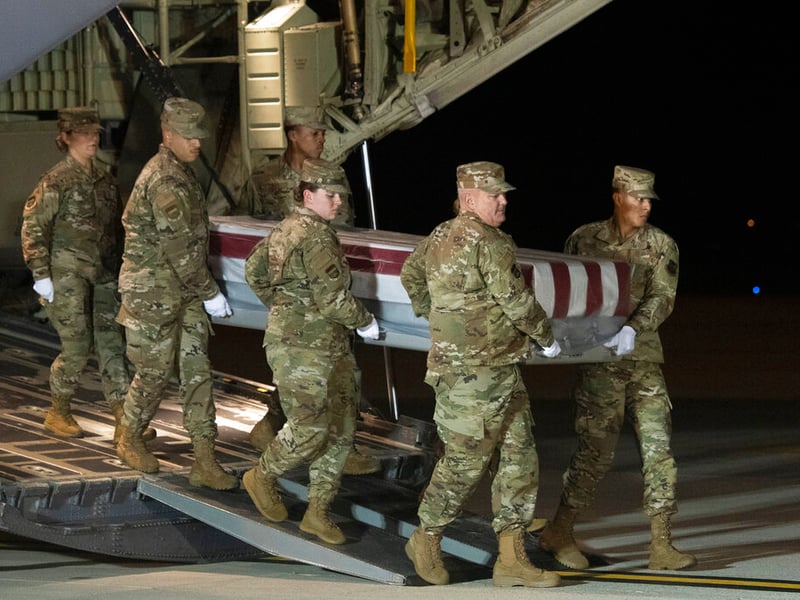
ATLANTA (CN) — An 11th Circuit Court of Appeals panel will allow part of a lawsuit brought by shooting victims and families of three service members killed at a Florida military base by a Royal Saudi Air Force cadet to proceed against the Kingdom of Saudi Arabia.
In a unanimous decision on Monday, the three-judge panel found that most of the victims’ claims were barred by the Foreign Sovereign Immunities Act, which protects foreign governments from certain civil lawsuits, except for one: Saudi Arabia was negligent in vetting and hiring the officer, Mohammed Saeed Al-Shamrani.
“These claims are facially sufficient because they are based on a series of acts of commission (rather than acts of omission) taken by the kingdom in hiring and vetting Al-Shamrani that rose to the level of gross negligence under Florida law,” U.S. Circuit Judge Stanley Marcus, a Ronald Reagan appointee, wrote in the 71-page decision.
U.S. Circuit Judges Britt Grant, a Donald Trump appointee, and Jill Pryor, a Barack Obama appointee, joined Marcus on the panel.
The case will now return to the Northern District of Florida.
In December 2019, Al-Shamrani, a Saudi Air Force cadet training with the U.S. military at Pensacola Naval Air Station, shot and killed three sailors while also wounding eight others. Al-Shamrani was killed by police during the incident. The FBI managed to hack into Al-Shamrani’s phones, which revealed his contacts with several al-Qaida members as far back as 2015.
The victims and their families brought a federal lawsuit against Saudi Arabia in 2021, accusing the kingdom of knowing about Al-Shamrani’s connections to al-Qaida, his public social media posts showing his growing radicalization and its failure to monitor him as he trained on the naval base.
Last year, U.S. District Judge M. Casey Rodgers, a George W. Bush appointee, dismissed the lawsuit, citing the Foreign Sovereign Immunities Act.
During oral arguments in front of the 11th Circuit panel this summer, Stephen Vladeck, representing the victims and families, told the three-judge panel that the goal of the Justice Against Sponsors of Terrorism Act of 2016 was to override foreign sovereign immunity when the country provides “material support to terrorist organizations or persons that engage in terrorist activities against the United States.”
“It is difficult to imagine how any JASTA case can survive if this one can’t,” he said at the time.
In Monday’s decision, the panel defended the lower court’s order dismissing most of the claims that Saudi Arabia did not monitor Al-Shamrani’s social media while he was in the U.S. and his country liaison officer failed to properly supervise him.
“For starters, the plaintiffs identify no provision or policy document that requires the kingdom to assign a country liaison officer in the first place,” Marcus wrote. “Any fair reading of the documents referenced in the amended complaint yields the conclusion that assigning a country liaison officer is optional.”
Furthermore, the panel concluded that the country cannot be blamed for Al-Shamrani’s actions.
“It is beyond real dispute that purchasing a firearm, allegedly in violation of Saudi Arabia’s policy and procedures, and then attempting to commit mass murder on an American military base, where he was supposed to be learning how to operate military equipment and bringing that knowledge back to Saudi Arabia, were not part of Al-Shamrani’s job in coming to the United States,” Marcus wrote.
However, the panel did agree that the victims could pursue claims that Saudi Arabia did not properly vet Al-Shamrani.
“The foreign state is also required to follow policies and procedures designed to ensure the safety of the United States and its citizens,” Marcus wrote. “These include implementing and carrying out various security screening and vetting protocols before program participants can receive an invitational travel order and a visa to come to the United States.”
“Under Florida common law, Saudi Arabia had a duty to investigate Al-Shamrani for security purposes and, if it learned that Al-Shamrani posed some imminent danger or security risk, to take action to bar him from entering flight training in the United States,” he added.
Vladeck, the attorney representing the victims and families, praised the 11th Circuit ruling.
“We are very pleased that the 11th Circuit unanimously revived our lawsuit against Saudi Arabia, and we’re looking forward to securing a long-overdue measure of justice for the victims of the 2019 NAS Pensacola shooting and their families when we go to trial in the district court,” he said.
Gregory Rapawy, representing Saudi Arabia, declined to comment.
 Follow @alexbpickett
Subscribe to our free newsletters
Our weekly newsletter Closing Arguments offers the latest about ongoing trials, major litigation and rulings in courthouses around the U.S. and the world, while the monthly Under the Lights dishes the legal dirt from Hollywood, sports, Big Tech and the arts.