
 Search Articles


DENVER (CN) — Finding an oil company’s suit timely if categorized as a contribution action, the 10th Circuit on Wednesday revived a claim asking for a century-old mine’s previous owner to pitch in on a $63.7 million environmental cleanup bill.
“Actions for contribution and cost recovery entail separate statutes of limitations,” wrote U.S. Circuit Judge Robert Bacharach in a 15-page opinion. “Choosing between the two options, the district court applied the statute of limitations for cost-recovery actions. We disagree, concluding that the limitations period for contribution actions should apply.”
Atlantic Richfield Company initially sued NL Industries in 2020, seeking to recoup cleanup costs for silver mines in southwest Colorado under the Comprehensive Environmental Response Compensation and Liability Act of 1980. The company filed an amended complaint in May 2022, following a settlement with the government.
NL Industries countered that the statute of limitations had long run out to file a claim, as the suit came 37 years after Atlantic Richfield first started cleaning the site, 25 years after the company’s first demand letter to share cleanup costs arrived, 20 years after the EPA’s emergency cleanup and nine years after the EPA’s restoration order.
Bacharach debated whether to apply the statute of limitations for contribution or to use a cost-recovery action timeline, even though the case wasn’t seeking cost-recovery.
“Cost recovery is available to parties who have incurred expense in cleaning up environmental damage but haven’t faced a suit or settlement,” wrote Bacharach, a Barack Obama appointee. “Contribution refers to a partially responsible party’s effort to recoup a proportionate share of the expense incurred during or after a settlement or specified civil action.”
Given two square holes and one round peg, the panel chose the former for being the closer fit.
“The settlement covered not only Atlantic Richfield’s payments to the federal government, but also the work to clean up the mining site. Atlantic Richfield’s suit thus involves contribution,” Bacharach said, noting that the law and the settlement agreement allows for a party to seek contribution for “response actions,” like the cleanup work Atlantic Richfield did at the mining site.
Under the law, Atlantic Richfield would have three years from the date of its 2021 EPA settlement to sue for contribution to the cleanup cost.
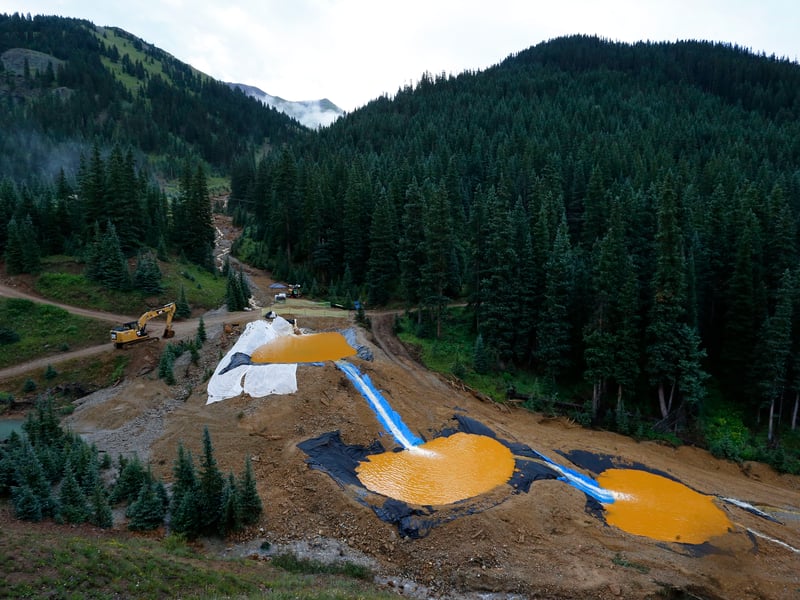
The storied history of silver mining outside Rico, Colorado, began in 1869 at the Pigeon, Mountain Springs and Wellington mines. Atlantic Richfield took over the mines from Rico Argentine Mining Company, which began extracting resources in the early 1900s. From 1930 to 1941, NL Industries’ predecessor, the St. Louis Smelting and Refining Co., mined the area and built a 6,000-foot-long tunnel to drain acid into the Dolores River.
Beginning in 1943, first Rico Argentine, then Atlantic Richfield Company, ran the site. After mining ceased in 1971, the company built cyanide leach heaps and operated a sulfuric acid plant that in 1974 discharged thousands of gallons of cyanide into the river, killing an estimated 30,000 fish downstream.
In 1983, Atlantic Richfield began cleaning the site and first sent NL Industries demand letters in 1995 asking it to share in the cleanup costs.
Five years later, the Environmental Protection Agency engaged in an emergency site cleanup, and in 2011 the agency ordered Atlantic Richfield to complete site restoration. Over 10 years, the oil company spent $63.7 million on environmental restoration. In 2021, it settled its liability with the EPA and agreed to pay $400,000 for agency oversight costs.
Largely relying on the 1997 findings of Sun Co. v. Browning-Ferris Inc ., Joe Biden-appointed U.S. District Judge Nina Wang initially found in federal court that Atlantic Richfield’s $63.7 million bill missed the deadline to file a claim under the environmental response compensation act, but maintained a second claim asking NL to contribute to the EPA’s $400,000 tab.
Atlantic Richfield appealed.
Chief U.S. Circuit Judge Jerome Holmes, appointed by George W. Bush, and Senior U.S. Circuit Judge David Ebel, a Ronald Reagan appointee, also signed onto the opinion, sending the case back to court in the U.S. District of Colorado.
Attorney Joel Herz of Tucson represented NL Industries, and neither responded to an inquiry for comment.
Denver attorney Theresa Benz represented Atlantic Richfield, which declined to comment on the development.
 Follow @bright_lamp
Subscribe to our free newsletters
Our weekly newsletter Closing Arguments offers the latest about ongoing trials, major litigation and rulings in courthouses around the U.S. and the world, while the monthly Under the Lights dishes the legal dirt from Hollywood, sports, Big Tech and the arts.