Search Articles


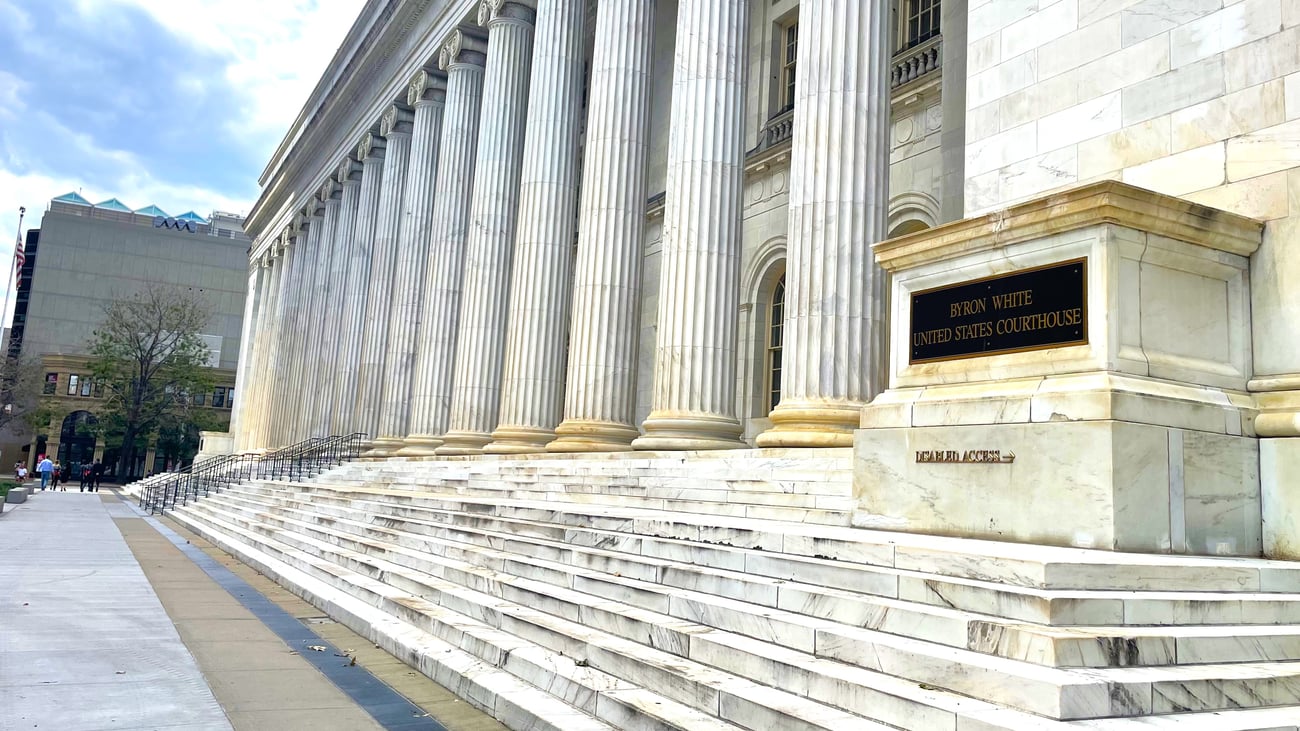
DENVER (CN) — The 10th Circuit on Tuesday revived a Utah journalist’s viewpoint discrimination claim against statehouse staffers who denied him media credentials after he left The Salt Lake Tribune and started his own independent publication.
“At bottom, the Legislature’s denial of a credential to Schott implicates his constitutional right to access either a limited public or nonpublic forum free from viewpoint discrimination,” wrote U.S. Circuit Judge Timothy Tymkovich in a 47-page opinion. “This is core protected First Amendment speech.”
For more than two decades, Bryan Schott worked as a political journalist with legislative credentials while working for The Salt Lake Tribune.
When he launched his own publication, Utah Political Watch, the Legislature’s media liaison rejected his application for the 2025 legislative session, citing a policy that limited access to “established reputable news organizations.”
Believing he was facing retaliation for recent criticisms of staffers and the Senate president, Schott sued the chiefs of staff for both chambers of the Utah Legislature as well as the media liaison on Jan. 22, 2025.
A lower court declined to grant Schott a temporary restraining order and then dismissed the issue as moot in September. Schott appealed, arguing the policy to deny “independent media” press credentials gave the government too much power in controlling information.
While the government argued Schott’s reporting was unrelated to their decision to deny credentials, the journalist pointed to the staffers’ inconsistent approval of access to a news aggregate and a local urban planning blog, despite the written policy to categorically exclude these types of publications.
“We conclude that Schott’s well-pleaded factual allegations are sufficient to show the Legislature plausibly discriminated against him because of his viewpoints,” Tymkovich wrote. “The district court therefore erred in dismissing Schott’s as-applied viewpoint discrimination claim, and we remand for further proceedings.”
In restoring Schott’s viewpoint discrimination claim, the 10th Circuit panel also affirmed the lower court’s dismissal of his retaliation, prior restraint and vagueness claims.
In distinguishing between whether the media policy attempted to regulate expression, or simply restricted access to a restricted forum, the court compared the Utah Legislature’s credentialing criteria to the city of Lakewood, Colorado’s “wholesome” permitting rule. Just as Lakewood was able to reject The Tool Box’s nude dancing business for not being wholesome, legislative staffers may require press pass-holders to be established, reputable journalists.
“The policy is a law of general application that is not aimed at free expression or expressive conduct, and it does not permit credentialing decisions to be made on the basis of ongoing expression,” Tymkovich wrote. “Schott’s prior-restraint challenge therefore fails. He does not allege the Legislature used its unbridled discretion to arbitrarily deny him a press pass (e.g., ‘for any reason’); he alleges the policy as written excluded him.”
While legislative hearings are open to the public, media credentials at the Utah Legislature grant reporters access to parking spaces, a press room and internet, as well as press releases and conferences with lawmakers.
On remand, the panel also reversed the lower court’s denial of a preliminary injunction, potentially allowing Schott an opportunity to renew the request for access ahead of the 2027 legislative session.
On appeal, Schott was represented by Charles Miller, an attorney for the Institute for Free Speech.
“Utah’s Legislature revised its credentialing policy to exclude independent journalists right after a veteran reporter who covered the Capitol for decades and who was known for asking tough questions started his own news site,” said Miller to Courthouse News over email. “The Tenth Circuit recognized that this kind of viewpoint-based gatekeeping is exactly what the First Amendment forbids.”
The Utah Attorney General’s Office did not immediately respond to an inquiry for comment.
Bill Clinton-appointed Senior U.S. Circuit Judge Michael Murphy and Barack Obama-appointed U.S. Circuit Judge Robert Bacharach signed onto the opinion. George W. Bush appointed Tymkovich.
 Follow @bright_lamp
Subscribe to our free newsletters
Our weekly newsletter Closing Arguments offers the latest about ongoing trials, major litigation and rulings in courthouses around the U.S. and the world, while the monthly Under the Lights dishes the legal dirt from Hollywood, sports, Big Tech and the arts.