
 Search Articles


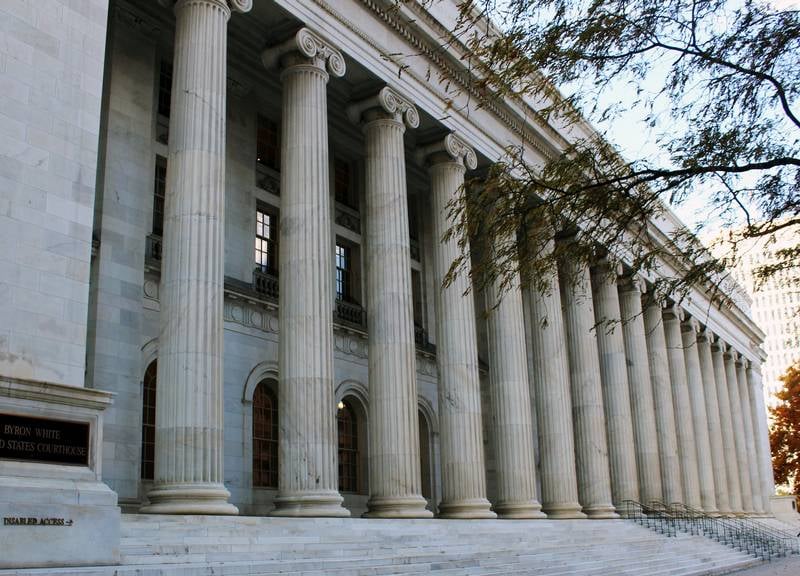
(CN) — A whistleblower lawsuit against Colorado Technical University can continue after the 10th Circuit denied an appeal by the for-profit school on Tuesday morning.
A panel of judges ruled that the university’s appeal of a motion to dismiss did not meet the stringent requirements to be heard by the court and would have to wait until the lower court decides the case.
“CTU has not shown that erroneous denials of public disclosure bar motions cannot be redressed on appeal from a final judgment,”U.S. Circuit Judge Scott Matheson Jr. said in the court’s decision.
Attorneys for Fiorisce, the plaintiff company formed to sue the school, celebrated the decision in a straightforward, optimistic statement.
“We are pleased with the court’s decision, and we look forward to continuing to litigate this important False Claims Act case,” Marlene Koury of Constantine Cannon, who represents Fiorisce, told Courthouse News via email.
The case centers on the school’s use of Intellipath, an adaptive learning software, the university allowed students to easily skip content they already knew to complete classes faster. However, the university then submitted the full course credits on financial aid applications. Because the program failed to offer supplemental material or to replace the missed lessons, students were actually getting fewer credit hours than reported.
Credit hours, though not the sole factor, are used to determine if an academic program receives federal financial aid.
The lawsuit was first filed in 2021 by an unnamed faculty member of Colorado Technical University, who claims she sued the school to expose its fraudulent billing scheme where it reported more credit hours than students actually received to the federal government.
To protect her identity, the plaintiff formed shell corporation Fiorisce LLC, under which she filed the lawsuit.
Fiorisce filed its qui tam suit in the lower court, claiming that the university violated the False Claims Act by misrepresenting its compliance with federal credit hour requirements and fraudulently billed the government for educational content it never provided to students.
In October 2023, the university moved to dismiss the case for failure to state a claim, which the lower court denied in January 2024. The university appealed the motion to dismiss order in February 2024 and hearing for the appeal took place in Denver in early 2025.
As a general rule, only final judgments are appealable, but non-final orders may be reviewed by higher courts in interlocutory appeals under an exception called the collateral order doctrine — although the requirements to be heard this way are strict.
On appeal, the university argued the False Claims Act’s “public disclosure bar” exempted it from the lawsuit and asked the court to review the motion under the collateral order doctrine.
The act’s public disclosure bar prohibits a qui tam plaintiff from filing a False Claims Act lawsuit based on a fraud that has previously been exposed through certain public channels, like news outlets, unless the relator is the “original source” of the information.
The district court denied Colorado Technical University’s motion to dismiss because Fiorisce’s allegations were not substantially the same as those previously disclosed. It further stated that, even if the public disclosure bar applied, Fiorisce likely qualified for the “original source” exception.
On appeal, the panel disagreed with the university that the False Claims Act’s** public disclosure bar constituted a right to avoid trial.
“Rather than preventing trial, the public disclosure bar was designed to discourage undeserving relators from bringing qui tam suits that do not aid the government in combatting fraud,” Matheson said.
But, even if they bought that argument, the panel said that the university also had to cite a “substantial public interest” for dismissing the lawsuit. Ultimately, the panel ruled the university’s arguments weren’t up to snuff.
“But for the reasons stated below, CTU has not met its heavy burden to expand the collateral order doctrine to include denials of motions to dismiss under the FCA’s public disclosure bar,” the Barack Obama-appointed judge stated.
Colorado Technical University and its attorneys did not immediately respond to a request for comment.
The panel of judges was rounded out by U.S. Circuit Judges Carolyn B. McHugh and Gregory A. Phillips, both Barack Obama appointees.
Subscribe to our free newsletters
Our weekly newsletter Closing Arguments offers the latest about ongoing trials, major litigation and rulings in courthouses around the U.S. and the world, while the monthly Under the Lights dishes the legal dirt from Hollywood, sports, Big Tech and the arts.