
 Search Articles


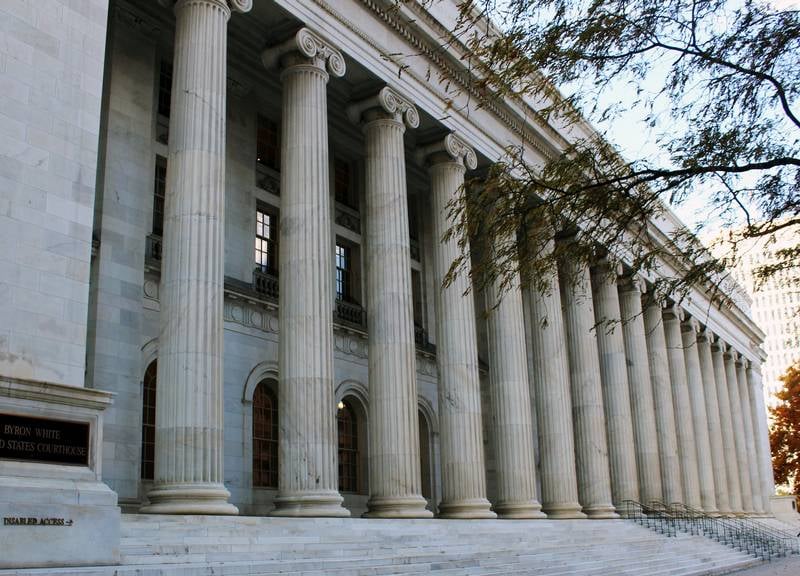
DENVER (CN) — The 10th Circuit on Monday remanded Colorado’s air quality plan back to the U.S. Environmental Protection Agency after finding the government failed to account for air pollution generated during drilling and fracking in granting permits.
“The EPA acted arbitrarily and capriciously by failing to address the potential emissions during drilling, fracking, and well completion,” wrote U.S. Circuit Judge Robert Bacharach in a 19-page opinion.
The Denver Metro North Front Range area — which spans eight counties east of the Rocky Mountains — has failed to control ozone and meet national ambient air quality standards for more than 15 years.
Under the Clean Air Act, Colorado is therefore required to submit plans to the EPA showing actions that will improve air quality for the 3.3 million people living in the area. While state officials say they are making progress, environmentalists have contested many aspects of the state implementation plan, notably when it comes to regulating oil and gas operators.
In recent years, the nonprofit Center for Biological Diversity led several challenges to Colorado’s air quality plan, pointing out gaps that prevent the state from meeting attainment goals by the next 2027 deadline and where important sources of pollution have been left out of the state’s calculations.
In 2023, the 10th Circuit agreed with the environmentalists that Colorado had wrongly exempted “temporary emissions” from its calculation of air pollution. In March, however, the appellate court rejected another of their petitions, finding instead that Colorado made “common sense” steps toward federal air quality goals even if it didn’t guarantee meeting them.
On Dec. 13, 2024, the center’s attorney, Ryan Maher, asked the 10th Circuit to vacate a 2019 definition change that he said overlooked emissions generated during drilling, fracking and well completion. In Monday’s order, the appellate court agreed.
“The decision is unlawful if the EPA acted arbitrarily and capriciously by failing to consider an important aspect of the problem or to provide a rational explanation for the decision,” Bacharach wrote.
The panel didn’t take a position on whether Colorado’s rule actually exempted well construction emissions, but found the federal agency didn’t adequately evaluate the Center for Biological Diversity’s concerns.
“The Center contends that the revised definition creates a new exclusion for pollutants emitted before a well starts producing. The EPA apparently credited Colorado’s characterization of the revision as ‘clarifying,’” wrote Bacharach. “But the EPA didn’t independently assess that characterization. By failing to independently assess that characterization, the EPA acted arbitrarily and capriciously.”
The nonprofit group also claimed Colorado was allowing oil and gas operations to begin before permits had been formally approved, and that the rule change limited regulators’ ability to deny permits in the face of excessive emissions. The 10th Circuit rejected the claim, finding that if Colorado was allowing oil and gas operators to begin work without permits, the issue did not originate with this specific change.
“The EPA has never approved a provision in Colorado’s implementation plan that would allow construction to start before the owner gets a permit," wrote Bacharach. “So even if the general permits served to bypass federal regulations, the violation would not arise from the 2019 revisions to the implementation plan.”
Although the ruling was mixed, Maher considered the Center for Biological Diversity’s petition a successful check on the government’s air quality plan.
“Despite the Front Range’s chronic and severe smog problem, Colorado and EPA continue to hand the oil and gas industry free passes to pollute,” Maher told Courthouse News via email. “The decision today has checked EPA’s rubberstamping of yet another pollution exemption in the state. It’s an important step towards reigning in the massive amounts of toxic air pollution from well drilling and fracking.”
Rather than outright vacate the EPA’s approval of Colorado’s plan and send both parties back to square one, the appellate panel remanded the issue back to the federal agency for further review.
“Colorado has argued that the revision serves only to clarify what the prior plan allowed. On remand, the EPA can independently evaluate that argument,” wrote Bacharach, a Barack Obama appointee.
Senior U.S. Circuit Judge Bobby Baldock, a Ronald Reagan appointee, and Donald Trump-appointed U.S. Circuit Judge Joel Carson rounded out the panel.
Representatives for the U.S. Department of Justice and the Colorado Attorney General’s Office did not return requests for comment before publication.
 Follow @bright_lamp
Subscribe to our free newsletters
Our weekly newsletter Closing Arguments offers the latest about ongoing trials, major litigation and rulings in courthouses around the U.S. and the world, while the monthly Under the Lights dishes the legal dirt from Hollywood, sports, Big Tech and the arts.